








All Over Floral Rug
An all over floral rug brings timeless symmetry and warmth to a room through continuous botanical patterns woven across the entire field.
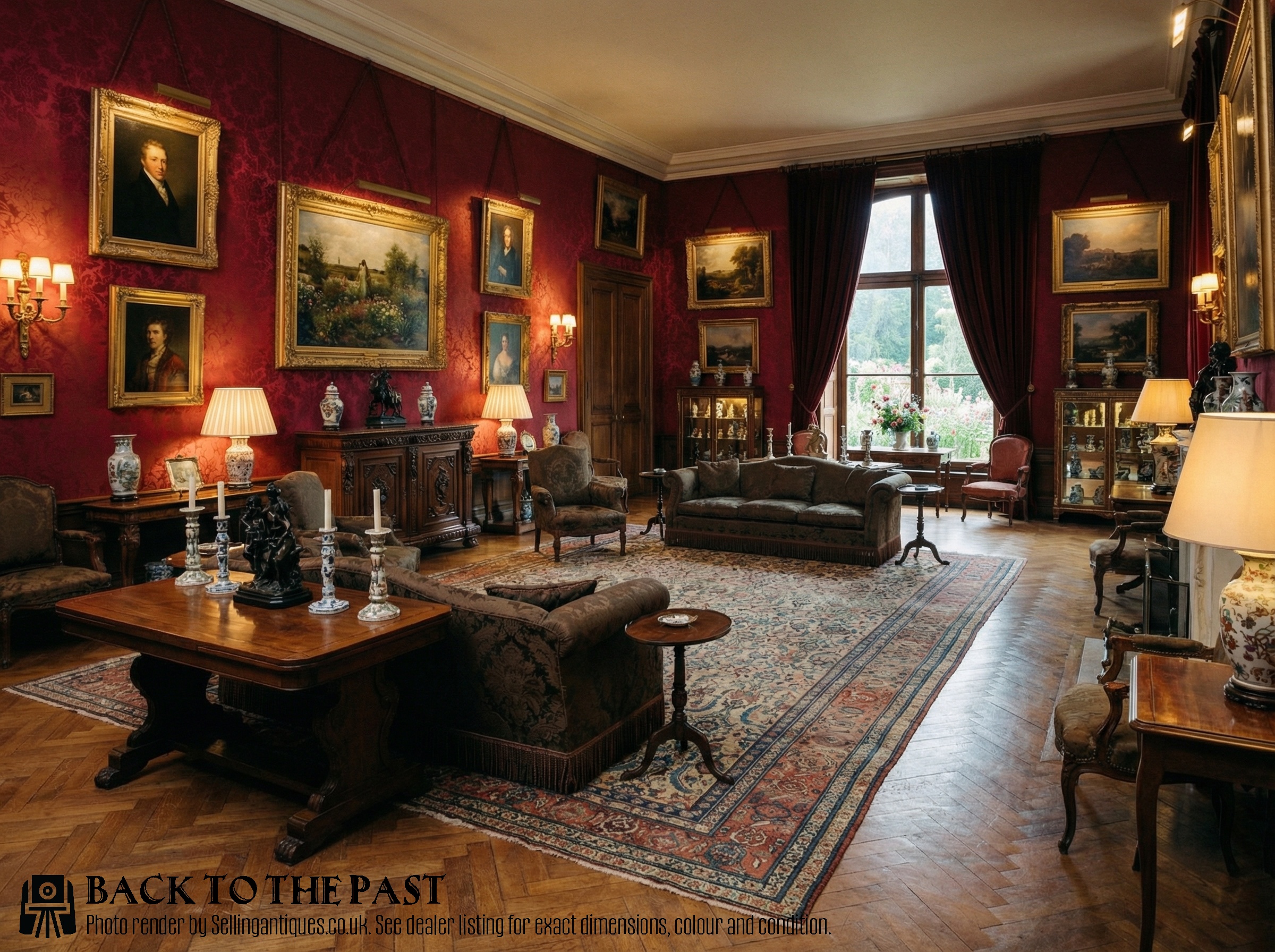
All Over Floral Rug
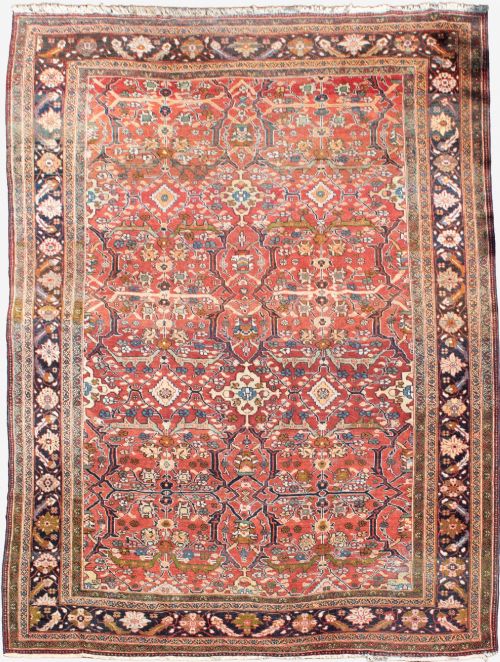
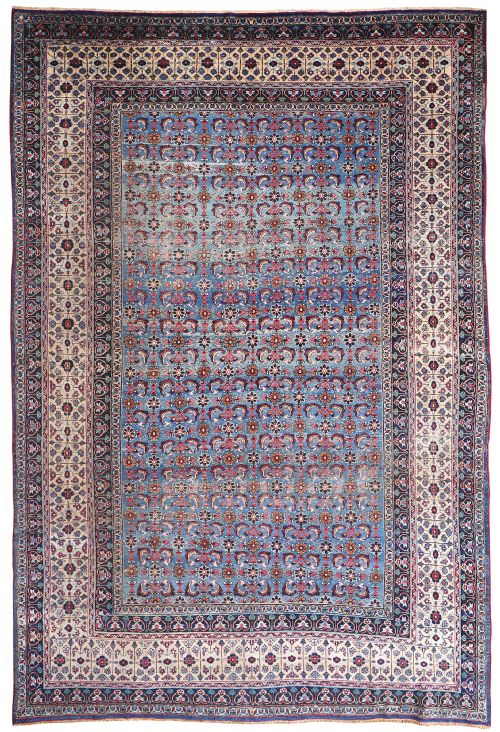
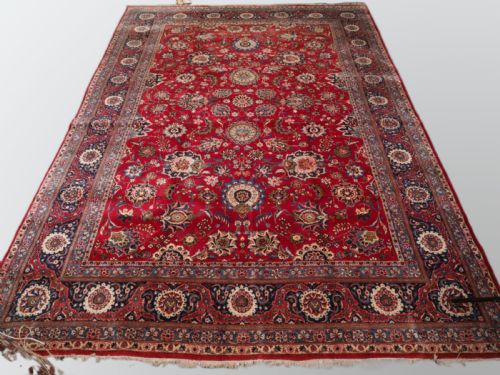
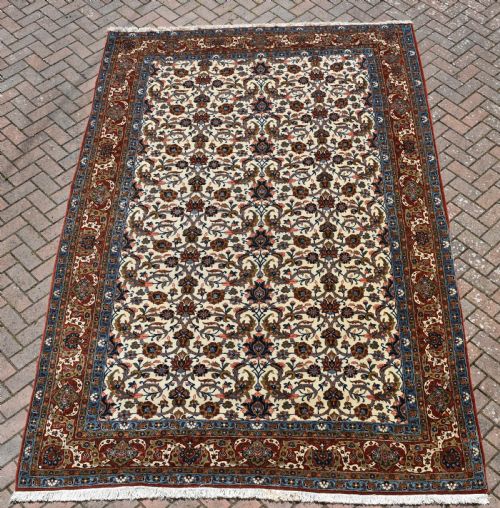
An all over floral rug presents a continuous pattern of blossoms, vines, and leaves that spreads across the entire ground rather than centring on a single medallion. Buyers choose this layout to anchor large spaces with a balanced, repeating rhythm that is easy to live with and arrange furniture around.
The pieces available here span various origins and dates from the Victorian era into the twentieth century, taking the form of large carpets and roomsize floor coverings. Persian weaving traditions dominate the selection, including regional works from Mahal, Sultanabad, Heriz, Tabriz, and Kashan.
Makers utilised durable natural materials suited for heavy use, creating substantial floor coverings designed to endure for generations in country houses and town residences alike.
Materials and construction
These carpets and rugs were constructed using a foundation of sturdy cotton for warps and wefts, providing structural stability underfoot. Hand-spun wool forms the plush pile, dyed with rich traditional hues that mellow gracefully over decades of light and wear.
Weavers knotted the wool densely onto the cotton framework by hand, employing traditional techniques specific to Persian workshops. This labour-intensive method yielded thick, resilient textiles capable of sustaining heavy domestic traffic without losing the clarity of the botanical motifs.
All Over Floral Rug Retail Price Guide 2026
Typical asking prices for all over floral rug among the pieces listed under this phrase on Sellingantiques today, from the lower quarter to the upper quarter. They describe what is for sale here now, not the wider market.
Listings feature Persian weaving regions such as Mahal, Sultanabad, Heriz, and Kashan, alongside materials of wool and cotton dating from the Victorian era to the 1930s.
What separates the finest examples
Quality in these floor coverings rests upon the finesse of the drawing, the saturation of the dyes, and the density of the knotting. Finer specimens display crisp, fluid botanical outlines where every floral spray and connecting vine maintains distinct proportions across the field.
The condition of the wool pile and the integrity of the original selvedges and ends also distinguish superior pieces. A well-preserved pile retains its lanolin and resilience, ensuring the pattern remains legible and the fabric holds together firmly.
Saber
The All Over Floral Rug Glossary
- All-over design
- A pattern arrangement where floral motifs repeat evenly across the field without a central medallion. This layout creates a calm, harmonious visual balance that does not compete with room furniture.
- Medallion
- A distinct central ornament placed in the middle of a rug field. Pieces of this type eschew that central focus in favour of continuous overall repeat patterns.
- Pile
- The upright yarn loops that form the soft surface of a rug. In these pieces, hand-knotted wool creates a durable and warm walking surface.
- Warp
- The vertical foundation threads stretched lengthwise on the loom before weaving begins. Cotton serves as the standard warp material in these regional Persian works.
- Weft
- The horizontal threads passed alternately over and under warp threads to lock knots in place. Together with warps, they form the stable grid supporting the wool pile.
All Over Floral Rug: Frequently Asked Questions
How do I clean an old wool rug?
Vacuum gently without a rotating brush bar to remove surface grit without pulling the wool fibres. Professional specialist cleaning remains essential for deep washing to protect old dyes and foundations.
Avoid household chemical cleaners and excessive water immersion, which can damage cotton foundations and cause colour run in traditional dyes.
Where should I place a large carpet?
Large roomsize carpets work best in principal reception rooms, dining areas, or drawing rooms where furniture can sit comfortably on top of the field. Placing them centrally allows the repeating floral design to be seen without obstruction.
Use a quality underlay beneath the carpet to prevent slipping, cushion the tread, and reduce friction between the floorboards and the cotton foundation.
How do I date a Persian carpet?
Dating relies on stylistic clues, wool characteristics, structural weave counts, and regional palette shifts across different decades. Pieces from the nineteenth century often show softer vegetable dye subtleties compared to later synthetic introductions.
Comparing construction traits with known regional types helps narrow the period of origin between Victorian output and mid-century examples.
What is a Mina Khani design?
The Mina Khani design is a classic repeating Persian pattern composed of daisy-like flowers linked by delicate curved vines in a symmetrical grid. This motif creates an orderly yet organic field of blooms across the rug.
It provides a steady visual rhythm that works well in both traditional interiors and more eclectic modern spaces.