

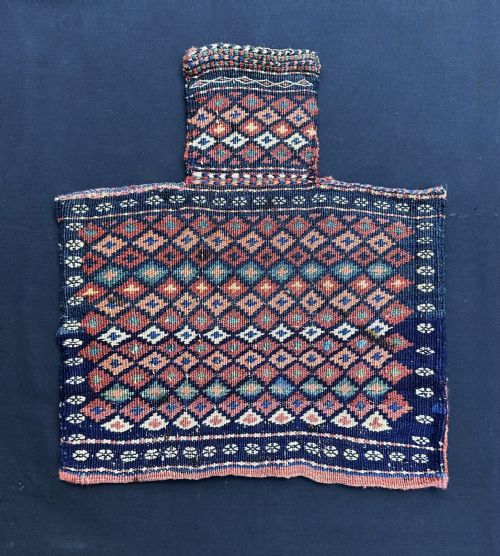

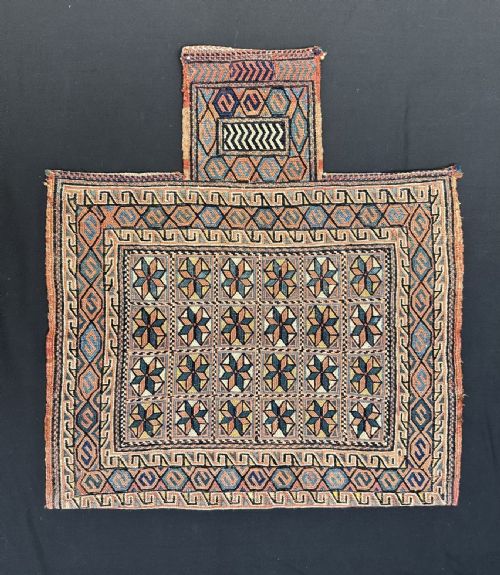
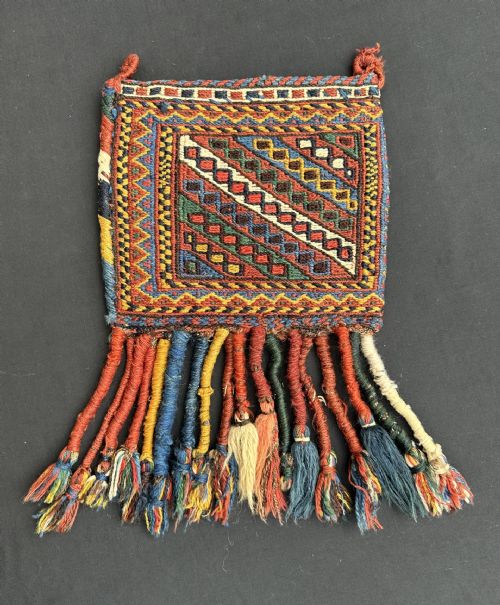
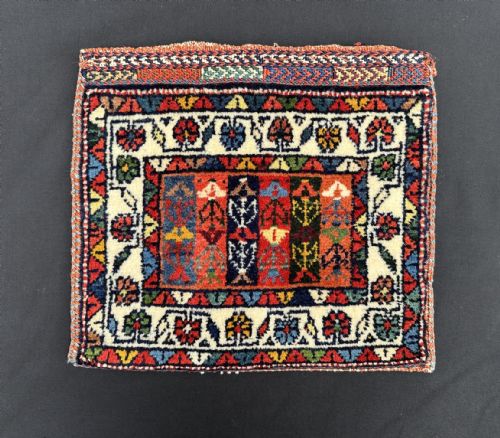


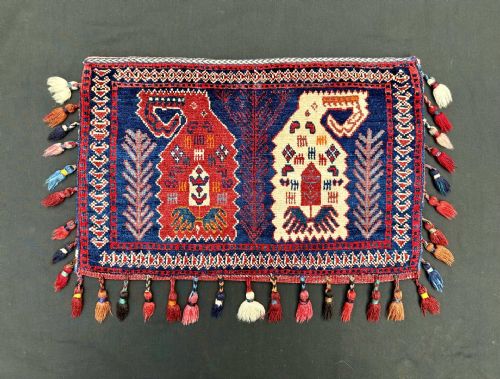
Afshar Woven Bag
An afshar woven bag brings the vibrant textile art of South Persia directly into your home with practical, nomadic charm.
Afshar Woven Bag
The objects serve as functional tribal storage pouches and trappings rather than decorative pictures, reflecting the daily practicalities of nomadic life. You will find them dated across several decades from the mid-nineteenth century through the early twentieth century.
These tribal textiles show strong regional identities tied closely to the Afshar nomads. Each piece carries the distinct geometric patterns and cultural heritage of its makers in South Persia.
Materials and construction
An afshar woven bag is constructed using hand-spun wool and cotton, often employing soumak work alongside standard weaving techniques. Artisans utilised natural dyes to colour the textiles, resulting in rich, enduring tones.
Specific examples incorporate tactile details like cowrie shells into their structure. The combination of lustrous luminous wool and sturdy plain weave backs on saddle bags demonstrates the durable craftsmanship required for nomadic utility.
Afshar Woven Bag Retail Price Guide 2026
Typical asking prices for afshar woven bag among the pieces listed under this phrase on Sellingantiques today, from the lower quarter to the upper quarter. They describe what is for sale here now, not the wider market.
Listings feature pieces from the Kerman province dated between 1860 and 1920, utilising hand-spun wool, cotton, and natural dyes.
Judging the quality
The fineness of the wool and the brilliance of the natural dyes set superior examples apart from standard work. Lustrous, luminous wool indicates careful material selection by the weaver.
Clarity of design execution in motifs like the boteh pattern and precision in techniques such as soumak work distinguish the finer pieces. The integrity of the weave across both faces and plain weave backs dictates the overall standard.
The Afshar Woven Bag Glossary
- Soumak work
- A flat-weave technique where coloured weft threads wrap around the warp threads to create a textured, durable surface. This method produces crisp geometric designs on tribal bags.
- Boteh
- A traditional almond-shaped or paisley motif found frequently in Persian tribal weaving. It symbolises life and eternity in textile design.
- Salt bag
- A specialised small pouch woven by nomads for storing household salt. These pieces often feature narrow necks and secure hanging loops.
- Plain weave
- A simple interlacing of warp and weft threads creating a flat, untextured fabric. It frequently forms the back panels of saddle bags for strength.
- Natural dyes
- Colourants derived from plants, insects, and minerals rather than synthetic chemicals. They age gracefully and develop a deep patina over time.
Afshar Woven Bag: Frequently Asked Questions
What is an afshar woven bag used for?
These textiles served practical functions within nomadic camps, acting as containers for salt, personal cosmetics, or as transport pouches on animals.
Today, they function well as small wall hangings or decorative accents that bring texture and historic depth to interior spaces.
How do I date an afshar woven bag?
Dating relies on stylistic markers, natural dye palettes, and the specific characteristics of hand-spun wool recorded across nineteenth and early twentieth-century pieces.
Archival comparisons with documented tribal weavings help narrow down the period of production.
Where were these bags made?
They were produced by the Afshar nomads and sub-tribes residing in the Kerman province of South Persia, including specific areas like Bardsir and the Jebal Barez Mountains.
Each region within this territory imparted subtle variations in design and material preparation.
How should I care for my bag?
Protect the natural wool and dyes by keeping the textile away from direct, harsh sunlight to prevent fading. Gentle vacuuming through a mesh screen helps remove dust without damaging the weave.