




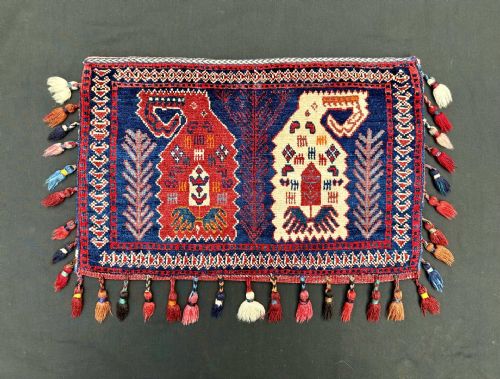
Afshar Rug Bag
An afshar rug bag is a dense tribal storage piece carrying the geometric patterns of south Persia, sought after for genuine nomadic character.
Afshar Rug Bag
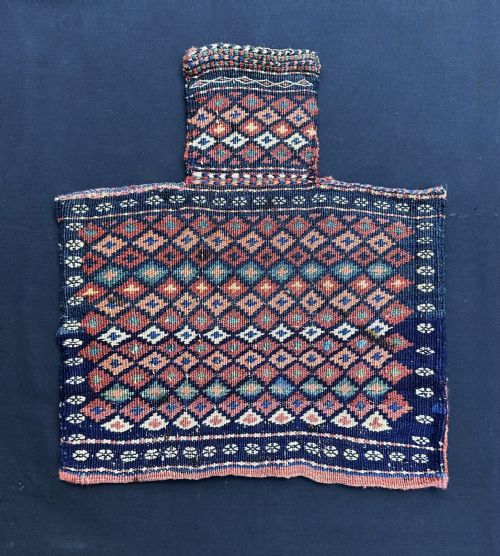
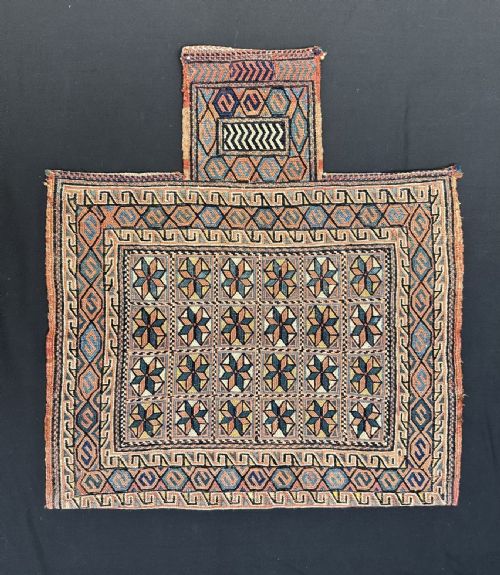
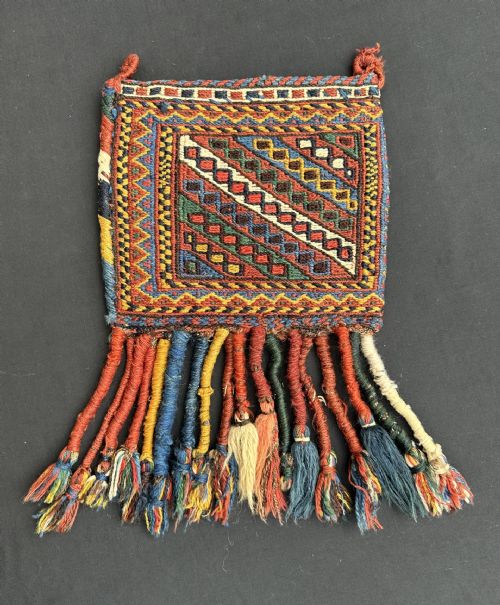
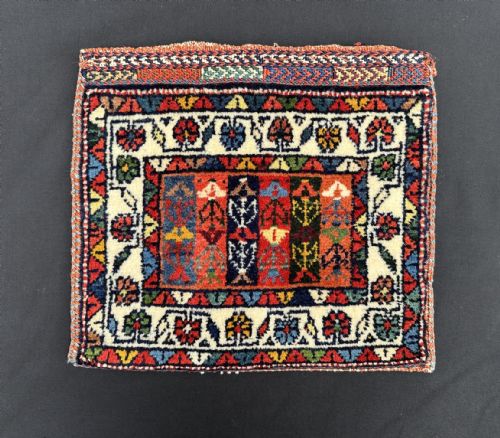
An afshar rug bag is a utilitarian tribal weaving created by nomadic groups originating in the Kerman Province of south Persia. These textiles include salt bags, vanity bags, and saddle bag faces originating from regions such as Bardsir and the Jebal Barez Mountains.
The pieces appearing on this page span several decades from the mid nineteenth century through the early twentieth century. Buyers encounter complete saddle bags retaining their plain weave backs alongside individual bag faces and specialised storage pouches.
Tribal weavers produced these items for practical household or travel use rather than for export. Their designs reflect the traditional visual vocabulary of the Afshar nomads and related tribal groups.
How they were made
Makers utilised hand-spun wool combined with cotton foundations to construct these durable tribal weavings. Natural dyes provide the underlying palette, while certain examples incorporate supplementary techniques such as soumak work alongside standard pile weaving.
Some individual bags integrate decorative embellishments including cowrie shells into their structure. The careful handling of lustrous, luminous wool distinguishes the surface texture of these nomadic textiles.
Afshar Rug Bag Retail Price Guide 2026
Typical asking prices for afshar rug bag among the pieces listed under this phrase on Sellingantiques today, from the lower quarter to the upper quarter. They describe what is for sale here now, not the wider market.
Listings feature wool, cotton, natural dyes, and cowrie shells across pieces dated from the eighteen-eighties to nineteen-twenty.
What varies in quality
The refinement of the weave and the clarity of the geometric patterns dictate the standing of an individual piece. Tightly constructed examples with well-preserved structures represent the upper echelon of these nomadic items.
The depth and brilliance of the natural dyes influence visual appeal. Pieces retaining complete original components, such as plain weave backs or specific decorative shells, hold greater physical integrity.
The Afshar Rug Bag Glossary
- Soumak work
- A flat-weave technique where coloured weft threads wrap over and under the warp threads to create a textured surface. This method produces a durable fabric often utilised on storage bags.
- Boteh
- A stylised almond or pear-shaped motif frequently found in Persian tribal textiles. It represents a traditional symbol of life and eternity.
- Plain weave
- A simple interlacing of warp and weft threads without pile. This structure forms the unadorned backs of many saddle bags.
- Natural dye
- Colour extracted from plant or mineral sources rather than synthetic compounds. These substances yield the characteristic rich tones seen in older tribal weavings.
- Pile weave
- A technique where individual yarn loops are knotted onto the warp threads and cut to form a plush surface. This method creates the dense texture of traditional rug bags.
Afshar Rug Bag: Frequently Asked Questions
How were these bags used originally?
Nomadic families utilised these textiles inside tents and during migrations to store salt, personal items, and household goods. Saddle bags served a dual purpose for carrying possessions across pack animals.
Their sturdy construction protected contents from dust and daily wear during transit.
How do I care for a tribal bag?
Protect the wool textile from direct sunlight to prevent natural dye fading. Gentle vacuuming with a low suction setting helps remove accumulated dust.
Avoid excessive moisture and consult a specialist textile conservator for professional cleaning.
How can I tell the age of these bags?
Age is assessed by examining the materials, dye types, and structural wear patterns. Earlier examples typically feature hand-spun wool and specific regional motifs characteristic of nineteenth-century production.
Structural details such as the presence of original plain weave backs provide additional clues to period origin.