


Aesthetic Movement Accent Chair
An aesthetic movement accent chair brings radical late-nineteenth-century reform design to a modern interior through striking ebonised frames and refined linear forms.
Aesthetic Movement Accent Chair
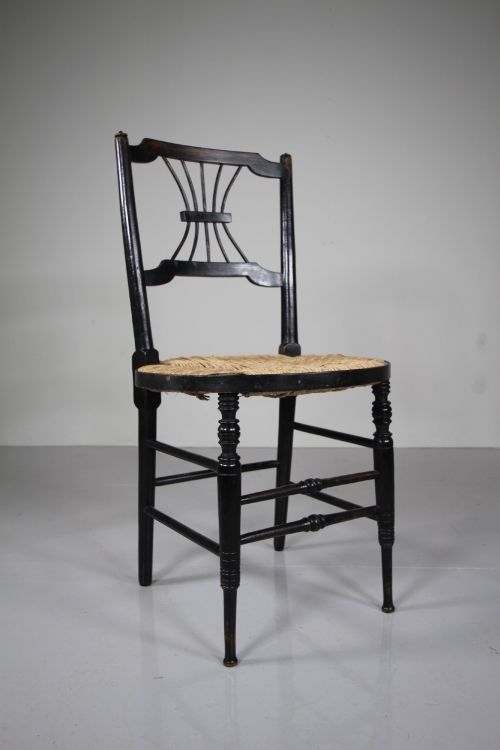
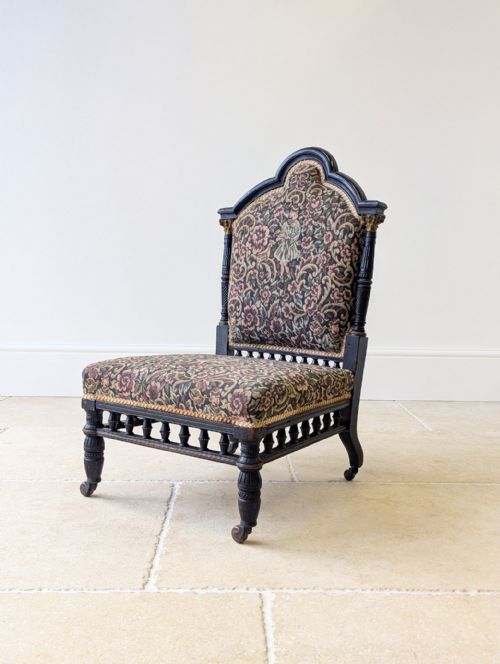
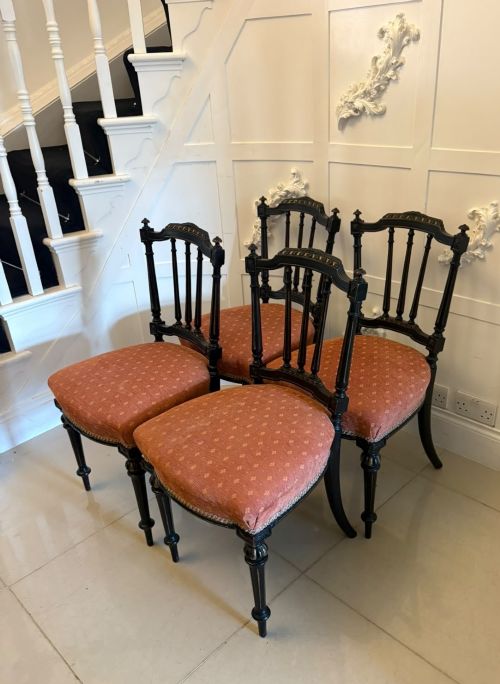
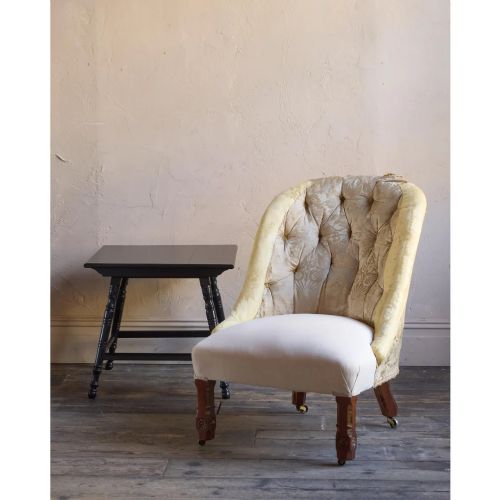
An aesthetic movement accent chair draws on a rich cross-section of nineteenth-century design, appearing across forms such as low salon chairs, bedroom chairs, and armchairs. These pieces reflect the shift away from heavy Victorian upholstery towards lighter, more artistic furniture that prioritises decorative surface and clean lines.
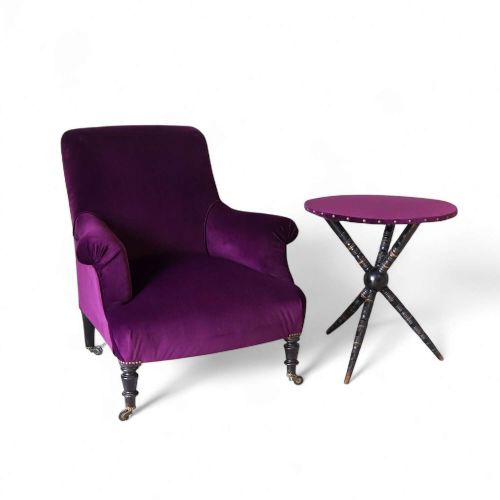
You will frequently encounter ebonised wood finishes paired with rush seats or rich velvet upholstery, bridging the gap between Victorian tradition and the emerging Arts and Crafts ethos. The selections here encompass side chairs and occasional seating produced from the 1870s through to 1900.
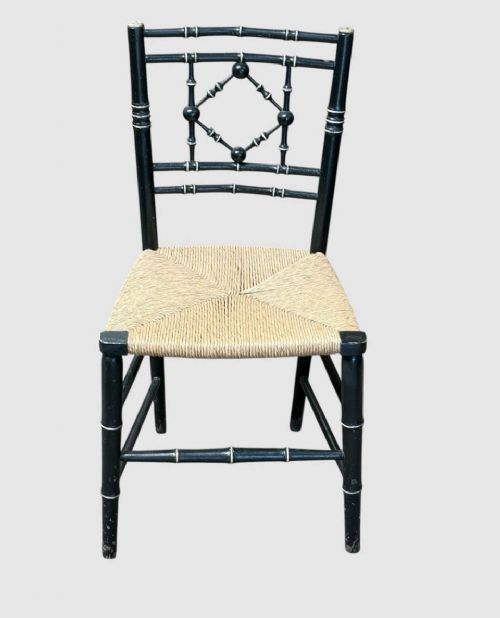
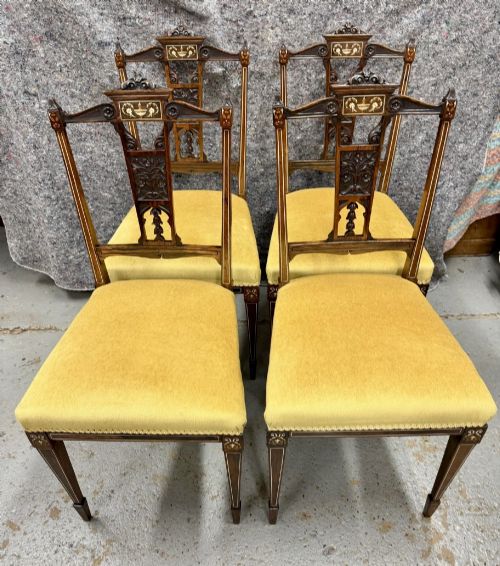
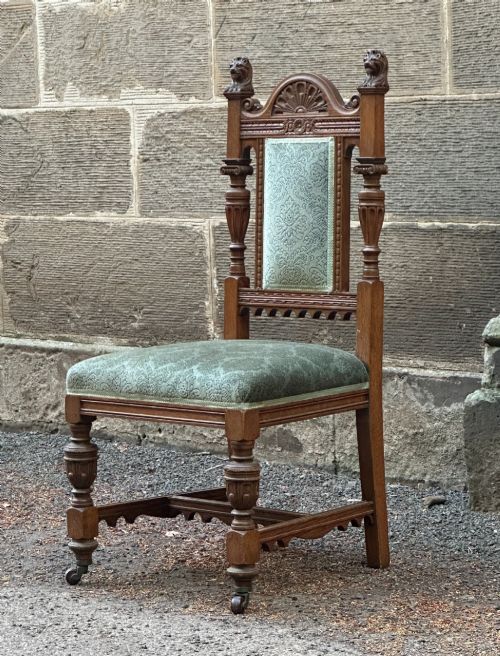
Makers and designers of the period embraced diverse influences, resulting in variants ranging from turned rush-seated Sussex chairs to inlaid rosewood dining chairs and carved oak hall seating.
Materials and construction methods
Cabinet makers of the era relied heavily on ebonised wood to achieve the smooth, blackened surfaces characteristic of the style, often highlighting structural details with subtle gilding or contrasting brass elements. This dark finish mimics exotic hardwoods while providing a uniform canvas for decorative carving and incised detailing.
Seating construction frequently incorporates natural rush for woven seats, alongside traditional upholstery fabrics and plush purple velvet. Frames utilise sturdy timbers such as oak, mahogany, and rosewood, ensuring enduring structural integrity beneath decorative surface treatments.
The listings here demonstrate a strong preference for ebonised wood finishes across Victorian armchairs, low salon chairs, and occasional seating.
Distinctions in craftsmanship
The division between standard production and exceptional work rests in the precision of the joinery and the depth of the carved or incised ornament. Superior examples display crisp turnings, tight joints in the ebonised framework, and thoughtful proportions that balance decorative ambition with practical comfort.
Attribution to prominent designers or esteemed retail houses elevates a piece, as seen in works linked to workshops like Liberty or specific visionaries of the period. The quality of secondary materials, from the durability of the rush weave to the grade of velvet upholstery, further distinguishes workshop output.
William Morris·Bruce Talbert·E W Godwin·Liberty and Co·Collier and Plucknett
The Aesthetic Movement Accent Chair Glossary
- Ebonised wood
- Timber treated to resemble expensive ebony, typically through staining or painting. This finish defines much of the dark, dramatic seating of the period.
- Sussex chair
- A traditional vernacular form popularised by William Morris and associates, featuring slender turned members and rush seating. These chairs combine simplicity with great structural strength.
- Salon chair
- A light, movable chair designed for entertaining in nineteenth-century reception rooms. They often feature low profiles and decorative upholstery.
- Hall chair
- Rigid wooden seating placed in entrance hallways, frequently ornamented with carved panels or crests. These items prioritise striking silhouette over cushioned comfort.
Aesthetic Movement Accent Chair: Frequently Asked Questions
What defines an aesthetic movement chair?
These chairs reject overly ornate Victorian decoration in favour of artistic simplicity, linear forms, and often ebonised finishes.
They reflect late-nineteenth-century reform ideals, drawing inspiration from diverse historical and global design traditions.
Where were these chairs used originally?
They served multiple roles throughout the Victorian home, from drawing rooms and bedrooms to hallways and reading spaces.
Specific forms like low salon chairs or bathroom chairs were tailored to particular domestic routines and interior layouts.
How do I care for ebonised wood?
Keep ebonised surfaces away from direct sunlight and excessive moisture to protect the dark finish from fading or lifting.
Dust gently with a soft, dry cloth and avoid harsh chemical polishes that can degrade the historic surface.
How can I tell the period?
Examine the timber construction, joinery methods, and upholstery materials for late-nineteenth-century manufacturing characteristics.
Stylistic crossovers with Arts and Crafts or Gothic Revival styles help narrow down production between the 1870s and 1900.