

Adjustable Shelving
Adjustable shelving offers practical utility within Victorian, Edwardian, and Regency bookcases, cabinets, and display units.
Adjustable Shelving
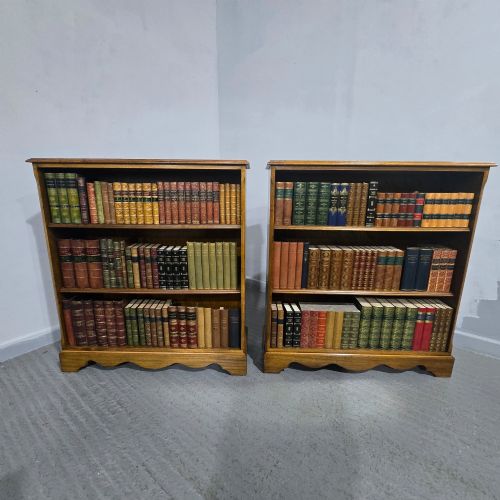
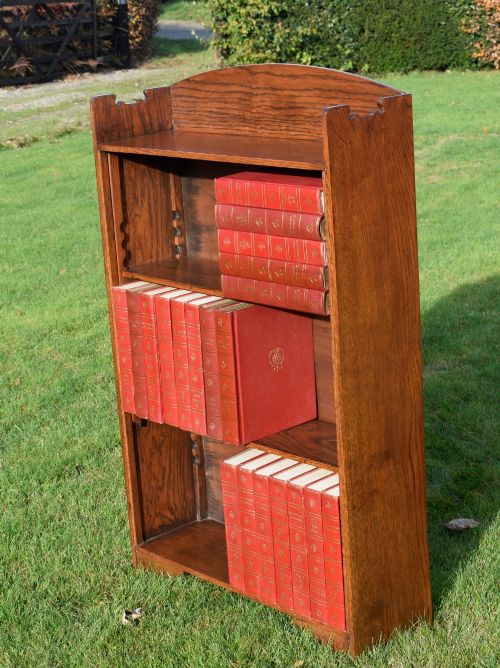
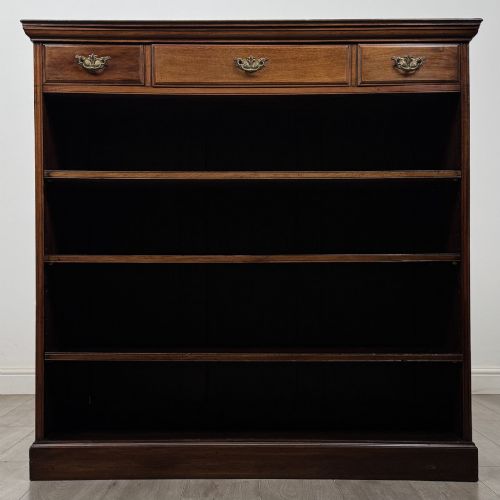
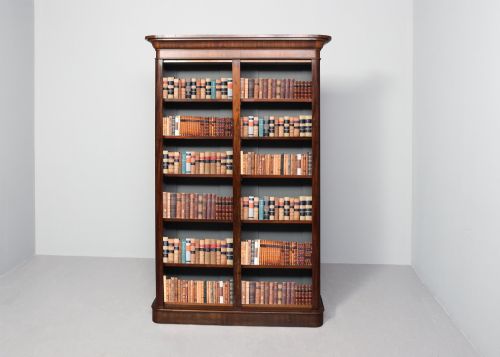
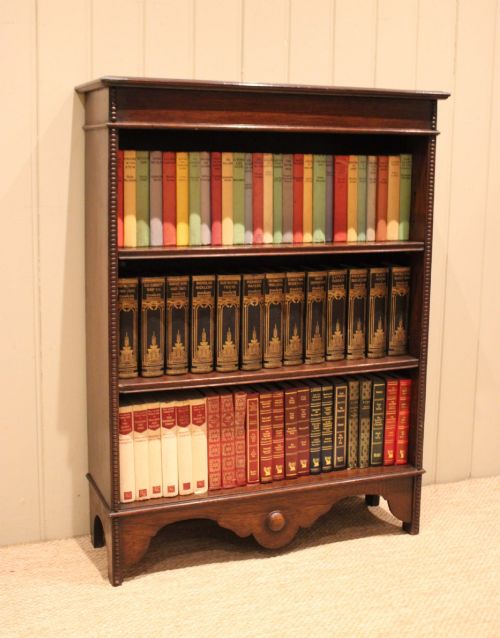
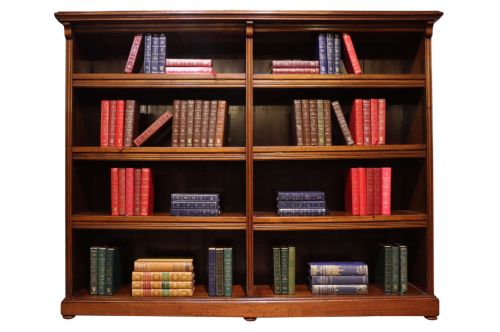
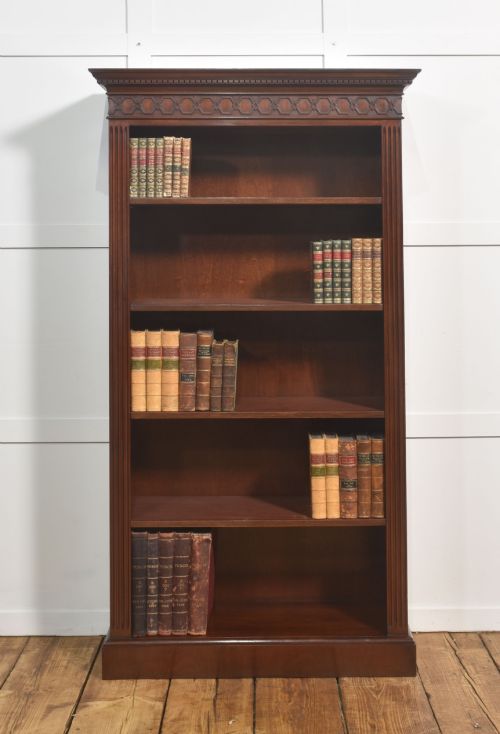
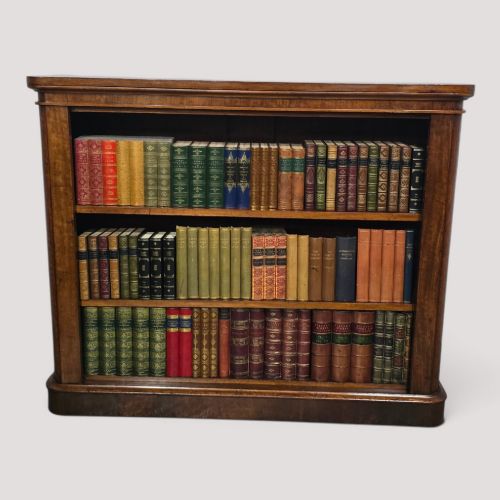
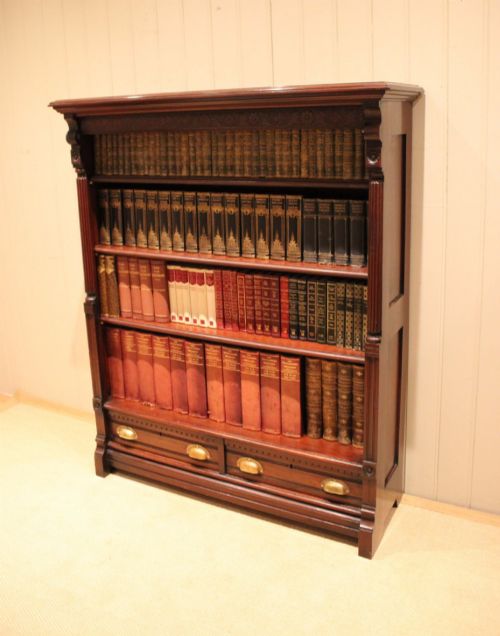
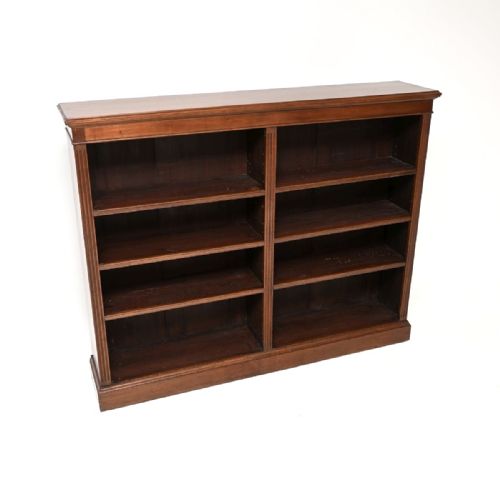
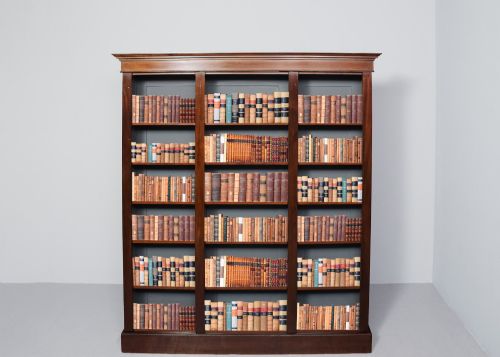
Adjustable shelving primarily appears inside open bookcases, library bookcases, and breakfront display cabinets dating from the Victorian and Edwardian periods. Buyers encounter mahogany, oak, and walnut open bookcases fitted with movable shelves designed to accommodate varying book heights.
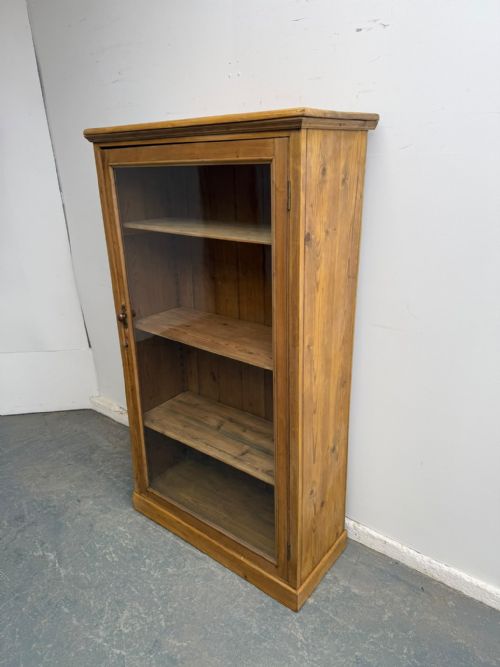
Makers adapted tambour cabinets, shop display units, and large three-section breakfront furniture to include adjustable shelves. Pine and softwood examples also emerge, often waxed or painted for rustic country or domestic use.
The form ranges from slim, low dwarf bookcases in ebonised finishes with carved details to large library bookcases built for extensive collections. Regency and William IV pieces provide rosewood and mahogany alternatives with similar height-regulating mechanisms.
Materials and construction
Carpenters constructed these pieces predominantly using solid mahogany, oak, and walnut, frequently enhancing surfaces with burr walnut veneers or ebonisation. Glass panels appear in glazed bookcases and shop display cabinets alongside brass hardware.
Pine and softwood serve for rustic country and utilitarian storage cupboards, often finished with wax or left ready for paint. Inlaid details in Sheraton-style pieces utilise contrasting timbers to create decorative borders on mahogany carcases.
Adjustable Shelving Retail Price Guide 2026
Typical asking prices for adjustable shelving among the pieces listed under this phrase on Sellingantiques today, from the lower quarter to the upper quarter. They describe what is for sale here now, not the wider market.
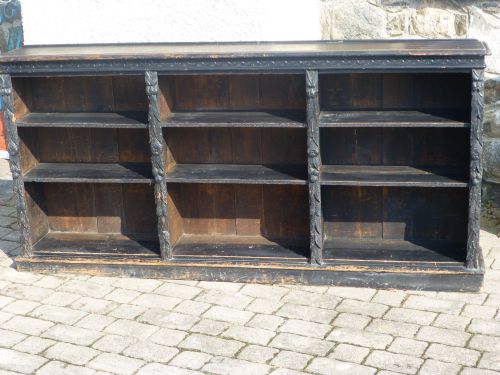
Green man carvings peer out from ebonised dwarf bookcases, watching over the adjustable shelves.
Distinctions in craftsmanship
The calibre of timber selection and complexity of carcase design separate standard utility furniture from pieces produced by notable firms like Bowman Brothers or Waring and Gillows. Breakfront proportions and multi-section construction require superior joinery to maintain structural integrity.
Carved enrichments, such as green man motifs or detailed mouldings, reflect the hand of skilled artisans on Victorian and Edwardian oak or ebonised pieces. The refinement of the shelf support system within the interior housing also indicates the original grade of the bookcase.
Bowman Brothers·Waring and Gillows
The Adjustable Shelving Glossary
- Breakfront
- A large cabinet or bookcase where the central section projects forward from the flanking wings. This architectural arrangement creates depth and visual variety in large library furniture.
- Dwarf bookcase
- A low open bookcase designed to sit beneath window height or along a wall without dominating the room. These pieces often feature ebonised finishes or carved details.
- Pier cabinet
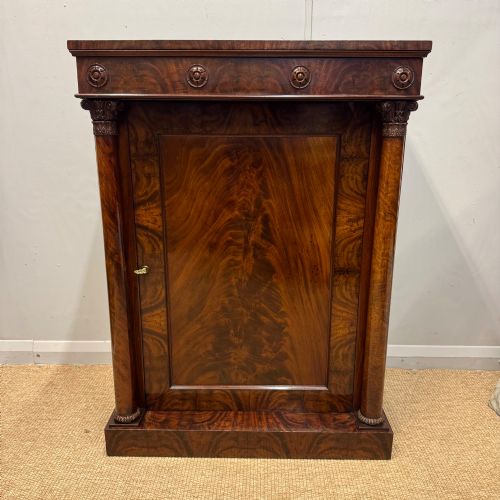
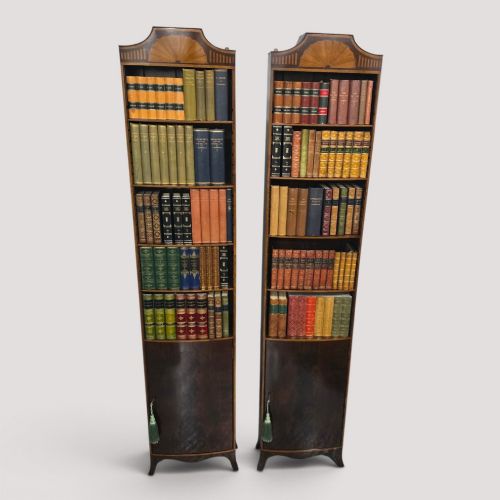
- A narrow cabinet designed to fit against the wall space between windows. These pieces frequently incorporate adjustable shelves behind glazed or solid doors.
- Tambour cabinet
- An item of furniture featuring a flexible door made of narrow vertical strips of wood running in a track. Edwardian examples often house adjustable shelving within.
- Ebonised
- Timber treated with a dark stain or chemical process to imitate ebony. This finish gained popularity during the Victorian era for decorative library and display pieces.
Adjustable Shelving: Frequently Asked Questions
What periods do these pieces date from?
The listings span the Regency, Victorian, and Edwardian eras, alongside pieces dated through the nineteenth and early twentieth centuries.
Craftsmen built these items from hardwoods and softwoods to serve evolving domestic and library storage needs.
How do adjustable shelves work in antiques?
Antiques use various systems such as wooden ratchets, metal pilasters, or rows of peg holes inside the interior uprights.
These mechanisms allow owners to alter shelf heights to suit different volumes and display objects.
Which woods are most common?
Mahogany, oak, and walnut form the primary materials for formal library bookcases and display cabinets.
Pine and softwood appear frequently in rustic or utilitarian country furniture.
Are these pieces suitable for modern books?
Deep open bookcases and library shelving units provide adequate depth and height for contemporary volumes.
The adjustable mechanism allows users to configure the interior space for oversized books.