


Adjustable Fire Guard
These adjustable fire guard pieces offer practical hearth protection, appearing in brass, bronze, and mahogany across Victorian and Georgian designs.
Adjustable Fire Guard
When you search for an adjustable fire guard, you encounter extendable hearth fenders and adjustable firescreens designed to regulate fireplace heat and protect rooms from sparks. The selection spans Victorian, Georgian, Edwardian, and Regency periods, reflecting shifting interior tastes across the nineteenth and early twentieth centuries.
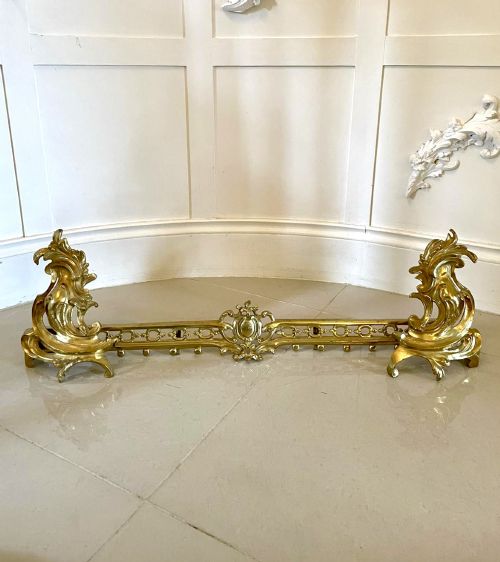
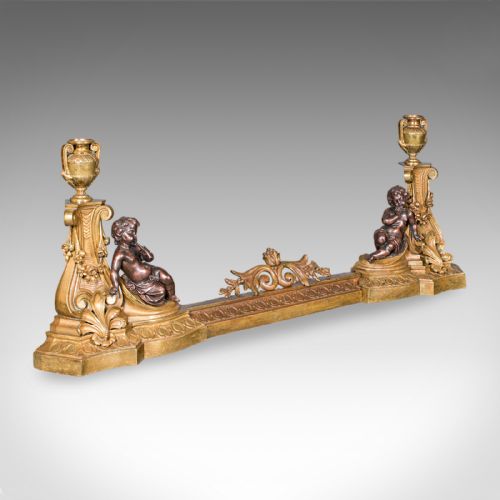
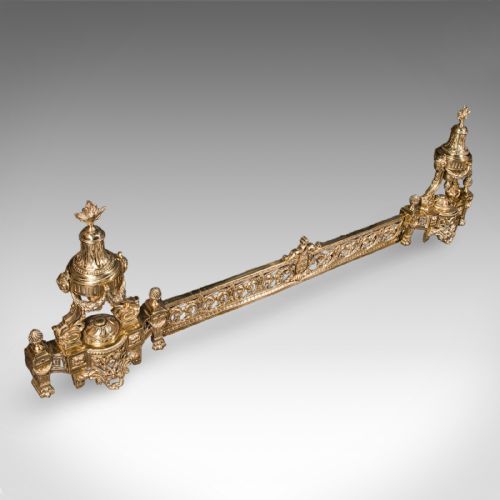
Extending brass and bronze fenders dominate the available forms, alongside wooden pole screens and firescreens featuring adjustable panels or doors. These objects originate from English and French workshops, utilising materials that range from polished brass and gilt bronze to rosewood and mahogany.
The most common items meet the eye as heavy brass extending fenders or firescreens with needlework, embroidered, or etched glass panels. Buyers often choose between functional extending hearth curbs and decorative upright screens that adjust to catch or block the warmth.
Materials and construction methods
Makers utilised cast and polished brass, bronze, and ormolu for metal fenders, employing sliding mechanisms that permit expansion across various hearth widths. Ormolu and gilded brass components often display rococo revival scrolling or French Louis XV style details.
Wooden frames in rosewood, mahogany, and solid walnut house adjustable panels of needlework, embroidery, or etched glass. These screens incorporate mechanical pivots and sliding poles to raise or lower the protective panel according to need.
Listings feature Victorian, Georgian, and Regency periods alongside Edwardian examples in brass, bronze, mahogany, and rosewood.
Distinctions in quality and finish
Quality rests upon the weight of the metal castings and the smoothness of the extending mechanism. Heavier brass, bronze, and ormolu fenders with crisp, deep scrolling show superior metalwork compared to lighter, plain examples.
Firescreens depend on the execution of their panels, where finely worked needlework, poker work, or etched glass set within rosewood or mahogany frames indicate higher workmanship than standard production pieces.
The Adjustable Fire Guard Glossary
- Fender
- A low metal guard placed around the hearth to contain embers. It usually sits directly on the floor.
- Pole screen
- An upright firescreen with a vertically adjustable panel mounted on a central wooden pole. This design allows the user to shield their face from the fire's direct heat.
- Ormolu
- Gilded bronze applied to decorative metalwork and fireplace accessories. It provides a rich, gold-coloured finish characteristic of French rococo styling.
- Kerb
- An alternative spelling of curb, referring to the metal boundary of the hearth fender. It frames the fireplace opening.
- Poker work
- A technique of burning designs into wood or leather surfaces using heated metal tools. It appears on panels within period firescreens.
Adjustable Fire Guard: Frequently Asked Questions
What is an adjustable fire guard?
An adjustable fire guard is a hearth accessory designed to fit various fireplace dimensions or shield occupants from radiant heat. The category includes extending metal fenders and firescreens with movable panels.
These pieces use sliding metal mechanisms or vertical poles to adapt their size and position. They combine practical hearth safety with period decorative styles.
How do I measure for a fender?
Measure the width of your hearth opening and the available floor space surrounding the fireplace base. Extending fenders allow for adjustments within specific length ranges.
Check the minimum and maximum extension measurements of the fender to ensure it spans the correct distance across your stone or brick hearth.
What materials are common?
Brass, bronze, and gilded ormolu dominate the metal fireplace accessories seen in period pieces. These metals often feature cast rococo scrolls and detailed surface finishing.
Wooden frames utilise mahogany, rosewood, and walnut to hold fabric embroidery, needlework panels, or etched glass inserts within the screen designs.
How do pole screens work?
Pole screens feature a vertical wooden standard mounted on a stable base with a sliding panel attached to it. The panel moves up and down along the pole.
Users adjusted the height of the embroidered or poker work panel to block heat from the fireplace while sitting nearby in a parlour.
How do I date a piece?
Dating relies on stylistic clues such as French rococo revival details, Louis XV influences, or Victorian and Georgian construction characteristics. Materials like rosewood and heavy cast bronze also point to specific eras.
Examine the construction methods of the sliding mechanisms and the joinery on wooden frames to understand the period of manufacture.