


Adjustable Brass Fire Fender
An adjustable brass fire fender guards the hearth with telescopic convenience, bringing both bright metallic warmth and practical containment to the fireplace.
Adjustable Brass Fire Fender
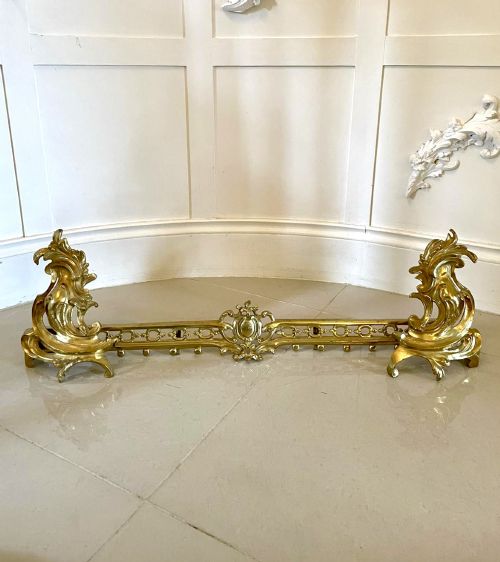
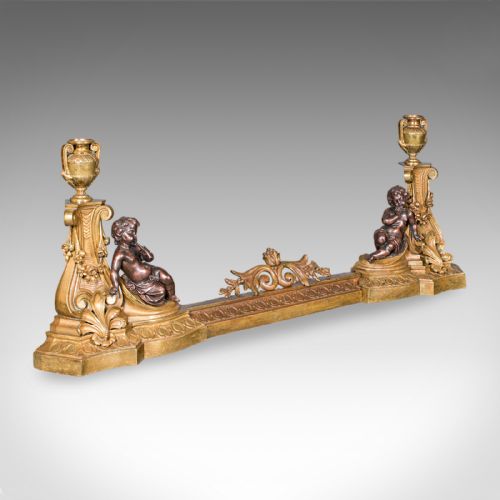
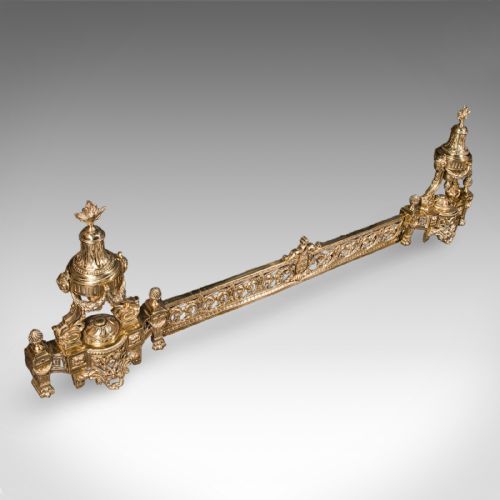
An adjustable brass fire fender forms a protective barrier around the hearth, designed to fit varying fireplace widths through sliding or extending sections. These hearth accessories appear in forms ranging from simple extending rails to ornate French Rococo and Louis XV style designs.
The pieces seen here span the Victorian, Edwardian, and 19th Century periods, encompassing English and French origins. Buyers most frequently meet heavy brass or gilded configurations dating from the mid-to-late 19th century.
Object types include fire kerbs, hearth fenders, and fireplace surrounds that adapt to the physical dimensions of the chimney breast. Each item serves the dual purpose of keeping stray embers contained while framing the hearth visually.
How they were made
Makers utilised cast brass, ormolu, and gilt bronze to shape these hearth accessories, often applying patination or gilding to the metallic surfaces. The construction relies on durable sliding mechanisms that allow the main body to expand or contract between stone jambs.
Stylistic ornamentation ranges from scrolled cast brass work to intricate French Rococo and Louis XV style castings. Workshops employed heavy gauge metals to ensure the sliding rails maintained structural integrity under daily fireside use.
Some extending fenders come with matching chenets, proving that even fireplace hardware enjoys dressing in matching pairs.
What varies in quality
The thickness and weight of the cast brass or gilt bronze separate the substantial examples from lighter productions. Heavy metal gauge ensures that the extending mechanism operates smoothly without bending or sagging when adjusted.
The crispness of the chasing and scrollwork dictates visual merit, particularly on French Chateau and Rococo Revival pieces. Finer specimens display deeply articulated casting detail that remains sharp across the extending joints.
The Adjustable Brass Fire Fender Glossary
- Fender
- A low metal guard placed around the hearth to contain coal, ash, and sparks from an open fire. These objects sit directly on the floor in front of the fireplace opening.
- Ormolu
- Gilded bronze ornamentation applied to decorative metalwork and furniture, highly popular during the 19th century. This technique involves coating a bronze base with a finely ground mercury and gold amalgam.
- Chenet
- An alternative term for firedogs, sometimes associated with the flanking ends of adjustable fender assemblies. They often match the decorative style of the central extending rail.
- Kerb
- A low enclosing border around the hearth, functioning identically to a fender. The term frequently appears interchangeably with hearth fender in 19th-century descriptions.
Adjustable Brass Fire Fender: Frequently Asked Questions
How do adjustable fenders work?
These pieces use a telescopic or sliding mechanism where one section nests inside another. This design allows the overall width to expand or contract to fit different hearth openings.
To alter the span, the user simply slides the end pieces outward until the metal rail meets the masonry of the fireplace surround.
What periods do these fenders date from?
The available evidence points primarily to the 19th century, including specific Victorian and Edwardian examples. Makers during these eras produced extending hearth guards in both English and French workshops.
Stylistic cues such as Louis XV influence and Rococo scrollwork help place these pieces within their respective Victorian and 19th-century contexts.
How do I clean brass and ormolu?
Maintenance requires gentle dusting and careful treatment to preserve any original gilding, patination, or ormolu surfaces. Harsh abrasive cleaners can strip the historic finish from cast brass and gilt-bronze components.
Consulting a specialist conservator ensures that historic patination remains intact without damaging the underlying metal.
Where were these fenders used?
These guards occupied the hearth of principal reception rooms and parlours in both English and French homes. Their primary domestic role was safety, preventing burning fuel from rolling onto wooden flooring or rugs.
Beyond utility, they provided a polished metallic border that reflected the light of the open fire into the room.