



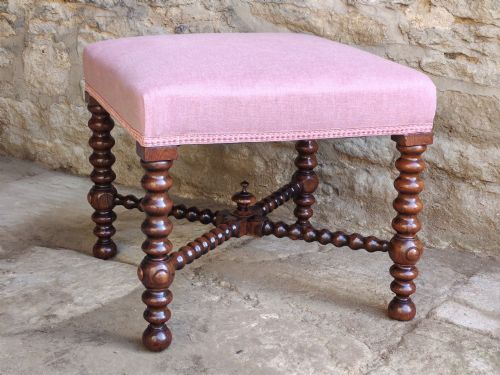

Accent Footstool
An accent footstool brings functional low seating and decorative interest to a room through varied period forms and rich timber frames.
Accent Footstool
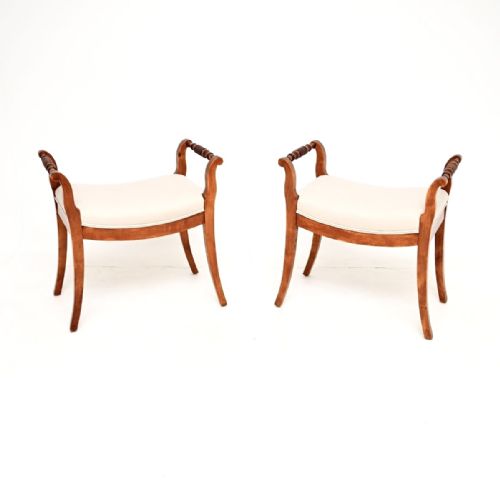
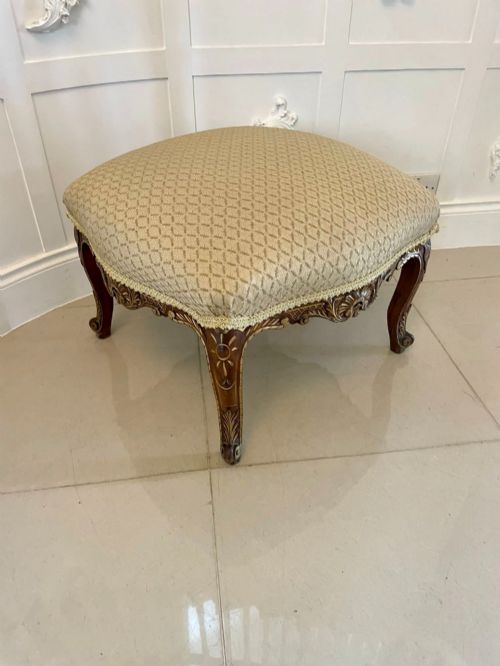
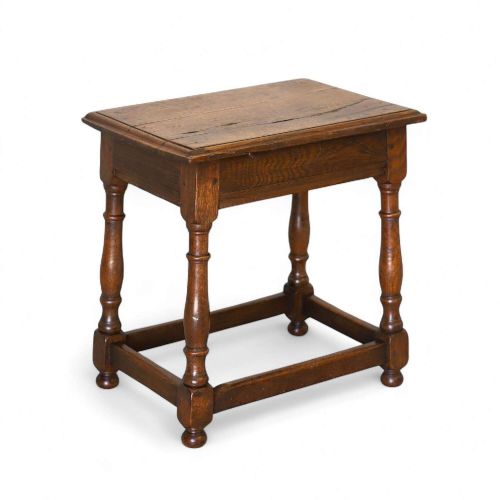
Most pieces on this page lean towards traditional wooden frames paired with textile or leather upholstery. Examples stretch from seventeenth-century provincial seating to Swedish birch pieces and nineteenth-century dressing table stools.
Origin and period dictate the character of each piece, offering everything from simple pegged construction to elaborate carved details. Buyers find both practical low seating and decorative accents suited to period and eclectic interiors alike.
Materials and Construction
Makers relied primarily on hardwoods such as oak, walnut, mahogany, and rosewood to build durable frames that withstand daily use. Joinery techniques range from traditional pegged joints in early oak pieces to sophisticated turned legs and carved decoration in later examples.
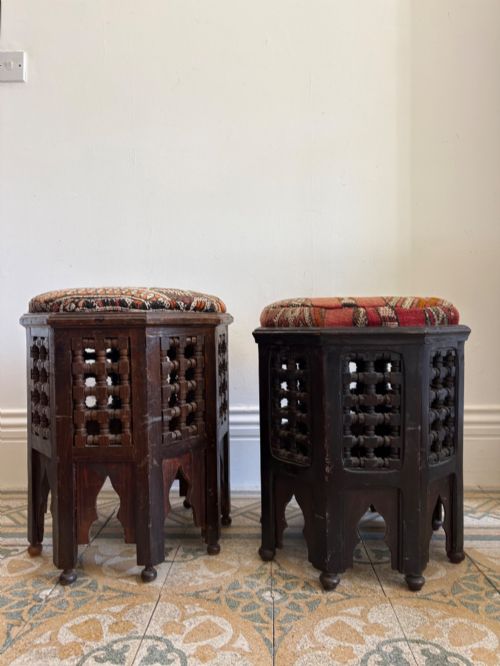
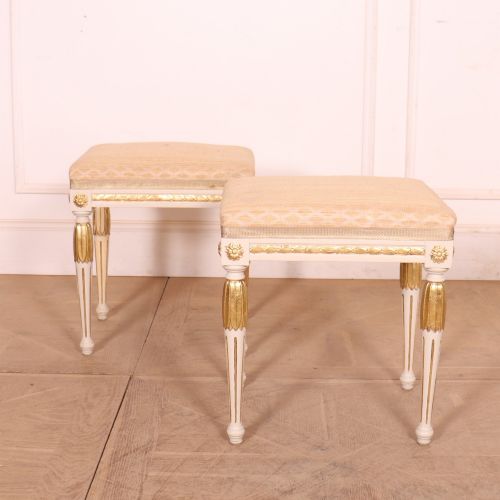
Upholstery fabrics play a central role, utilising textiles, needlepoint, tweed linen, and buttoned leather. Giltwood, ebonised finishes, and painted surfaces add decorative contrast to the exposed wood structures.
Accent Footstool Retail Price Guide 2026
Typical asking prices for accent footstool among the pieces listed under this phrase on Sellingantiques today, from the lower quarter to the upper quarter. They describe what is for sale here now, not the wider market.
Listings feature oak, walnut, mahogany, and rosewood frames alongside diverse textile, leather, and needlepoint upholstery.
Assessing Quality and Execution
Quality in these pieces rests upon the integrity of the timber and the crispness of any carved detailing. Superior examples exhibit tight joinery, rich natural timber grain, and thoughtful proportion.
The sophistication of the turning, whether bobbin legs or twisted rope supports, separates standard workshop output from finer cabinetmaking. Original upholstery elements and period-appropriate coverings further elevate the desirability of a piece.
James Shoolbred·Liberty & Co·A.M.E. Fournier
The Accent Footstool Glossary
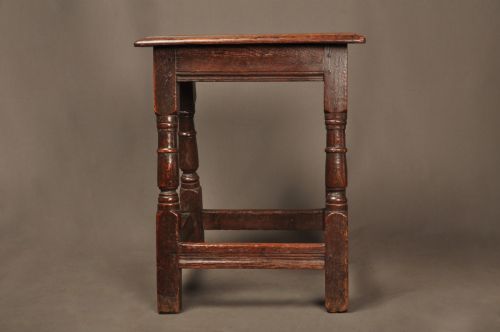
- Joint stool
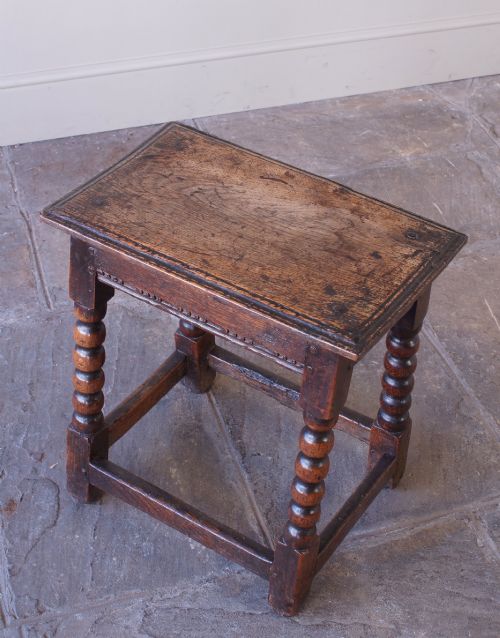
- A low wooden stool constructed with mortise and tenon joints, common in domestic interiors from the seventeenth century onward.
- X-frame
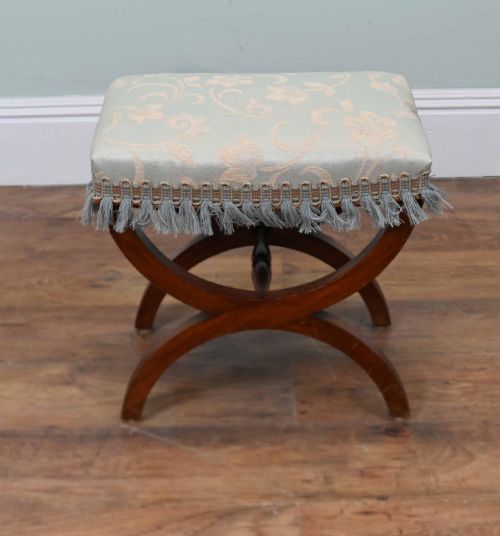
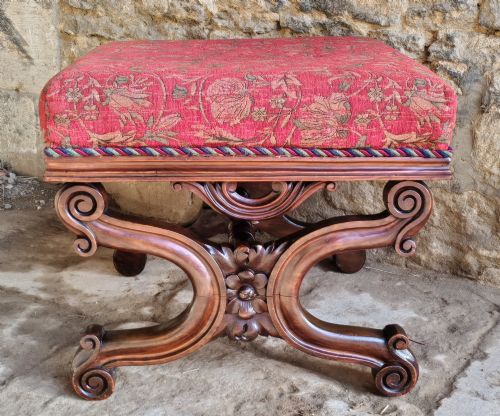
- A seating structure supported by intersecting diagonal legs forming an X shape, often associated with curule or neoclassical forms.
- Bobbin leg
- A turned furniture leg shaped to resemble a series of bobbins or spools strung together.
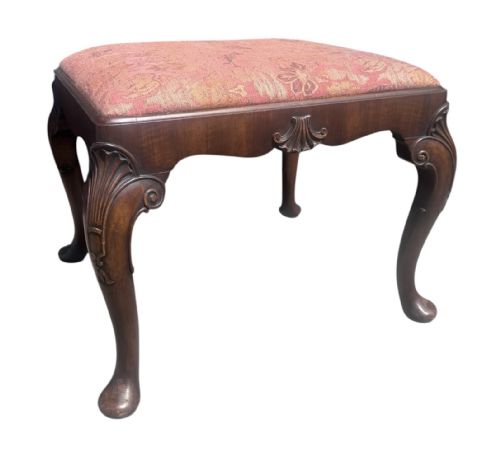
- Cabriole leg
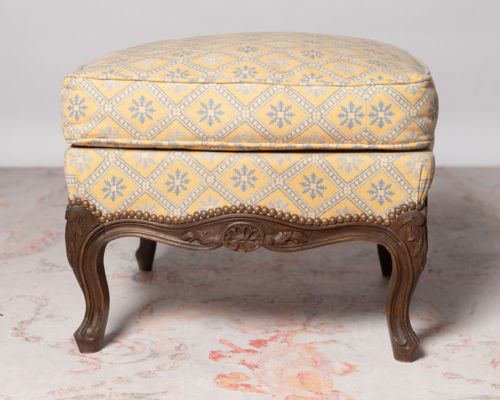
- A furniture leg that curves outward at the knee and tapers inward toward the foot, typical of eighteenth-century and revival designs.
- Curule stool
- An ancient Roman chair or stool form featuring crossed legs, revived in various nineteenth-century decorative styles.
Accent Footstool: Frequently Asked Questions
Where should I place an accent footstool?
These low seats suit placement beside a fireplace, at the foot of a bed, or beneath a dressing table. Their compact footprint allows them to move easily between rooms as needed.
They also function effectively as impromptu perches or display stands in hallways and living spaces.
How do I identify a joint stool?
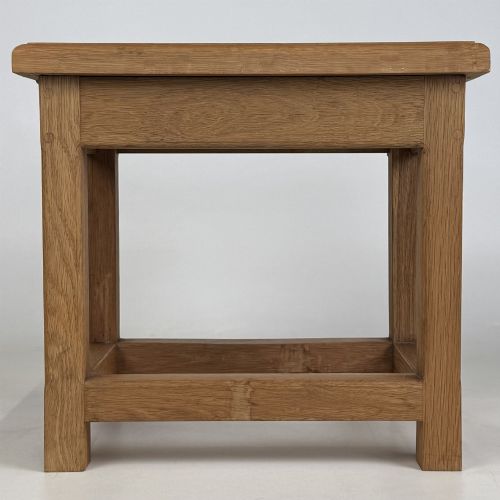
Joint stools feature rigid rectangular tops supported by vertical legs connected with stretcher rails near the floor. They rely on pegged mortise and tenon joints rather than modern fasteners.
Most early versions appear in solid oak, reflecting utilitarian domestic furniture from the seventeenth and eighteenth centuries.
Are these stools suitable for daily seating?
Solid wood frames provide sturdy structural foundations capable of regular weight bearing. Upholstered versions offer comfortable padding for short periods of sitting or resting feet.
Checking the stability of the frame and legs ensures safe everyday use in a modern home.
How do I care for antique wooden frames?
Keep wooden surfaces away from direct heat sources and excessive moisture to prevent timber splitting. Regular dusting with a dry cloth maintains the finish without harming the patina.
Occasional applications of suitable wax help preserve exposed hardwoods like walnut and oak.