

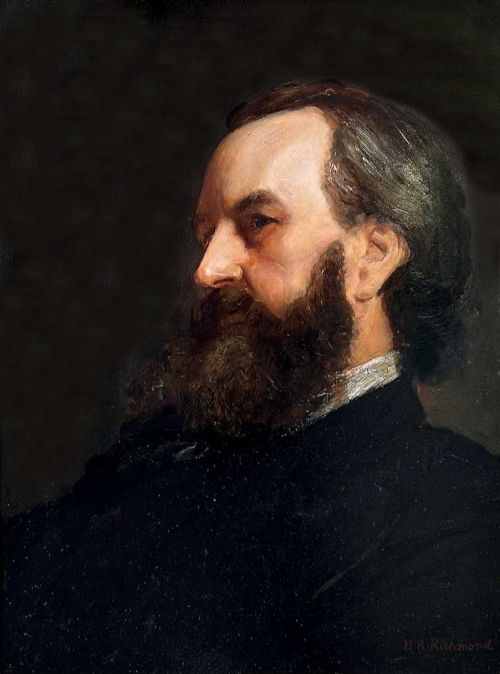
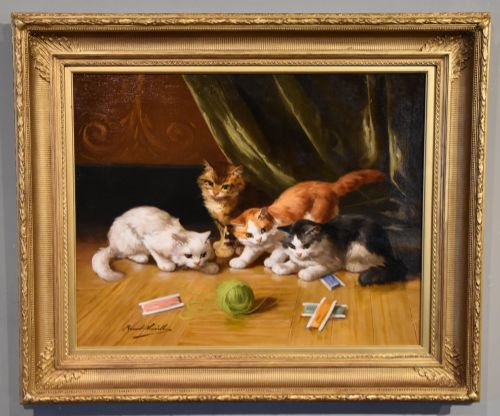
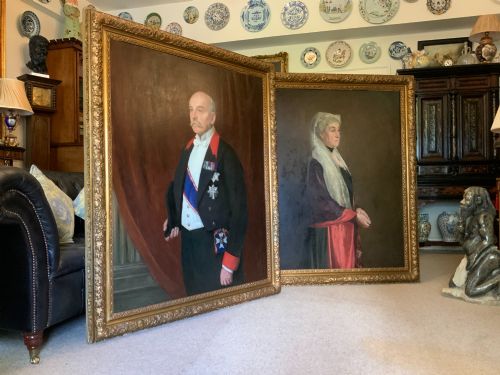
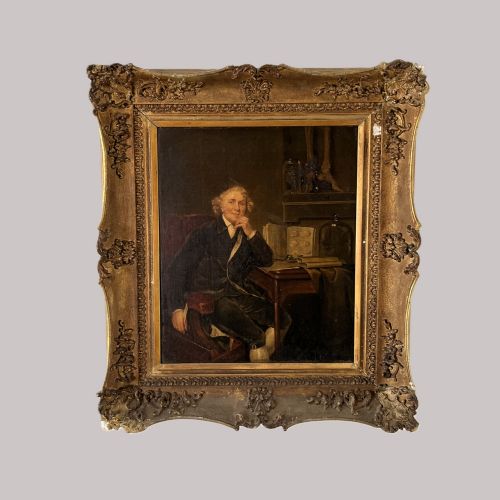
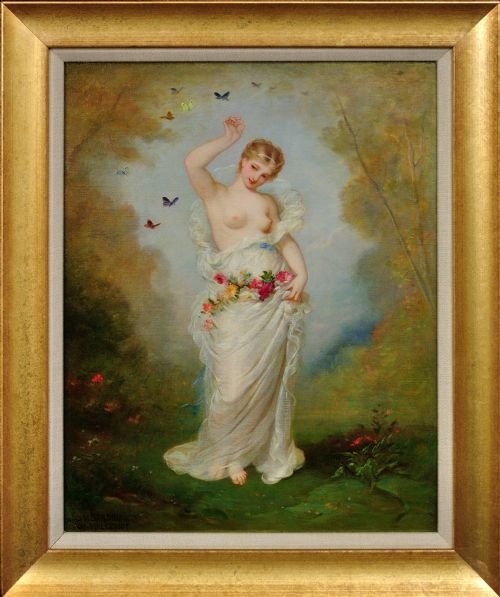


Academic Style Oil Portrait
Academic style oil portrait works bring rigorous draughtsmanship and rich narrative depth into a room, capturing sitters and historical scenes with formal precision.
Academic Style Oil Portrait
An academic style oil portrait represents a tradition rooted in rigorous academy training, focusing on anatomical accuracy, formal composition, and psychological depth. When exploring this selection, buyers encounter works spanning the Victorian era through the mid-twentieth century, capturing figures ranging from gentlemen and ladies to historical personages.
Many examples emerge from nineteenth-century French and British traditions, alongside historical genre scenes and interpretations after Old Masters. Canvases frequently arrive within ornate gilt wood frames that complement the formal gravity of the painted subjects.
Materials and technique
These works rely primarily on oil paint applied to woven canvas stretched over wooden supports. Painters built up rich surface textures through layered glazes and opaque applications to render fabrics, skin tones, and background details with lifelike precision.
Frames utilise carved wood finished with gold leaf or giltwood, often housing heavy stretcher frames that support large-scale compositions. Signatures, stamps, and attribution markers occasionally appear on the canvas or stretcher bars, noting the studio or hand of the painter.
Listings span the nineteenth century through the 1960s, incorporating canvas, oil paint, wood, and gold leaf materials across academic, romantic, and historicist revival styles.
Judging quality in academic portraiture
Excellence in this field rests upon the sureness of the draughtsmanship, the psychological engagement of the sitter, and the preservation of the pigment layers. Superior works demonstrate masterful handling of light and shadow, known as chiaroscuro, which models form with striking anatomical conviction.
The integration between the painting and its original gilt frame also shapes the overall integrity of the piece. Subtle gradations in tone and expressive brushwork distinguish ambitious studio output from more formulaic workshop production.
Dumini Leopoldo·William Blake Richmond·Alfred Arthur Brunel de Neuville·André Charles Voillemot·Alfred Holst Tourrier·August Heinrich Riedell·R.A Bartlett·Willem Johannes Martens·James Bertrand·Geza Vastagh·Adolphe Alexandre Lesrel·Pierre-Louis Bouchard·William Dring·Adrian Bury·Frank Samuel Eastman
The Academic Style Oil Portrait Glossary
- Academic Realism
- A style of painting produced under the influence of European academies of art, emphasising traditional standards, precise realism, and historical or mythological subject matter.
- Giltwood
- Wood that has been treated with gold leaf or a gold-coloured metallic finish, commonly used for ornate nineteenth-century picture frames.
- Historical Genre
- A category of painting depicting scenes from everyday life infused with historical, literary, or theatrical narratives.
- Oileograph
- A mechanical reproduction on canvas designed to simulate an oil painting, sometimes embellished by hand with additional paint strokes.
Academic Style Oil Portrait: Frequently Asked Questions
What defines an academic style oil portrait?
These works emerge from rigorous training in traditional academies, prioritising accurate anatomy, balanced composition, and polished surface finishes. They frequently depict identifiable sitters, historical narratives, or mythological subjects with formal dignity.
Subjects range from formal gentleman portraits to theatrical genre scenes set beside windows or within domestic interiors.
How should I care for an oil on canvas?
Keep the canvas away from direct sunlight, dampness, and rapid temperature shifts to protect the oil paint and wooden stretcher bars. Dust the surface gently with a soft, dry brush without applying pressure.
Avoid using liquid cleaners on the paint or the gilt frame, as moisture damages delicate surface gilding and aged varnishes.
Are these paintings supplied with frames?
Most works arrive housed in period frames, frequently constructed from carved wood with gold leaf or giltwood finishes. These surrounds complement the formal presentation typical of nineteenth-century exhibition standards.
Checking the listing details confirms whether a specific piece retains its original period frame or a later replacement.
How do I identify the period of a portrait?
Dating relies on costume details, hairstyles, stretcher construction, and framing styles characteristic of the Victorian era or later decades. Signatures, artist biographies, and exhibition stamps on the reverse provide further chronological context.
Inscriptions on the canvas or frame often record the sitter's name and dates, anchoring the work in a specific historical moment.