


Formal Portrait Painting
These formal portrait painting examples capture notable sitters in oils, offering striking historical presence and masterly academic realism for any interior.
Formal Portrait Painting
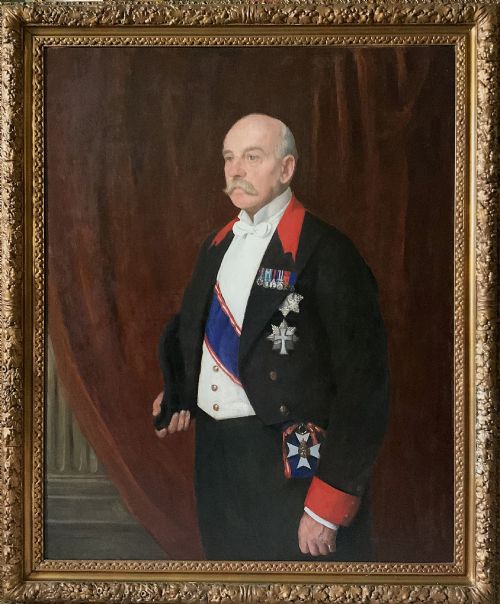
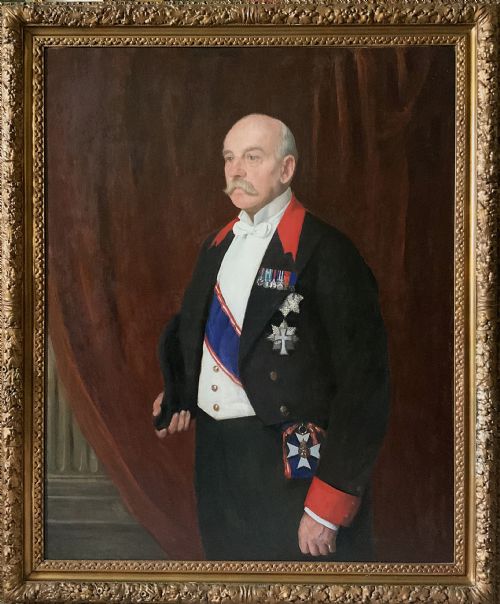
A formal portrait painting depicts distinguished military officers, baronets, and gentlemen executed with striking academic realism across the nineteenth and twentieth centuries. Buyers encounter significant canvases portraying figures in formal evening wear, militia dress, and ceremonial robes.
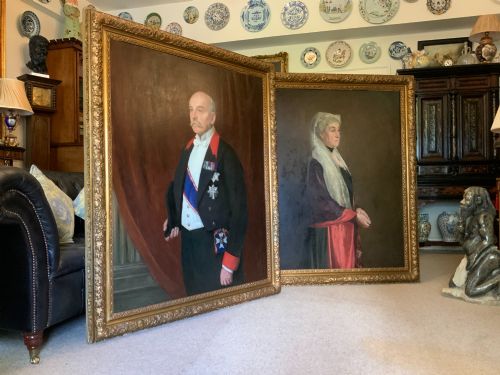
The selection ranges from large Edwardian works to mid-century realisms attributed to notable British artists. These oils record prominent historical personages with authoritative scale and presence.
How they were made
Frames frequently incorporate gold leaf and gilt wood alongside plaster ornamentation to complement the substantial scale of the paintings.
At least one rotund gentleman immortalised in black tie shares space with decorated generals in full military dress.
What varies in quality
The distinction lies in the academic competence of the brushwork and the psychological depth captured in the sitter's expression. Superior examples demonstrate confident handling of light across formal attire and detailed rendering of insignia or robes.
The architectural integrity of the original wooden stretcher and the preservation of the oil paint surface dictate the overall standing of each piece.
Henry William Pickersgill·John A.A. Berrie·Frank Thomas Copnall·William Dring·Arthur Royce Bradbury
The Formal Portrait Painting Glossary
- Academic Realism
- A style of painting produced under the influence of European academies that prioritises precise anatomical accuracy and detailed finish. This approach defines the formal execution seen in many nineteenth-century portraits.
- Oil on Canvas
- Pigment mixed with drying oil applied to a woven fabric support. This combination provides durability and allows artists to achieve rich tonal gradations.
- Gilt Wood
- Timber treated with a thin layer of gold leaf or metallic powder. Frames finished in this manner enhance the visual weight of large historical portraits.
- Black Tie
- A semi-formal evening dress code worn by sitters in later portraiture. It appears in twentieth-century depictions of gentlemen.
Formal Portrait Painting: Frequently Asked Questions
What periods do these paintings cover?
The selection spans from the nineteenth century through the Edwardian era and into the mid-twentieth century. Works reflect evolving portrait styles across these decades.
Artists from the English School and academic traditions created these significant canvases during distinct historical periods.
How should I hang a large portrait?
Substantial oil paintings require secure wall anchorages and robust fixings due to their considerable weight and framed dimensions. Ensure the wall structure supports heavy wooden stretchers.
Position the centre of the canvas at eye level to maintain proper balance within your room.
What subjects feature in these works?
Sitters include military generals, baronets, surgeons, and prominent historical figures depicted in formal attire. Many portraits record specific honours, uniforms, and ceremonial robes.
These identifiable individuals provide a direct connection to nineteenth and twentieth-century British history.