




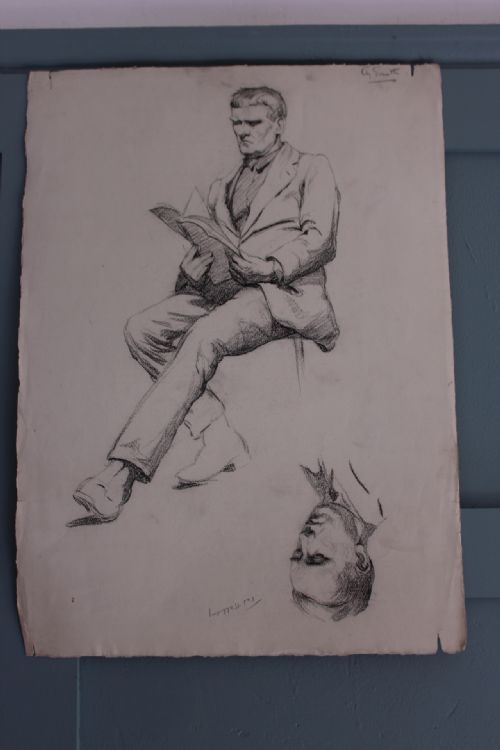
Academic Figure Portrait Study
An academic figure portrait study captures the rigorous draftsmanship and anatomical precision developed in traditional art academies.
Academic Figure Portrait Study
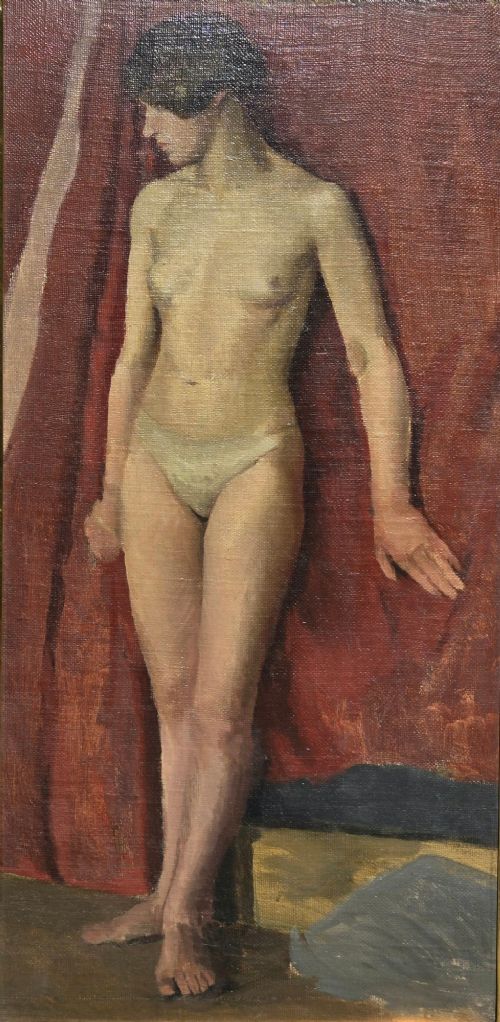
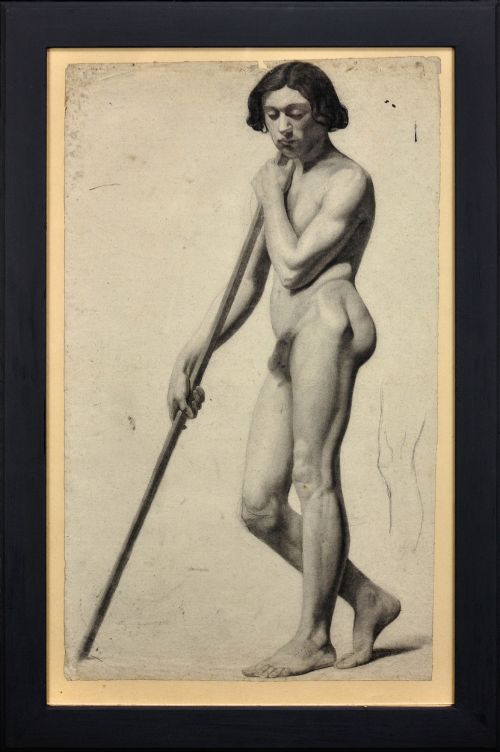
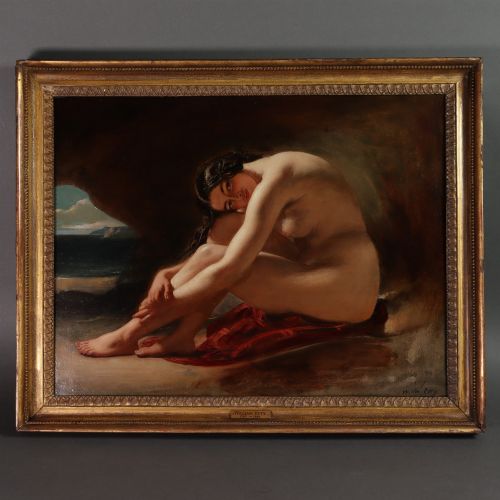
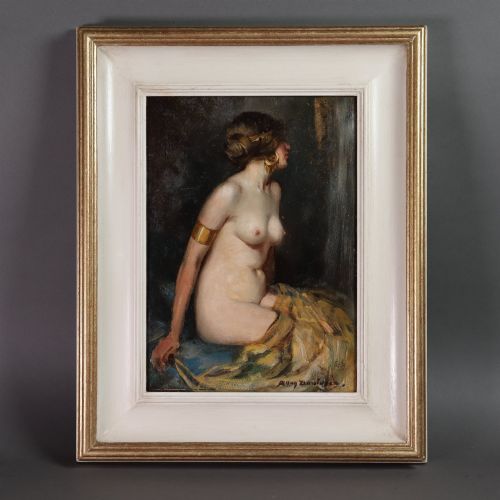
An academic figure portrait study represents the structured training methods of European and British art schools from the nineteenth century through the mid-twentieth century. These works range from tightly rendered charcoal and graphite drawings to confident oil paintings executed on canvas or board.
The pieces on this page span several distinct periods, including Victorian Romanticism, Edwardian academic realism, and post-war British realism. Buyers encounter everything from rapid studio life drawings of seated models to finished en grisaille self-portraits and framed portrait artworks.
Subject matter often focuses on detailed life studies of male and female nudes, alongside named historical figures and character portraits. Each piece records the intense observation required by academy tutors and their students.
Materials and methods
Artists relied heavily on dry media such as charcoal, graphite, chalk, and sanguine applied to paper to map tonal values and musculature with precision. These works often began as quick studio exercises before evolving into more resolved academic drawings.
Painted studies utilise oil paint on canvas, panel, or board, allowing practitioners to explore light, shadow, and flesh tones directly from the model. Monochrome techniques such as en grisaille appear alongside full-colour palettes depending on the period and the instructor's preference.
Listings feature works spanning the nineteenth century through to the nineteen-sixties, incorporating both British and continental European academies.
Judging quality in academic studies
Quality rests primarily on the sureness of the line and the artist's command of human anatomy and proportion. Stronger pieces reveal a confident understanding of skeletal structure and musculature beneath the surface.
The degree of finish also distinguishes the works, separating rapid preparatory sketches from highly resolved academy exhibition pieces. The sensitivity of the lighting and the ability to convey character within a structured setting elevate the best examples.
Augustus John·Henry Arthur Roberts·Alexandre-Louis Martin·William Etty·Allan Douglas Davidson·Jean Jules Salmson·James Clark·Winifred Eugene Ballard·Cecil CP Lawson
The Academic Figure Portrait Study Glossary
- Academic Realism
- A style of painting and drawing produced under the influence of European academies of art, emphasising rigorous adherence to classical standards. It values precise anatomical accuracy and polished execution above expressive distortion.
- En Grisaille
- A method of painting executed entirely in shades of grey or neutral monochrome. This technique allows the artist to focus entirely on tonal values and three-dimensional form without the distraction of colour.
- Life Study
- An artwork created from a live human model, typically within a studio or academy setting. These exercises were fundamental to traditional art training and figure composition.
- Sanguine
- A type of red chalk used in drawing, favoured for its warm earthy tone and ability to render soft flesh contours. It was widely used by artists for quick portrait sketches and anatomical studies.
Academic Figure Portrait Study: Frequently Asked Questions
What is an academic figure portrait study?
An academic figure portrait study is a rigorous drawing or painting created as part of formal art training, focusing on human anatomy, lighting, and proportion.
These pieces capture the methodical approach taught in nineteenth and twentieth-century art schools across Britain and Europe.
How were these studies used?
Artists produced these works in studio settings to hone their observational skills and understand the complexities of the human form.
Instructors evaluated them as exercises in draftsmanship, while artists often kept successful studies as reference material for larger history or portrait paintings.
How should I frame a delicate drawing?
Works on paper require conservation-grade mounting to prevent direct contact with the glass, which protects the charcoal or graphite media from moisture and smudging.
Using UV-filtering glazing also safeguards sensitive pigments and tinted papers from fading under ambient light.
How do I identify the period of a study?
Dating relies on stylistic markers, framing conventions, and the specific materials used, such as the heavy cream papers typical of the nineteenth century or later post-war boards.
Signatures, artist studio stamps, and exhibition labels often provide direct clues to the exact era of production.