
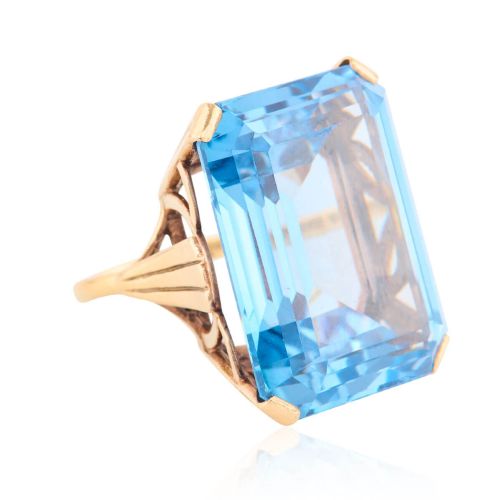
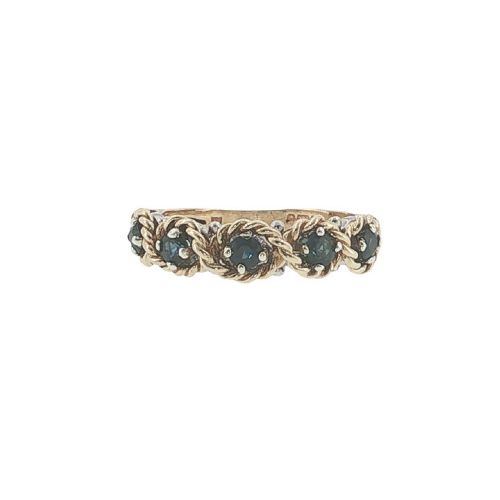


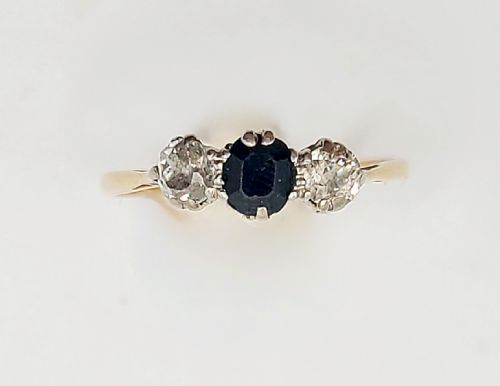


9ct Gold Blue Ring
These pieces of 9ct gold blue ring combine precious metal with sapphire, zircon, topaz, and paste stones across Victorian, Art Deco, and mid-century eras.
9ct Gold Blue Ring
A 9ct gold blue ring typically presents as a dress ring, cluster, solitaire, or multi-stone band configured to highlight a blue centre stone. Buyers seeking this phrase encounter pieces spanning the nineteenth century through the Victorian, Edwardian, Art Deco, and later twentieth-century periods.
The most common forms on this page include sapphire and diamond clusters, blue topaz solitaires, and blue zircon rings set in yellow, rose, or white nine-carat gold. These items reflect traditional manufacturing styles alongside distinct mid-century and vintage aesthetics from the 1950s, 1960s, and 1970s.
Materials and construction methods
Construction relies primarily on nine-carat gold mounts, incorporating yellow, rose, or white alloy variations to secure the principal gems. Stones are mounted using claw settings, bezel enclosures, or flush arrangements designed to support faceted and cabochon gems.
Gemstones utilised in these pieces range from natural sapphires, blue zircons, and topazes to diamond accents and blue paste substitutes. Jewelers combined these materials using traditional casting and hand-finished mounting techniques appropriate to each respective period.
Materials recorded across the inventory include nine-carat gold, sapphire, blue zircon, topaz, opal, diamond, and glass paste.
Quality factors in nine-carat gold and blue gemstone rings
Quality differentiation stems from the selection and optical performance of the central blue stone, whether a natural sapphire, a high-carat blue zircon, or a vintage paste substitute. Precision in stone cutting and the integrity of the surrounding diamond halo or shoulders dictate the visual impact of the piece.
The weight and solidity of the nine-carat gold mount also influence the grade of the ring, alongside the clarity of hallmarks indicating assay office origins and manufacturing dates. Pieces that maintain crisp detail in their settings and secure stone retention represent the higher tier of these designs.
The 9ct Gold Blue Ring Glossary
- 9ct Gold
- An alloy containing thirty-seven point five percent pure gold combined with base metals for durability. This material forms the structural foundation for the bands and settings found in these rings.
- Blue Zircon
- A natural silicate mineral possessing high refractive dispersion and brilliance. These stones are frequently encountered in early twentieth-century and Art Deco ring settings.
- Cluster Ring
- A ring style featuring a prominent central gemstone encircled by a group of smaller stones, typically diamonds or contrasting gems. This layout maximises the overall visual spread on the finger.
- Solitaire
- A mounting designed to hold a single gemstone as the focal point of the ring. This setting style places emphasis entirely on the characteristics of the primary stone.
9ct Gold Blue Ring: Frequently Asked Questions
What periods do these rings come from?
These rings originate from diverse eras including the nineteenth century, the Victorian and Edwardian periods, Art Deco the 1920s, and mid-century decades up to the 1980s.
Each era contributes distinct design motifs, from star-set cabochons to structured geometric sapphire clusters.
Are the blue stones natural or synthetic?
The selection includes natural gemstones such as sapphires, blue zircons, and topazes alongside synthetic stones and glass paste alternatives.
Listings specify the exact material makeup and certification details where available for individual items.
How should I care for a nine-carat gold ring?
Nine-carat gold is durable for daily wear due to its alloy composition, but setting integrity should be checked periodically by a professional.
Gentle cleaning with warm soapy water and a soft brush maintains the brilliance of both the gold mount and the blue stones.
What styles are most common in these listings?
Traditional, Art Deco, Victorian, and mid-century styles dominate the available range of rings.
Designs span simple multi-stone bands and trilogy configurations to elaborate diamond halo clusters.