
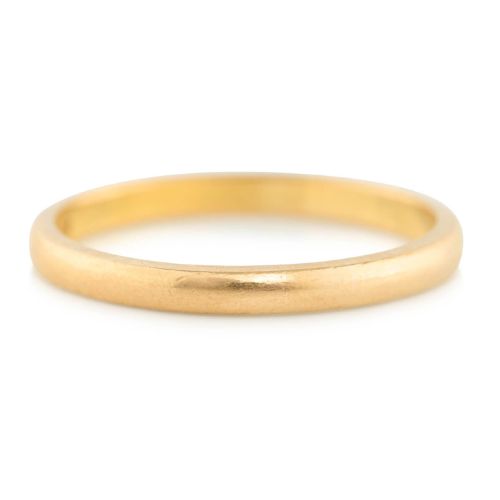


22ct Yellow Gold Ring
A 22ct yellow gold ring brings a deep, rich warmth to the hand that lighter alloys simply cannot match.
22ct Yellow Gold Ring
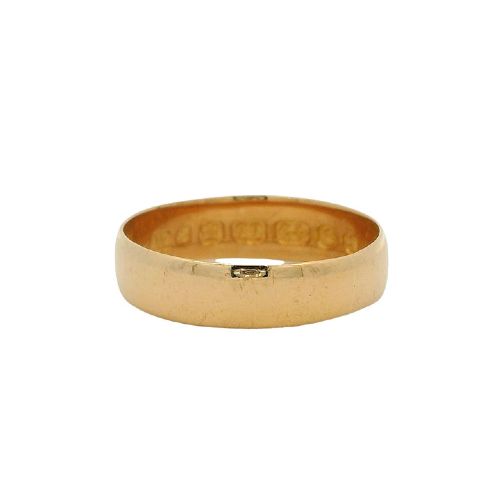
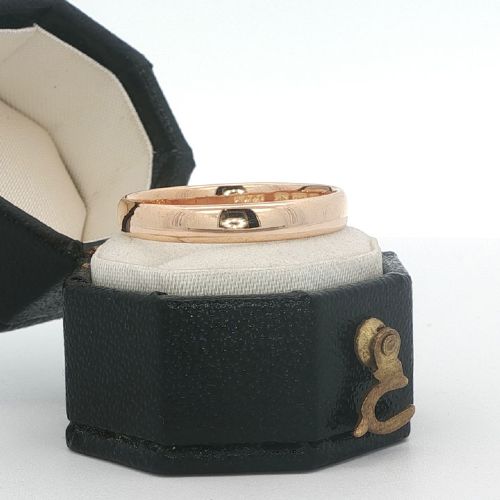
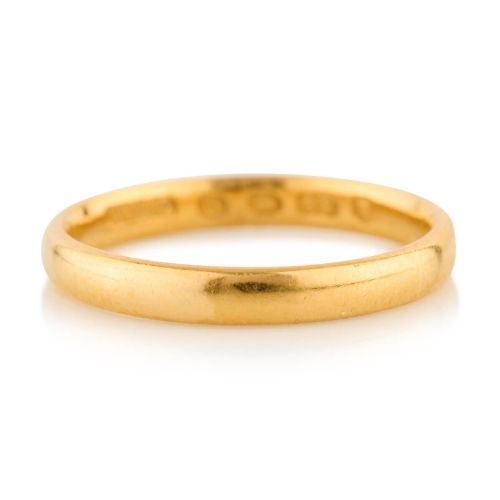
When you search for a 22ct yellow gold ring, you find a distinct class of jewellery defined by a very high purity of gold. The vast majority of pieces meeting this description on this page are traditional wedding bands, often plain in design and shaped in widths ranging from three to four millimetres.
The selection also spans stacked wedding bands and occasional gemstone pieces incorporating rubies and diamonds. These items originate across multiple decades and centuries, stretching from the Victorian era through the Edwardian period, Art Deco years, and mid-century modern times.
How they were made
The primary material shaping these pieces is high-purity 22ct gold, occasionally accompanied by 18ct yellow gold in multi-stone or cocktail configurations. Gemstone settings incorporate turquoise, rubies, and diamonds secured within traditional metal mounts.
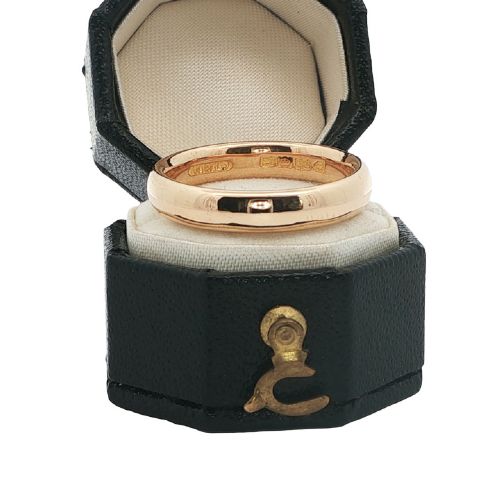
London hallmarking stamps frequently appear on these bands, providing official assay office verification of the metal standard and date of manufacture. Goldsmiths shaped these items into solid wedding bands and stacking rings using enduring traditional techniques.
One tiny wedding band carries a clear London hallmark from 1963, quietly waiting on the shelf for its next chapter.
What varies in quality
The distinction between tiers of quality rests upon the preservation of the original band width and the clarity of the hallmarking stamps. Bands that retain their intended thickness across the entire circumference demonstrate superior longevity through decades of wear.
Craftsmanship quality also shows in the crispness of the edges and the secure seating of any mounted gemstones such as diamonds, rubies, or turquoise. Maker marks add a distinct layer of provenance when stamped clearly beside the assay office details.
W. E. D. L
The 22ct Yellow Gold Ring Glossary
- 22ct gold
- An alloy containing 91.6 percent pure gold by mass. This high proportion gives the metal a softer, richer colour than standard 18ct or 9ct alternatives.
- Wedding band
- A plain or gently shaped ring exchanged during marriage ceremonies. These items often feature interior engravings or exterior hallmarks.
- Hallmark
- An official stamp or series of marks applied to precious metals in the United Kingdom. It indicates the purity of the metal, the assay office, and the year of testing.
- Stacking ring
- A slim ring designed to be worn in combination with other bands on the same finger. This form allows multiple bands from different periods to be layered together.
- Victorian
- A period spanning the reign of Queen Victoria from 1837 to 1901. Jewellery from this era often displays robust construction and distinct traditional British characteristics.
22ct Yellow Gold Ring: Frequently Asked Questions
Are 22ct gold rings durable enough for daily wear?
Gold at a 22ct purity level is softer than 9ct or 18ct alloys because it contains a higher proportion of pure gold. This means the metal wears down more quickly over many decades of continuous daily use.
Despite this softer nature, hundreds of antique 22ct bands survive in robust condition today. Their longevity depends heavily on the original width and thickness chosen by the goldsmith.
How can I date my 22ct gold ring?
British hallmarking stamps provide the most reliable method for determining the exact year of manufacture. These small stamped symbols identify the assay office, the metal standard, and a specific date letter.
When hallmarks are rubbed or missing entirely, stylistic clues such as the profile width and historical context help narrow down the production era.
What is the difference between a band and a stacking ring?
A traditional wedding band is typically worn alone or alongside an engagement ring as a single statement of union. These bands generally feature solid, uniform widths designed for structural permanence.
Stacking rings are purposefully manufactured with narrower profiles to sit comfortably alongside other bands on the same finger. This allows collectors to combine different periods and metals.
Why does 22ct gold look different from modern gold?
The high gold content of 22ct alloy produces a much deeper, buttery yellow hue compared to the paler appearance of 9ct or 14ct pieces. Modern commercial jewellery often uses lower purities blended with harder metals that alter the natural colour.
Antique pieces also acquire a subtle surface patina over generations of handling. This gentle ageing softens the polished finish into a warm glow.