


Traditional Gold Wedding Ring
A traditional gold wedding ring is a classic band of precious metal, offering enduring simplicity and a direct link to past decades.
Traditional Gold Wedding Ring
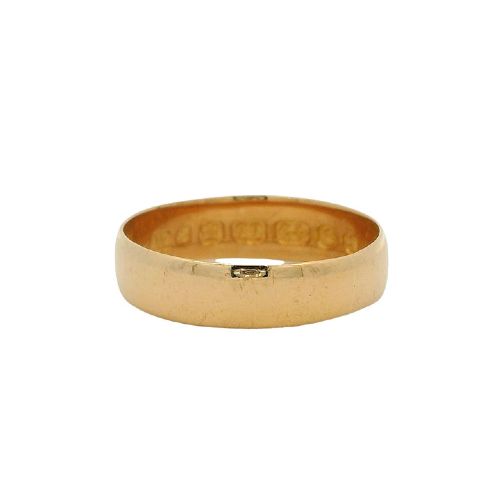
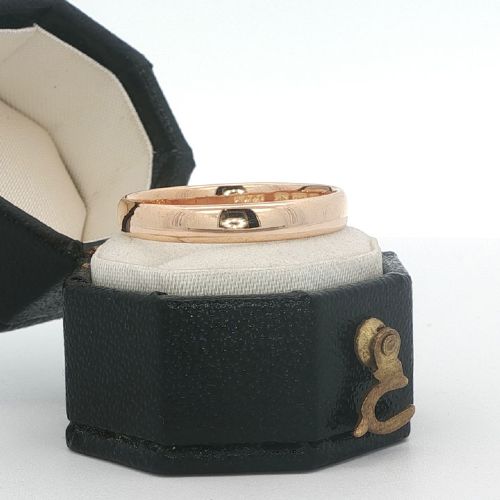
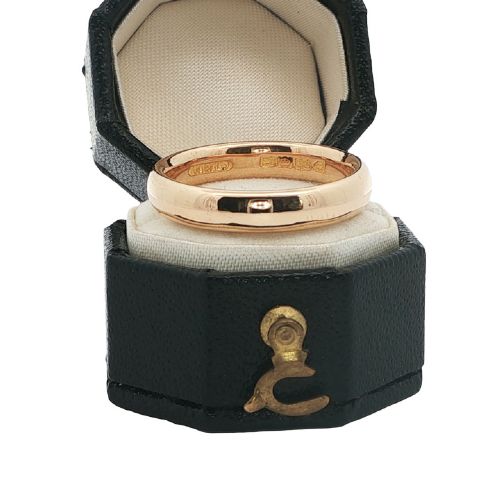
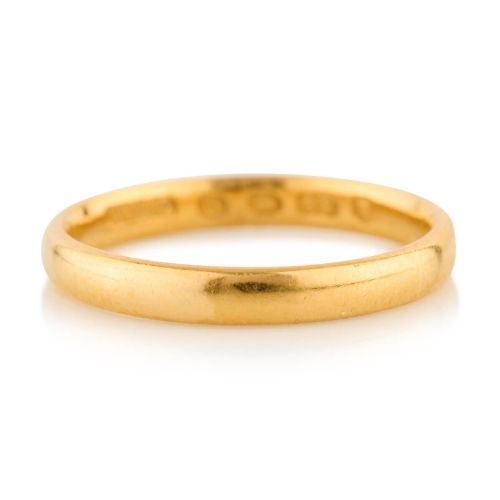
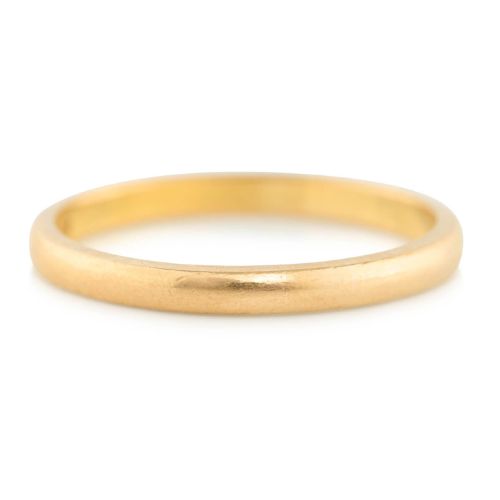
The version you are most likely to meet on this page is the plain gold wedding band, particularly those fashioned from high purity twenty-two carat gold. These simple bands often feature historical hallmarks indicating their exact year of manufacture and assay office origin.
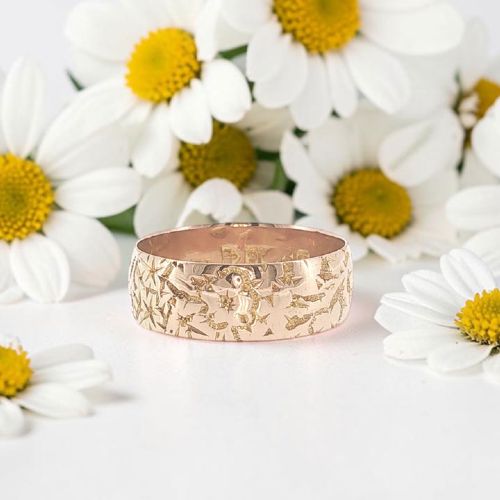
Beyond the plain band, the inventory incorporates vintage diamond and sapphire half eternity rings as well as engraved variations from the nineteenth century. These pieces demonstrate how traditional designs incorporated subtle ornamentation or gemstones while maintaining a wearable profile.
How they were made
The rings rely upon traditional metalworking techniques, utilising high carat gold and durable alloys shaped into seamless bands. Goldsmiths formed these profiles by hand or machine, often applying surface engraving to Victorian examples.
Hallmarking played a crucial role in manufacture, stamping official marks into the metal to guarantee purity at assay offices in locations such as London and Chester. Gemstones in the eternity and multi-stone rings were set securely using traditional claw or channel techniques.
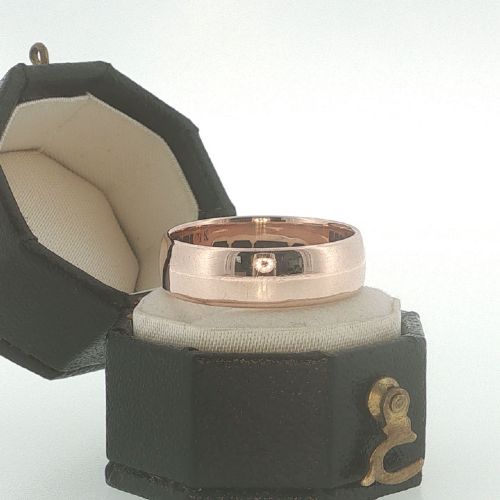
Listings span from the Victorian era through the Edwardian period and mid-century decades, utilising yellow gold, rose gold, platinum, and diamonds.
What varies in quality
Quality in a traditional gold wedding ring depends largely on the purity of the metal and the preservation of original hallmarks. Higher carat golds display a richer colour and greater intrinsic material value, while clear stamps provide a dependable history.
The integrity of the band's profile and the sharpness of any engraved decoration separate standard examples from finer specimens. In stone-set variations, the security of the setting and the matching quality of the diamonds or sapphires determine the overall standard.
W. E. D. L
The Traditional Gold Wedding Ring Glossary
- Hallmark
- An official stamp or series of marks applied to precious metals, indicating the fineness, maker, and year of assay. These marks provide a reliable method for dating antique jewellery.
- Carat
- A unit of measurement used to express the purity of gold, with twenty-four parts representing pure gold. Higher numbers indicate a greater proportion of gold in the alloy.
- Eternity ring
- A band set continuously with gemstones symbolising endless love, appearing here in half-set configurations featuring diamonds or sapphires. This style pairs comfortably alongside a traditional wedding band.
- Rose gold
- A gold alloy containing copper, which imparts a warm reddish hue to the metal. This material gained particular popularity during the Victorian and Edwardian eras.
- Assay office
- An official body that tests the purity of precious metals and applies hallmarks. British offices include those in London and Chester.
Traditional Gold Wedding Ring: Frequently Asked Questions
How do I know my ring size?
Ring sizes are measured using standard alphabetical scales based on the inner circumference of the band. Visiting a jeweller allows for an accurate measurement of your finger.
Antique bands can sometimes be resized by a skilled jeweller, though the presence of full hallmarks around the band requires careful consideration.
Can I wear a vintage band daily?
Most traditional gold bands are robust enough for everyday wear, particularly those made from high purity or durable lower carat metals. Regular use brings a soft patina to the surface over time.
Gemstone set rings require slightly more care to ensure the stones remain secure within their original mounts.
What do the different gold carats mean?
Gold carat ratings indicate the proportion of pure gold mixed with other metals to achieve strength and colour. Twenty-two carat gold offers a deep yellow tone and high purity.
Nine carat and eighteen carat gold incorporate higher proportions of alloy metals, providing increased resistance to daily wear.
How do I date an antique ring?
Dating relies heavily upon the maker marks and date letters stamped into the interior of the band during assay. Reference tables match these official symbols to specific years.
Stylistic elements such as hand engraving or the specific hue of rose gold also offer clues to the period of origin.