





20th Century Portrait Drawing
A 20th century portrait drawing captures personality directly through the artist's hand, offering an intimate record of sitter and technique.
20th Century Portrait Drawing
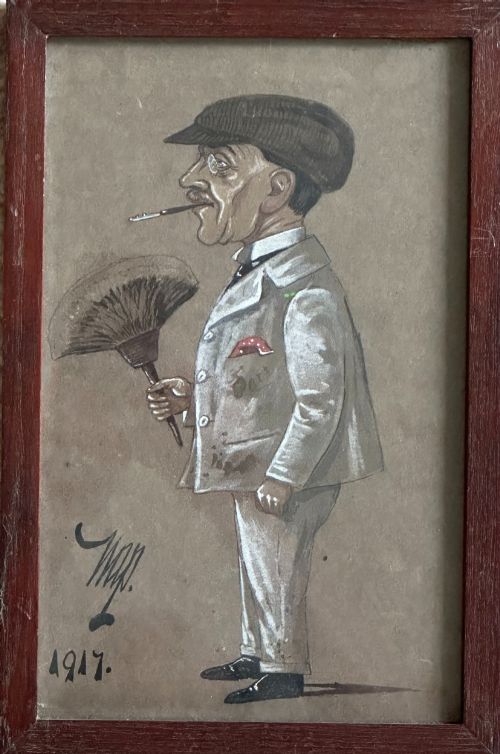
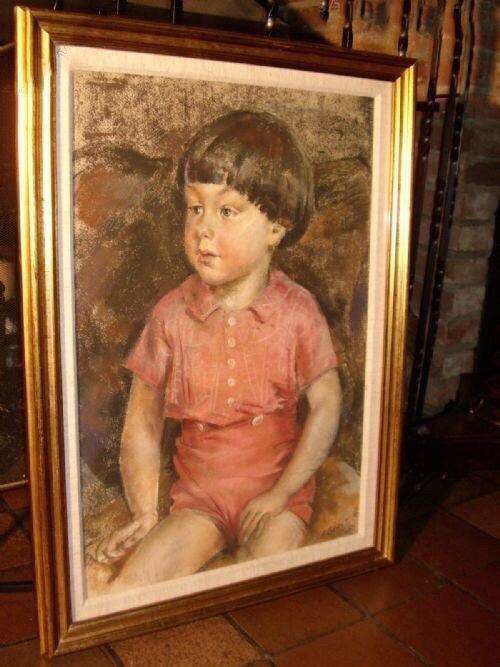
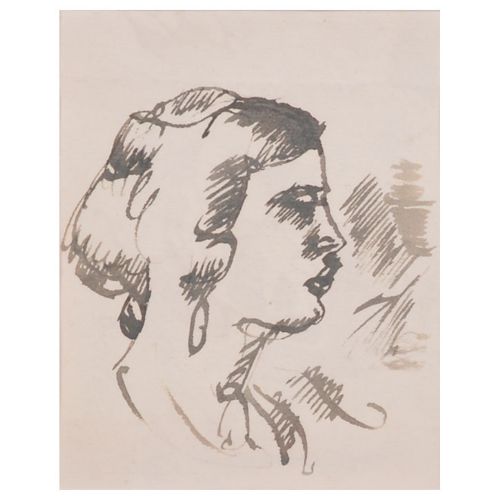
A 20th century portrait drawing comprises works on paper executed across the decades from the Edwardian era through to the mid-century. These works range from rapid life studies and academic drawings to finished gallery watercolours and caricatures.
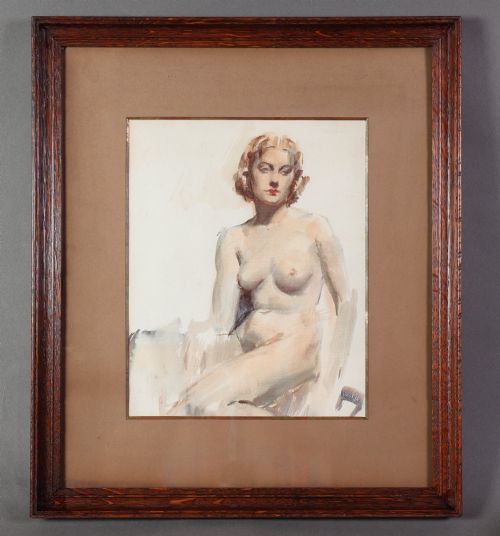
Buyers meet works spanning British schools, French sketches, and international hands, framed behind glass to protect fragile media. The subjects vary from notable public figures to anonymous sitters, soldiers, and nude life studies.
Materials and methods
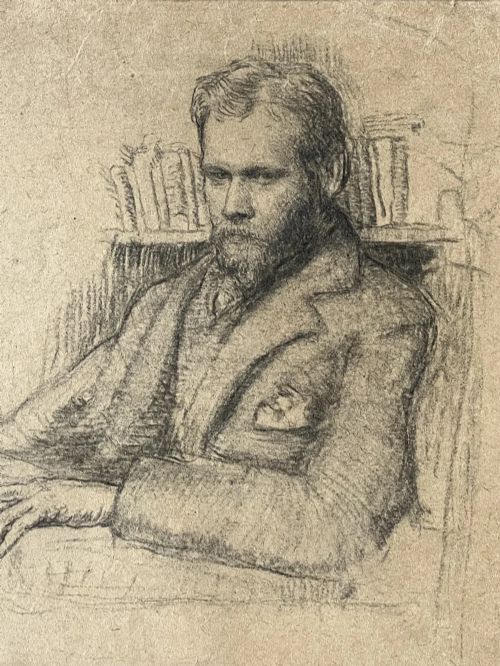
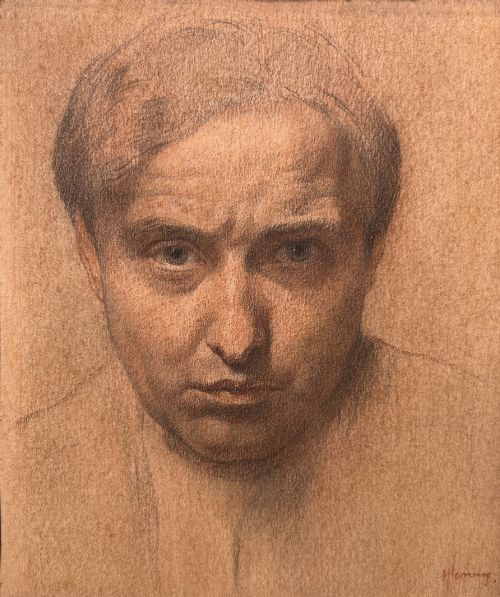
Artists relied primarily on paper supports, applying dry media such as graphite, charcoal, pastel, and chalk to build form and tone. Pencil and ink lines establish bone structure, while chalk and charcoal yield deep shadows and soft contours.
Watercolour and gouache frequently appear combined with pencil underdrawings, adding washes of tint and opaque highlights to the monochrome base. Fixatives sometimes protect pastels and charcoals, though the paper often retains the natural tooth and grain of the chosen medium.
Listings feature works spanning the early decades of the twentieth century, executed in pencil, charcoal, pastel, watercolour, and gouache on paper.
What separates the fine from the ordinary
Quality rests upon the sureness of the draughtsmanship and the economy of line used to define character. A master hand captures likeness and anatomical weight with minimal strokes, whereas weaker works struggle with proportion and stiffness.
Condition of the paper sheet and preservation under glass dictate the longevity of the piece, as light exposure damages fugitive pigments and fragile charcoal. The presence of a signature and documented provenance elevate a study from a generic life drawing to a significant cabinet work.
Emily Eyres·Augustus John·Raoul Millais·Winifred Eugene Ballard·John Duncan Fergusson·Reginald G. Eves·Faeq Hassan·Robin Watt·Dame Laura Knight·Ernest Borough Johnson·Francis O. A. Haviland·Francis Dodd·Harry Epworth Allen·Jacob Kramer
The 20th Century Portrait Drawing Glossary
- Academic Realism
- A style of painting and drawing produced under the influence of European academies, prioritising accurate anatomy and classical proportions.
- Gouache
- An opaque water-based pigment that provides flat areas of dense colour and crisp highlights on tinted paper.
- Life Study
- A drawing executed directly from a live nude or clothed model, typically produced in an art school or studio setting.
- Pastel
- A dry drawing medium consisting of powdered pigment and a binder, yielding velvety textures and rich colour gradations.
- Provenance
- The documented history of ownership of an artwork, establishing its authenticity and exhibition record.
20th Century Portrait Drawing: Frequently Asked Questions
How should I frame a portrait drawing?
Works on paper require conservation-grade mounting to keep the sheet away from direct contact with the glass. Ultraviolet-filtered glazing helps prevent the fading of charcoal, pastel, and watercolour pigments over time.
Select simple wood frames that complement the period of the drawing without overpowering the delicate medium. Ensure the backing board is acid-free to protect the paper from chemical degradation.
Are these drawings signed?
Many examples bear the artist's signature or monogram, often located in a lower corner of the sheet. Others remain unsigned, representing studio work or anonymous art school life studies.
Unsigned drawings often rely on stylistic comparison, old gallery labels, or accompanying archival notes for attribution. Both signed and unsigned pieces hold equal merit if the draughtsmanship is strong.
What is the difference between charcoal and graphite?
Graphite produces a metallic, reflective grey line with precise control and fine detail. Charcoal yields a deep, matte black mark that smudges easily for broad tonal shadows and dramatic contrast.
Drawings often combine both media, using graphite for initial mapping and charcoal for finished weight.
How do I care for works on paper?
Hang portrait drawings away from direct sunlight and damp environments to prevent paper discolouration and foxing. Stable indoor temperatures protect the fragile binders in pastels and gouache from flaking.
Avoid placing these artworks near heat sources or in rooms with high humidity, such as kitchens or bathrooms.