

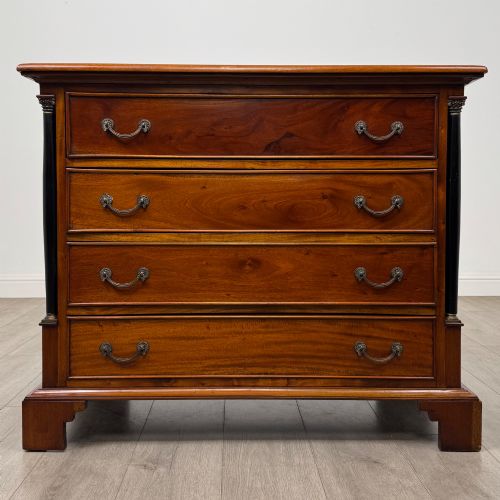
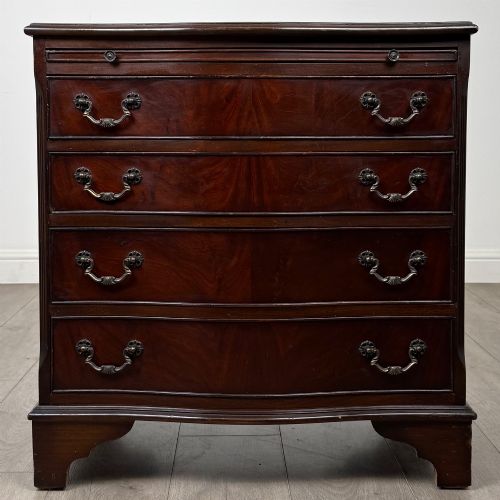
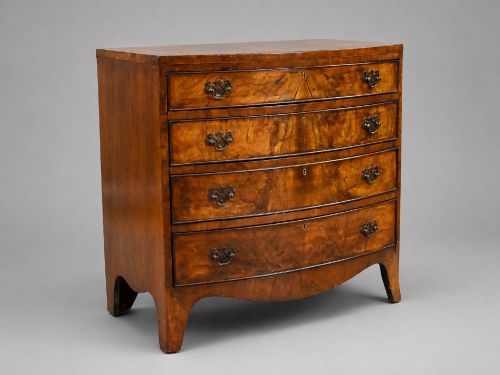
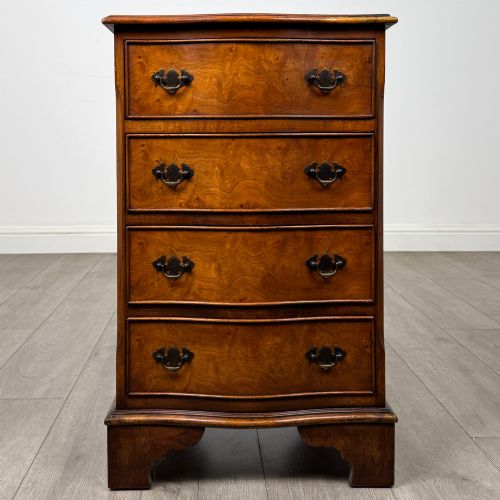
20th Century Commode
A 20th century commode brings architectural presence and versatile storage to a room through diverse revival styles and robust timbers.
20th Century Commode
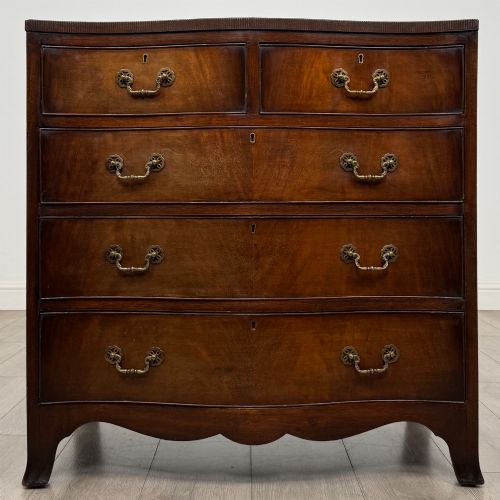
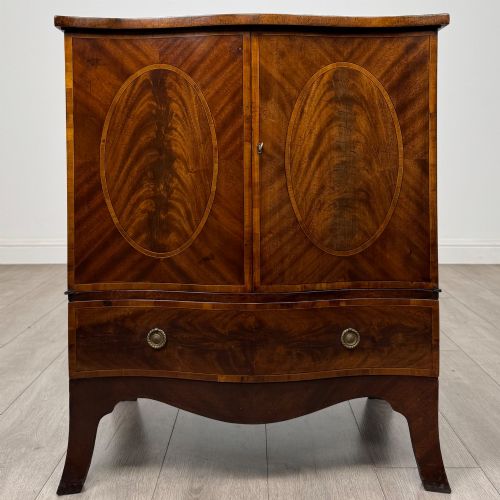
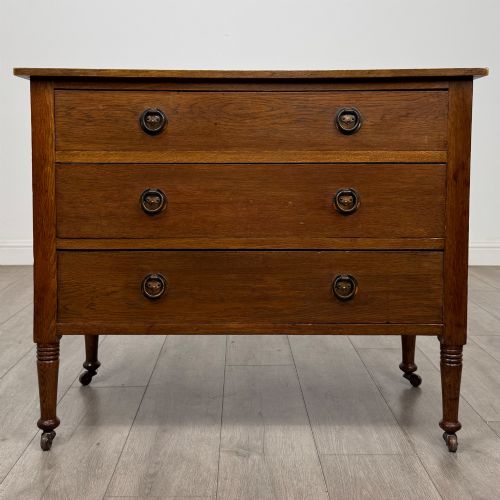
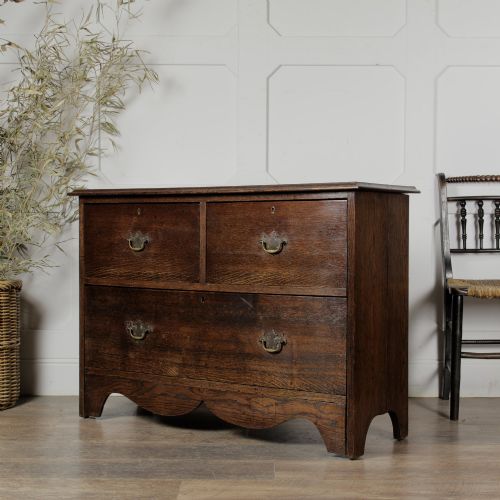
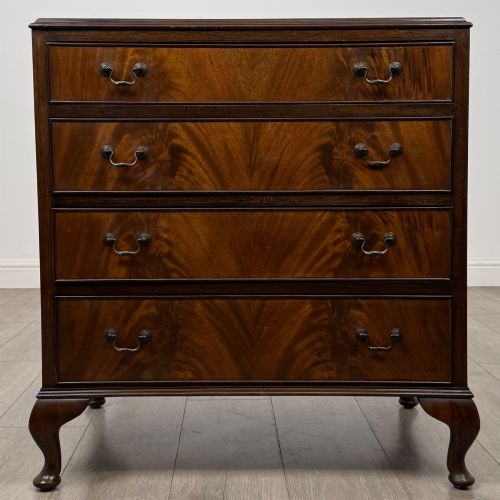
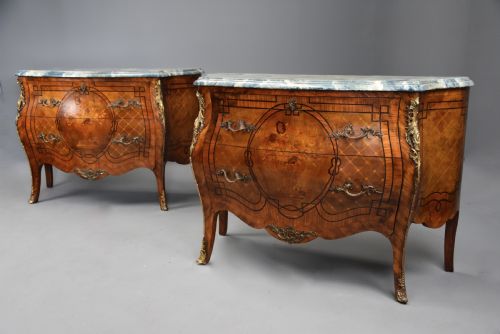
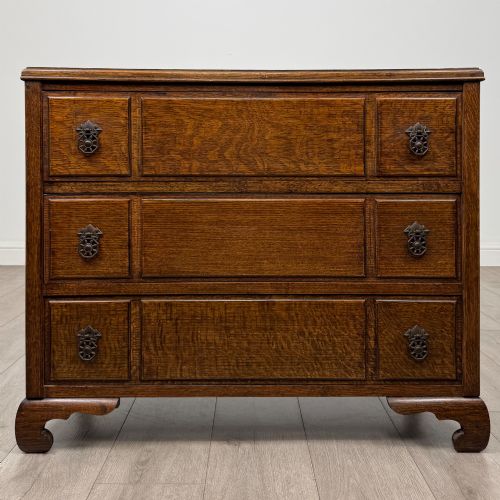
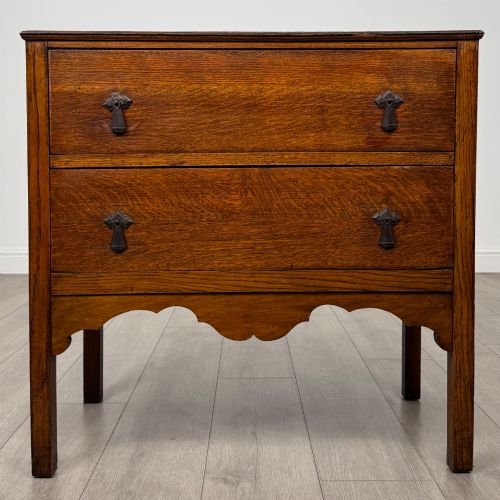
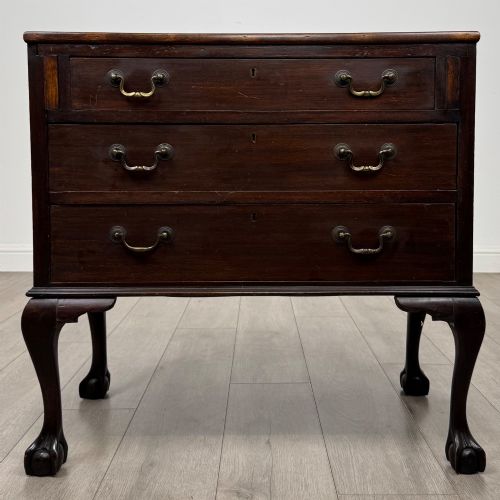
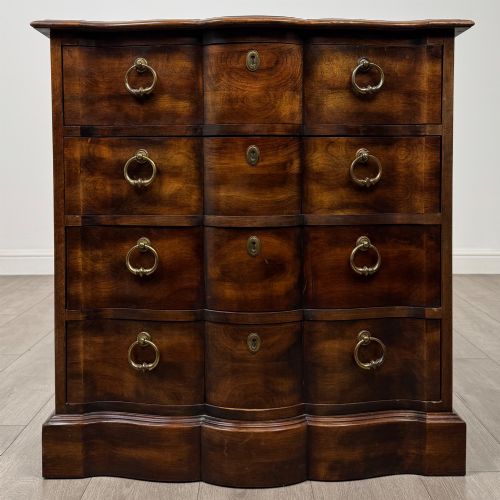
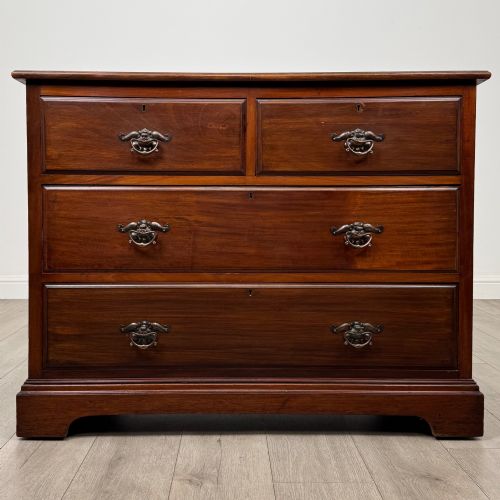
A 20th century commode encompasses chest of drawer forms, serpentine cupboards, and marble-topped display cabinets spanning Edwardian and later decades. Buyers encounter both British revival pieces in oak and mahogany alongside continental interpretations influenced by French design.
The Edwardian period dominates the selection with solid and figured timbers, while subsequent decades introduce specialised veneered surfaces and painted finishes. These items bridge traditional cabinet-making methods with the changing domestic requirements of the era.
Factors determining quality
Quality separates along the precision of timber selection, particularly in the matching of figured veneers on drawer fronts and curved surfaces. Superior examples demonstrate careful attention to proportion, edge detail, and the integration of secondary materials such as marble or bronze mounts.
The sophistication of internal construction and the retention of original hardware distinguish workshop output. Pieces designed for exhibition or produced by notable makers display greater refinement in carving, inlay, and structural joinery.
Some commodes secretly double as bedside companions or house miniature compartments designed for clandestine midnight correspondence.
Sormani·Pietro Ferrario
The 20th Century Commode Glossary
- Serpentine
- A shape characterised by a undulating front with a central convex curve flanked by concave sections. This contour demands advanced woodworking skill to execute cleanly.
- Bombe
- A swelling, outwardly curving profile associated with continental furniture forms. It provides a robust, sculptural silhouette.
- Ormolu
- Gilded bronze mounts applied as decorative accents on furniture. These elements enhance the visual richness of continental pieces.
- Parquetry
- Geometric wood inlay patterns arranged to form decorative surfaces. Artisans utilise contrasting timbers to achieve graphic visual effects.
- Demi-lune
- A half-moon or semicircular shape utilised for cabinets and commodes designed to sit flush against walls.
20th Century Commode: Frequently Asked Questions
How do I identify a French commode?
Continental pieces frequently incorporate painted surfaces, marble tops, and kingwood veneers with ormolu mounts. Their proportions often reflect Louis styles or provincial traditions distinct from British cabinet making.
Examination of the secondary woods and construction methods provides further context regarding the geographical origin of the workshop.
Where should I place a commode?
These cabinets function effectively in entrance halls, living rooms, and bedrooms as focal storage points. Their diverse footprints accommodate both expansive wall spaces and compact alcoves.
Pairing the timber tone with existing interior elements helps integrate the piece into contemporary or traditional room schemes.
Are marble tops original?
Many continental commodes feature fitted marble tops designed to protect the wooden structure and provide a durable surface. These slabs are typically heavy and rest directly upon the cabinet frame.
Checking the fit and edge profiling assists in confirming whether the marble corresponds to the period of the base.