


20th Century Chest
When choosing a 20th century chest, buyers encounter durable storage furniture shaped by Edwardian utility and earlier revival styles.
20th Century Chest
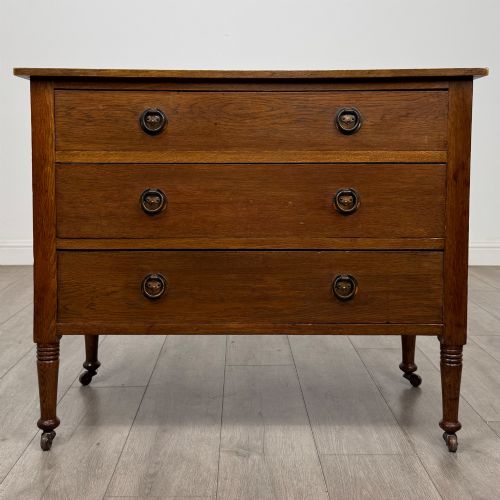
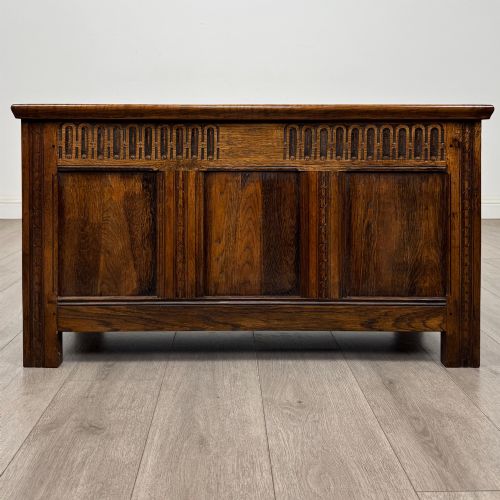
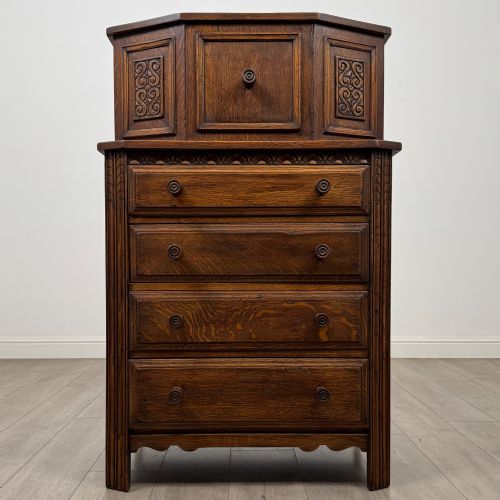
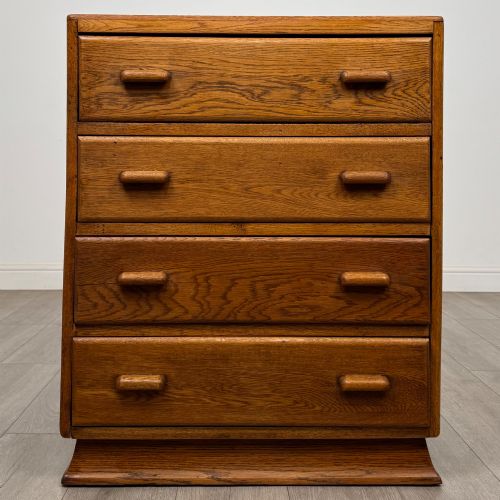
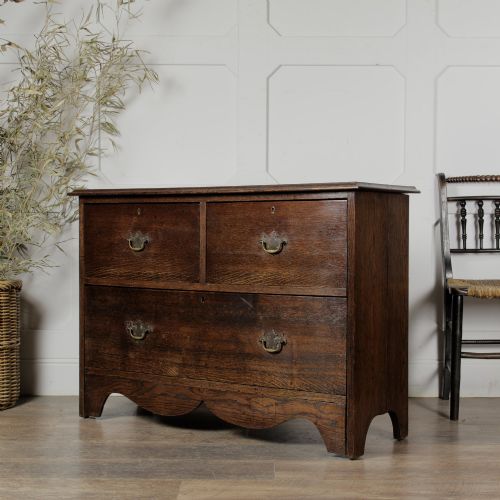
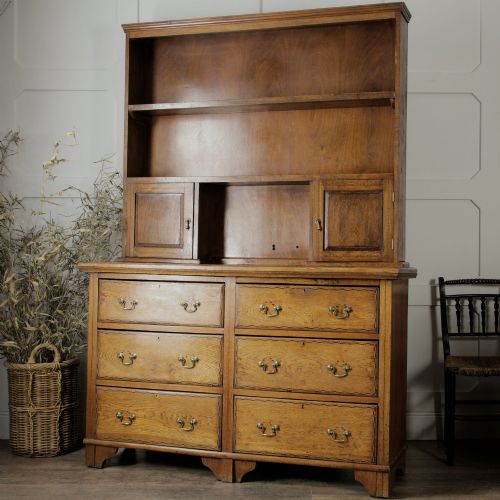
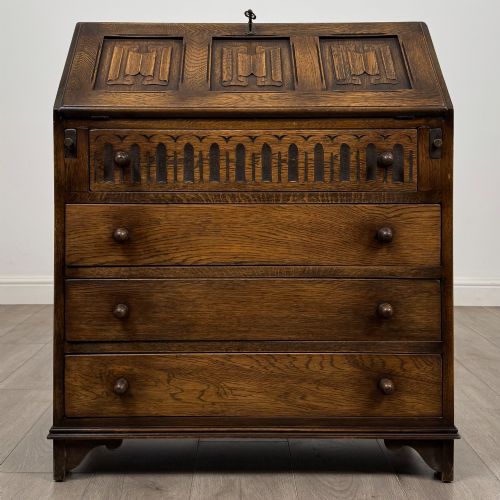
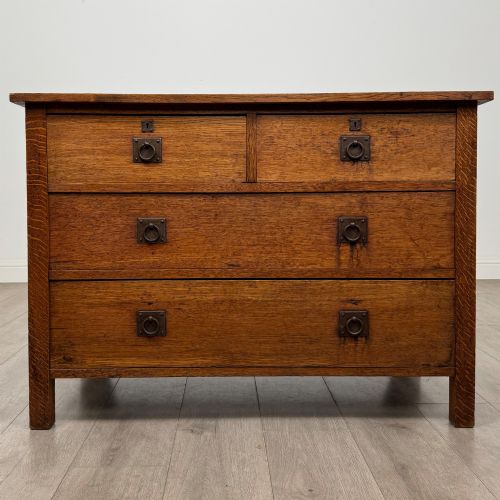
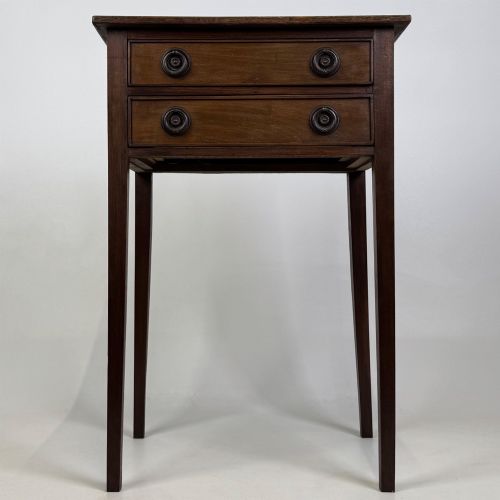
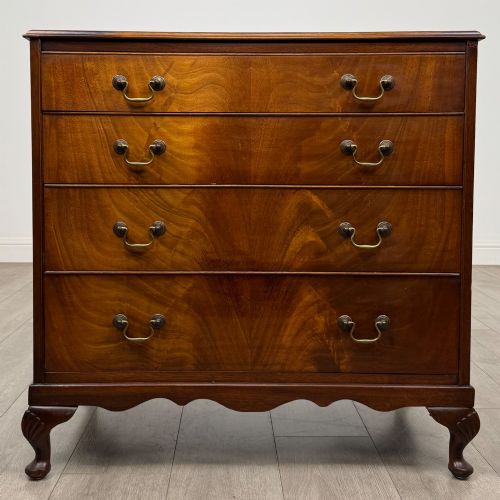
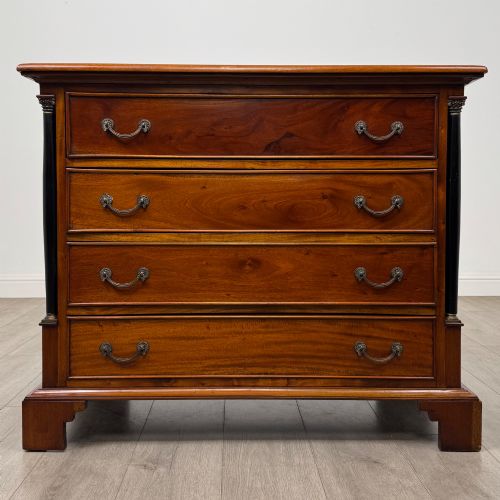
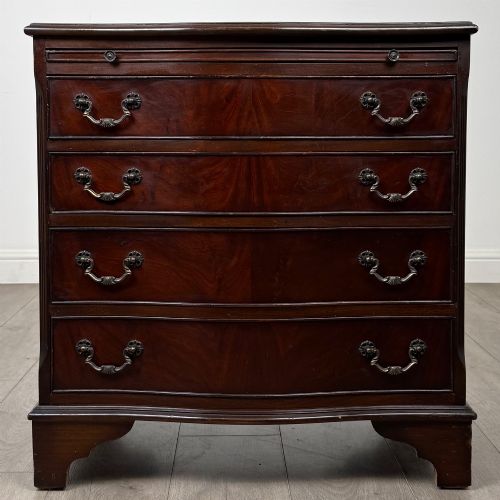
A 20th century chest encompasses standard chests of drawers, narrow tallboys, blanket boxes, and commodes originating from the Edwardian era through the nineteen-forties. Oak and mahogany dominate the selection, often taking the form of straightforward drawer configurations designed for domestic storage.
Edwardian examples frequently echo Georgian or Jacobean revival aesthetics, incorporating carved linenfold panels or serpentine fronts into traditional storage formats. Buyers searching this category frequently find solid timber construction intended for daily utility rather than decorative display alone.
Variants range from compact yew wood pieces and campaign style chests to heavily inlaid Middle Eastern trunks and French kingwood bombe commodes. Most pieces on offer date from the opening decades of the century, carrying the hallmarks of traditional cabinet making.
Materials and construction methods
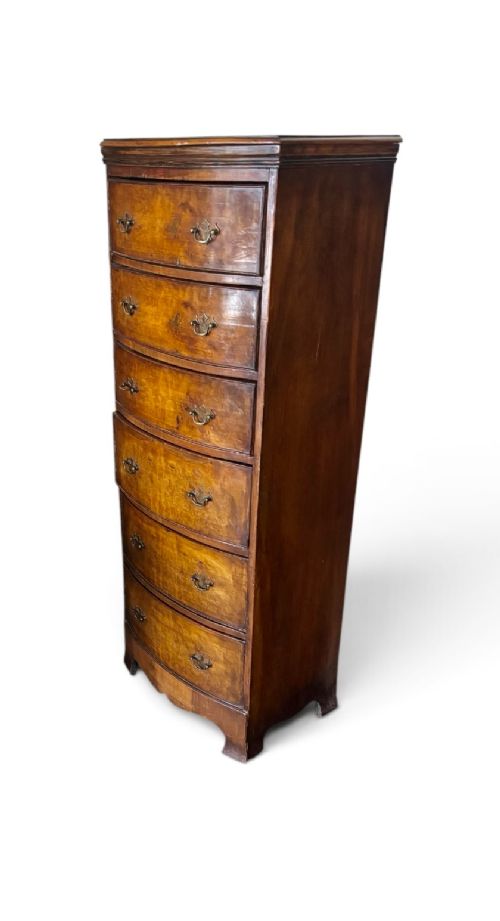
Makers relied heavily on solid oak and mahogany for carcases and drawer construction, applying figured walnut or burr walnut veneers to select surfaces for enhanced grain patterns. Brass hardware, iron handles, and glass elements appear as functional and decorative fittings across various styles.
Joinery techniques followed traditional paths, utilising panelled construction for blanket boxes and dovetail joints for drawer boxes. Surface treatments included linenfold carving, mother of pearl inlay, and tambour mechanisms that required precise manual fitting.
Listings feature woods including oak, mahogany, walnut, burr walnut, yew wood, and hardwood, spanning Edwardian and revival styles.
Distinctions in craftsmanship and materials
Timber selection dictates the baseline tier, distinguishing plain utility pine or standard oak from highly figured burr walnut, mahogany, and exotic hardwoods. The presence of book-matched veneers and intricate carved detailing separates standard commercial production from workshop pieces.
Structural integrity relies on the execution of joinery, drawer movement, and the quality of applied brass or iron mounts. Pieces featuring specialised mechanisms like tambour doors or serpentine fronts demand a higher level of joiner precision than flat-fronted counterparts.
Jas Shoolbred·Hickory Chair
The 20th Century Chest Glossary
- Tallboy
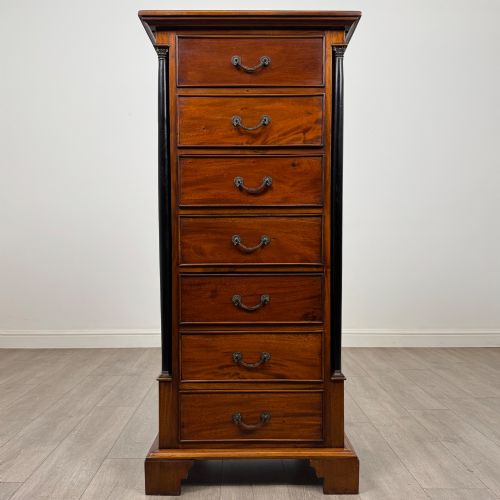
- A tall chest of drawers, often consisting of a chest stacked upon another section or built as a single elevated vertical unit. These narrow configurations maximise vertical storage space in compact rooms.
- Serpentine
- A front profile characterised by a concave central section flanked by two convex curves, or the reverse. This undulating shape requires advanced woodworking skill to shape accurately.
- Linenfold
- A style of wood carving that imitates folded linen or parchment, frequently seen on panels of Edwardian oak cabinets and chests. The motif derives from Tudor design revivals.
- Bombe
- A bulging, outward-curving chest or commode shape that swells on the sides and front. This profile is typical of continental furniture styles found in select twentieth-century collections.
- Campaign style
- Portable furniture built in sections with recessed brass handles and corner brackets designed for military travel. These sturdy chests split or stack for ease of transport.
20th Century Chest: Frequently Asked Questions
How do I identify an Edwardian chest?
Edwardian chests generally exhibit lighter oak or mahogany tones, often drawing inspiration from Georgian or Jacobean revival styles with simple linear hardware.
Examine the interior secondary timbers and drawer linings, which typically display period-appropriate machine-sawn or hand-finished surfaces consistent with the early decades of the century.
What is the difference between a tallboy and a standard chest?
A standard chest of drawers remains broad and low enough to utilise the top surface easily, whereas a tallboy rises higher with a narrow footprint.
Tallboys provide vertical storage capacity, making them suitable for rooms with limited floor space while offering multiple stacked drawers.
How should I care for a walnut veneer chest?
Keep veneered furniture away from direct sunlight and consistent heat sources to prevent the delicate burr walnut or figured walnut from drying out and lifting.
Apply traditional beeswax sparingly and buff gently with a soft cloth, avoiding modern silicone sprays that can damage the historical finish.
Where were campaign style chests used?
Campaign chests were originally engineered for British military officers on active service overseas, requiring robust construction that could endure frequent transport.
These pieces feature inset brass pulls to prevent snagging and reinforced corners, translating into durable, practical storage for modern homes.