




20th Century Carved Sofa
A 20th century carved sofa brings historic woodwork and upholstered comfort into a room, offering enduring craft for everyday sitting.
20th Century Carved Sofa
A 20th century carved sofa encompasses seating pieces produced across decades that span Edwardian elegance, Empire Revival grandeur, and later modernist designs. These items range from walnut suites and beech wood frames to mahogany pieces influenced by Chinese Chippendale aesthetics. Buyers searching this phrase meet everything from heavy carved frames to simpler upholstered forms.
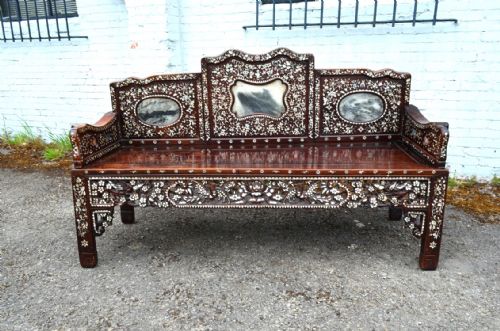
The selections on this page demonstrate varied stylistic revivals, including Chinese Export benches inlaid with mother of pearl alongside traditional walnut three-seater couches. Such pieces reflect the diverse cabinet-making traditions carried into the nineteen-hundreds and beyond. Each example combines functional seating with sculptural woodwork characteristic of its period.
Originating across different European and international workshops, these sofas display varied structural approaches from formal Empire Revival suites to unusual dual-design beech wood frames. Identifying a piece involves looking at the specific timber used, the depth of the carving, and the overall proportions. These seating options suit both traditional interiors and more eclectic modern spaces.
How they were made
Makers constructed these frames using solid timbers such as mahogany, oak, walnut, and beech wood, often selecting figured veneers for visual depth. Woodworkers shaped the structural elements through traditional joinery before applying hand-carved details to the crest rails, arms, and cabriole legs. Upholstered sections utilised textiles like velvet, supported by internal webbing and traditional stuffing techniques.
Decoration extended beyond carved wood to include specialist techniques such as mother of pearl inlay found on Chinese Export pieces. Metal elements and brass fittings occasionally reinforced structural points or decorated the feet. Surface finishes relied on French polishing, waxing, or oiling to seal the timber and highlight the grain.
Seen periods span the Edwardian era, Victorian times, nineteen-hundreds, and later twentieth-century revivals.
What varies in quality
The standard of timber selection and the crispness of the hand-carving set the finer pieces apart from standard workshop output. Deeply relief-carved walnut or mahogany frames with well-defined motifs demonstrate superior craftsmanship compared to shallow or mechanically shaped substitutes. The integration of decorative elements like mother of pearl inlay also indicates higher grade production.
Structural integrity depends on the precision of the joints and the original stability of the timber frame. Pieces that retain their heavy dense hardwoods and robust internal construction without excessive timber shrinkage represent better manufacture. Upholstery quality varies according to the standard of the covering textile and the preservation of the underlying support.
The 20th Century Carved Sofa Glossary
- Mahogany
- A durable tropical hardwood prized for its reddish-brown colour and stability in furniture making. It accepts fine carving exceptionally well.
- Walnut
- A rich brown timber with varied grain patterns widely used for high-status seating and tables. Figured walnut displays dramatic swirling patterns.
- Empire Revival
- A neoclassical style drawing on the French and Roman imperial designs of the early nineteenth century. It reinterprets these motifs with heavy classical proportions.
- Chinese Chippendale
- A style combining eighteenth-century English cabinet-making lines with Chinese decorative motifs such as fretwork and intricate carving. It saw significant revival periods.
- Veneer
- A thin slice of superior wood applied over a secondary timber base to provide an attractive exterior surface. Flame mahogany veneer creates distinct flame-like patterns.
20th Century Carved Sofa: Frequently Asked Questions
How do I date a carved sofa?
Dating relies on examining the timber species, the style of the carved ornamentation, and the construction methods used in the frame. Comparing stylistic details against known revival periods helps narrow down the decade of production.
Evidence from related pieces shows that Edwardian and Empire Revival styles often feature specific regional traits that assist in accurate chronological placement.
Are these sofas comfortable for daily use?
Most of these seating options provide firm support typical of traditional upholstery methods and sturdy timber frames. Comfort levels depend heavily on the condition of the internal webbing and padding.
Buyers often retain the structural frame while updating the top textiles to suit modern lounging preferences.
What woods were used in these frames?
Cabinet makers utilised a range of hardwoods including mahogany, oak, walnut, and beech wood. Figured veneers were frequently applied to enhance the visual appeal of the primary surfaces.
Some pieces also incorporate decorative inlays using materials like mother of pearl to highlight the woodwork.
How do I care for a carved wooden frame?
Maintenance involves dusting the carved areas regularly with a soft cloth and applying appropriate wax polish sparingly to nourish the timber. Keeping the wood away from direct sunlight and extreme temperature changes prevents the timber from splitting.
Upholstered sections benefit from gentle vacuuming and professional cleaning according to the textile type.