




20th Century British Landscape
Discover original 20th century british landscape paintings capturing rural scenes, coastal views and urban vistas across the decades.
20th Century British Landscape
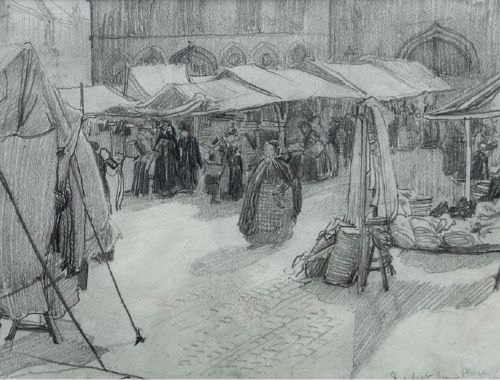
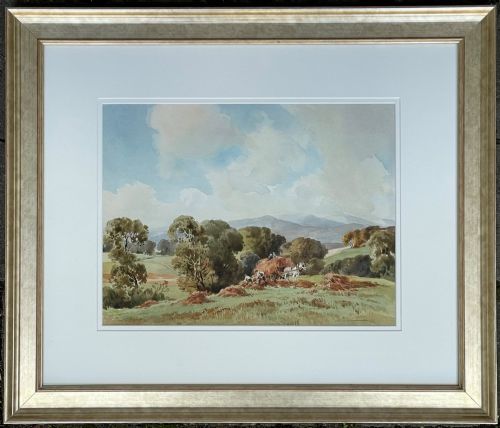
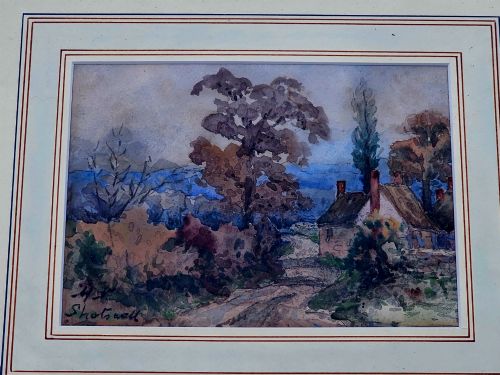
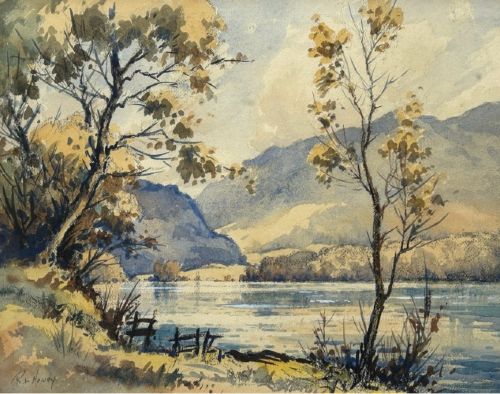
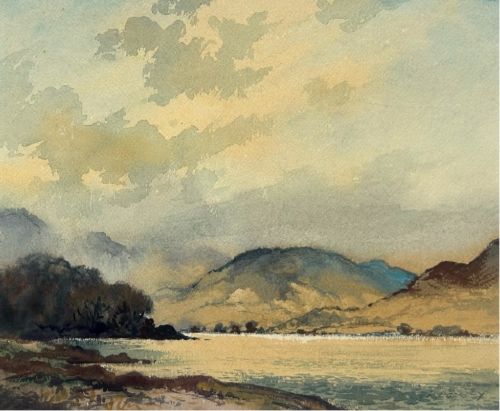
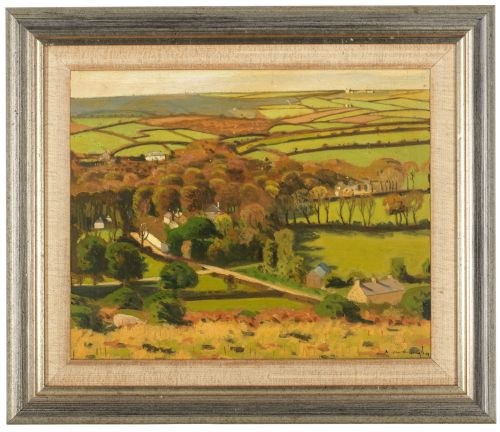
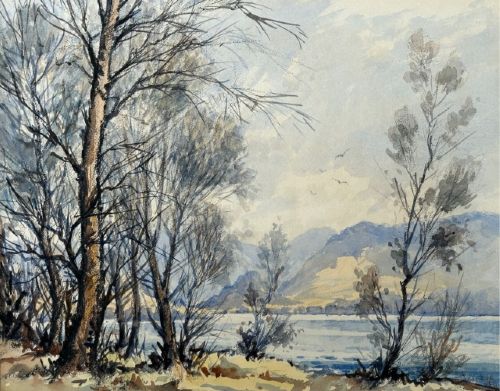
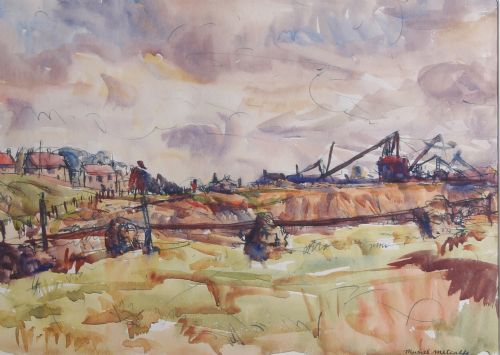
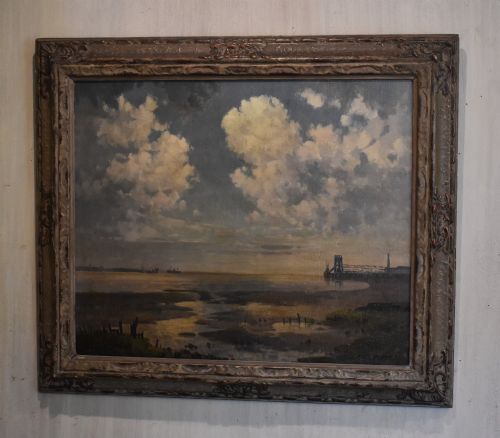
The material formats range from delicate paper studies to substantial canvases and wood panels. Many works capture specific regional locations, from the Cumbrian lakes and Yorkshire dales to Scottish highlands and Welsh valleys. Buyers frequently meet pieces dated across the decades, reflecting shifts in artistic interpretation from traditional realism to post-impressionist handling.
How they were made
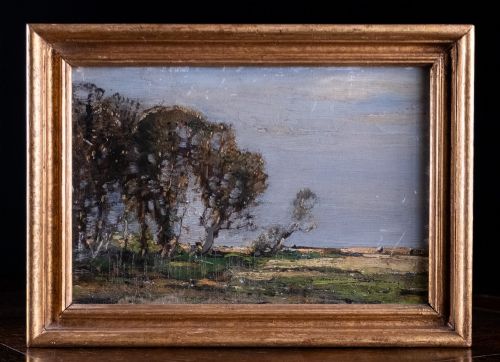
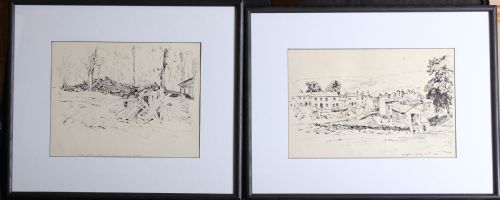
Artists painted primarily in oil or watercolour, applying pigment to prepared canvas, wood panel, paper or board. Oil paint provided rich texture and depth, particularly when laid thickly onto board or canvas, whereas watercolour allowed for fluid washes on paper. Ink and pencil were frequently utilised for preliminary sketching or linear definition within mixed media compositions.
Support materials evolved throughout the period, with artists selecting stretchers, wooden panels or sturdy boards depending on whether they worked in the studio or outdoors. Framing often consisted of simple wooden mouldings designed to protect the fragile paper or canvas surfaces without overpowering the painted image.
Several depictions feature wandering livestock, solitary fishermen, and roaming poultry supervising the picturesque hillsides and riverbanks.
What varies in quality
Quality rests upon the artist's command of light, atmosphere and structural composition within the landscape. Superior works demonstrate assured brushwork and a sophisticated palette that capture the specific mood of a location, rather than relying on formulaic topographical recording. The handling of paint or watercolour reveals the confidence of the maker.
Condition and preservation significantly influence the standing of any individual piece. Works maintained with stable pigments, minimal surface dirt and appropriate framing retain their original visual impact and tonal harmony. Stronger examples often bear clear signatures or exhibition histories that verify their provenance.
Tom Campbell·Percy Lancaster·Robert Leslie Howey·William Burns·Joseph Pighills
The 20th Century British Landscape Glossary
- Oil on Board
- A painting executed with oil-based pigments upon a rigid wooden or composite board substrate. This surface provides a firm foundation that prevents the flexing associated with stretched canvas.
- Watercolour Painting
- An artwork created using water-soluble pigments applied to absorbent paper. The technique relies on translucent washes to build luminosity and light.
- British Impressionism
- An artistic style characterised by visible brushstrokes and an emphasis on natural light. Practitioners focused on capturing transient atmospheric effects in local scenery.
- Wood Panel
- A solid wooden support used by artists instead of canvas. Panels offer a smooth, stable plane for detailed brushwork.
- Post-War British
- Art produced in the decades following the Second World War. This period encompassed evolving approaches to landscape representation ranging from traditional views to modernist abstraction.
20th Century British Landscape: Frequently Asked Questions
How do I identify early 20th century works?
Early pieces often display traditional academic techniques, muted palettes, and naturalistic subject matter rooted in Edwardian or pastoral traditions. Signatures, framing styles, and exhibition labels on the reverse frequently provide clues to the exact decade of creation.
Examination of the support materials, such as canvas types or specific board manufacturers, helps confirm the chronological placement alongside stylistic markers.
What subjects are most common?
Depictions of rural valleys, rivers, coastal havens, and mountain ranges dominate the regional scenery recorded by artists. Scenes from the Lake District, Yorkshire, Scotland, and Wales appear repeatedly across the selections.
Urban outskirts, village streets, and architectural landmarks also feature prominently, offering a comprehensive record of the British countryside and towns.
How should I care for these paintings?
Protect delicate works on paper and canvas from direct sunlight and high humidity to prevent fading and material degradation. Maintaining stable indoor temperatures preserves the integrity of both the paint layer and the underlying support.
Display watercolours behind protective glass with conservation-grade mounts, and keep oil paintings clear of direct heat sources.
What is the difference between oil and watercolour?
Oils utilise slow-drying pigmented paste suspended in oil, allowing for thick impasto textures and rich, buildable colour layers. Watercolours employ water-soluble pigments on paper, creating translucent effects and luminous washes.
Oils are typically displayed without glass on canvas or board, whereas works on paper require protective framing behind glass.