
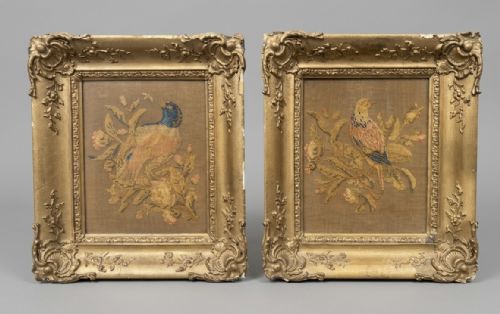


19th Century Woolwork
These 19th century woolwork pieces bring tactile texture and historic narrative to walls and furniture, offering a direct link to domestic handcraft of the period.
19th Century Woolwork
When you search for 19th century woolwork, you encounter a diverse range of framed wall art, fire screens, and textile art spanning the Victorian and Regency periods.
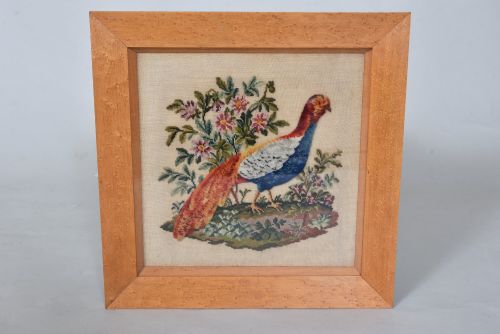
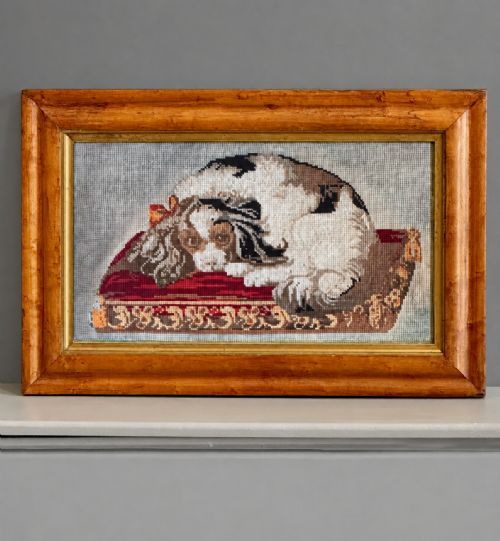
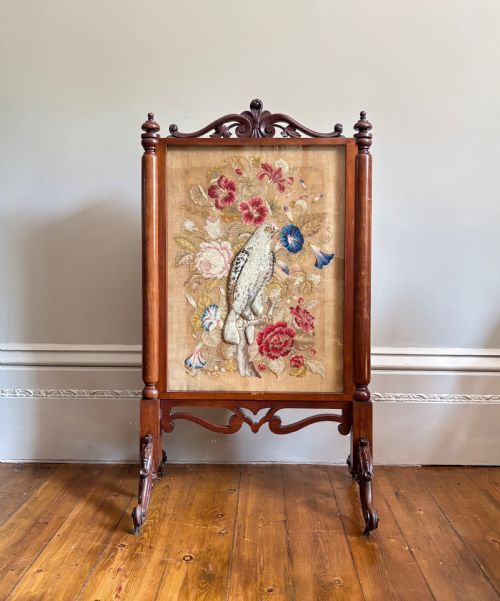
The most common formats on this page are framed textile pieces depicting animals, portraits, and maritime scenes, alongside functional items such as pedestal tables and side chairs with original wool work upholstery.
Origins stretch from English workshops to Scottish and continental European makers, capturing domestic scenes, courtly maidens, and historical subjects in wool and canvas.
What varies in quality
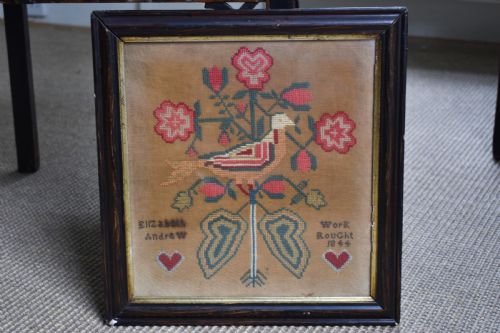
Quality rests on the precision of the needlework and the complexity of the design, distinguishing simple samplers from detailed pictorial tapestries depicting figures, birds, or maritime subjects.
The integrity and originality of the surrounding woodwork - such as rosewood frames, burr maple borders, or mahogany chair structures - substantially elevate the piece.
King Charles spaniels stare out from burr maple frames with the exact same watchful gaze they held in Victorian parlours.
The 19th Century Woolwork Glossary
- Berlin work
- A type of needlepoint embroidery worked on canvas from printed colour-grid patterns, popular during the nineteenth century. It allowed makers to create highly pictorial images of animals and people.
- Gros point
- A coarse needlepoint stitch used for larger areas of background and sturdy upholstery. It provides a robust, textured surface seen on chairs and fire screens.
- Verre églomisé
- A process of applying gold leaf and painting on the reverse side of glass. It creates a reflective, decorative border often found on oval picture frames.
- Plushwork
- A variant embroidery technique involving cut loops that produce a velvet-like, raised pile. This method gives texture to subjects such as animal coats.
19th Century Woolwork: Frequently Asked Questions
How do I hang woolwork safely?
Keep framed textiles away from direct sunlight to prevent the wool yarns and dyed threads from fading over time.
Ensure the wall fixings are secure and the hanging environment maintains stable humidity to protect both the fabric and the original wood or gilt frames.
Were these pieces made at home?
Many examples began as domestic handcraft projects, utilising printed Berlin wool work charts and pre-worked kits stitched by individuals.
Others were produced in professional workshops and specialised studios, particularly larger tapestries, maritime woolies, and upholstered furniture.
How do I date 19th century woolwork?
Dating relies on stylistic clues, framing methods, and occasional dated inscriptions or samplers that record specific years.
Comparative analysis of Victorian and Regency framing woods, such as rosewood and burr maple, helps narrow the period of manufacture.
Can I use woolwork chairs daily?
Original textile seats on mahogany or pedestal tables require mindful care if utilised in daily seating arrangements.
Regular, gentle maintenance helps preserve the historic wool and canvas structure from excessive friction and wear.