

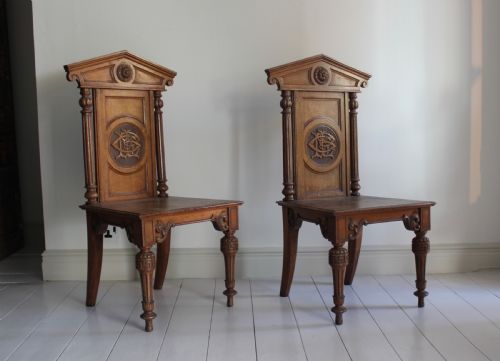

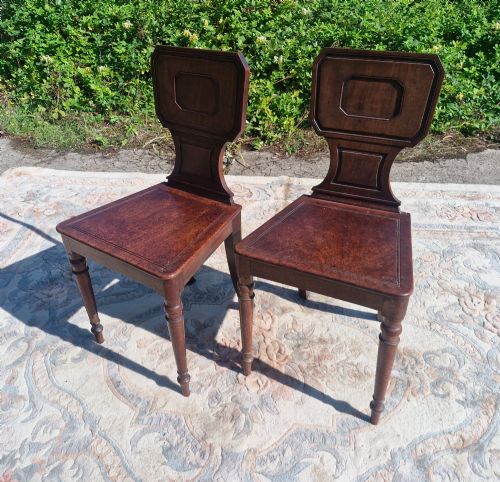
19th Century Wooden Chairs
These 19th century wooden chairs bring functional period timberwork into daily use, offering sturdy seating built from native and imported hardwoods.
19th Century Wooden Chairs
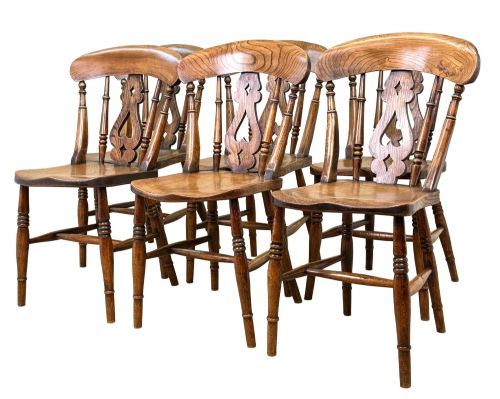
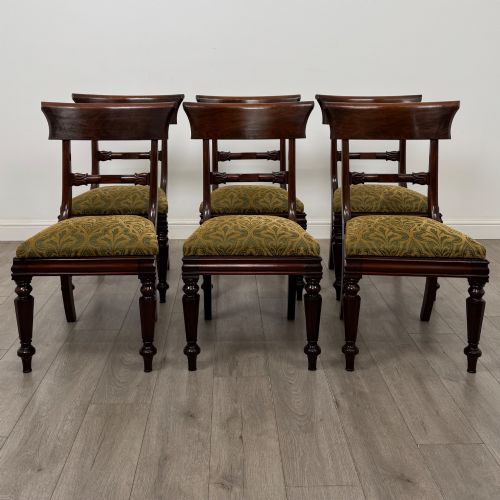
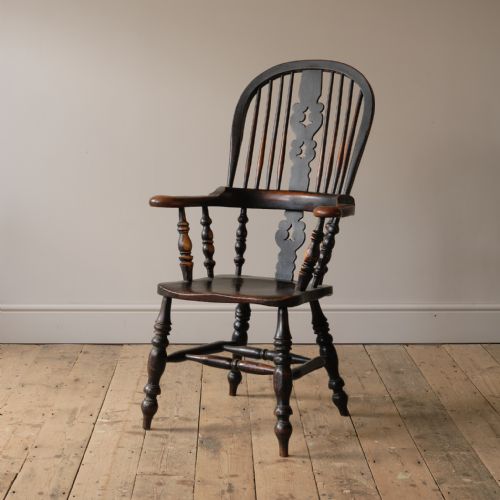
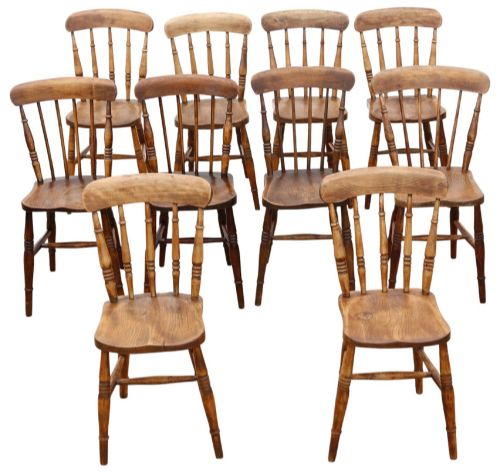
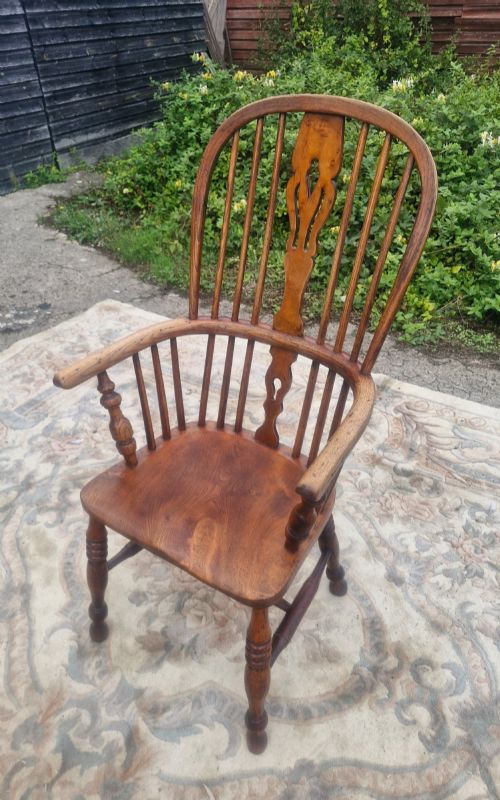
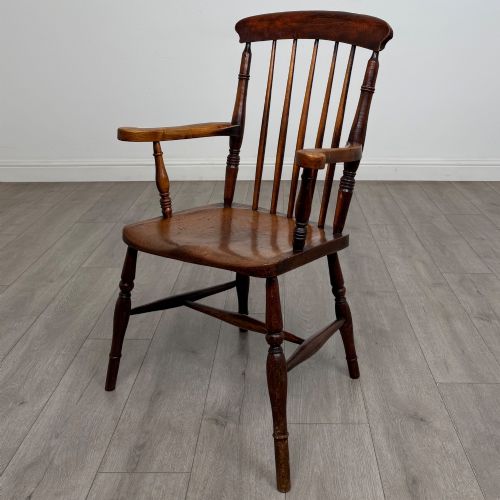
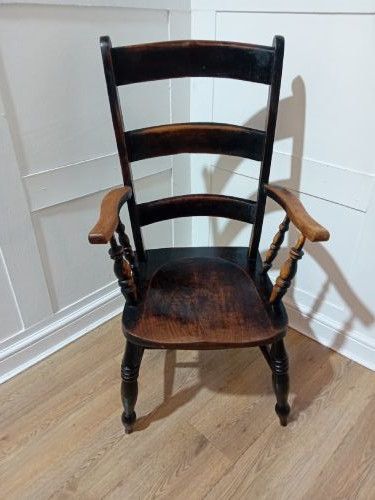
When hunting for 19th century wooden chairs, buyers encounter a diverse selection ranging from formal dining sets in mahogany to robust country windsor armchairs in elm and ash.
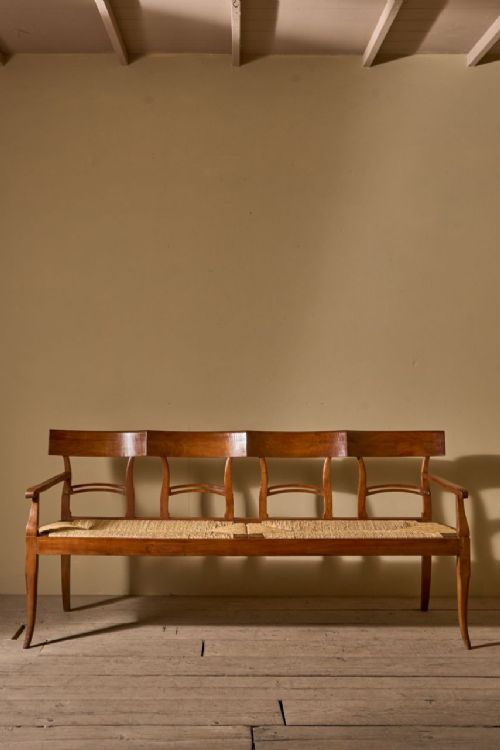
The varieties span formal drawing room seating, library desk chairs, and hallway pieces, alongside rustic vernacular forms built by regional carpenters.
Most pieces on this page originate from the Victorian and Regency periods, utilising timbers such as walnut, beech, and yew.
How they were made
Cabinet makers and bodgers constructed these seats using solid hardwoods like mahogany, oak, and walnut for formal furniture, whilst combining elm, ash, and beech for country chairs.
Joinery techniques relied on traditional mortise and tenon joints, turned spindles, and steam-bent components to shape Windsor bows and balloon backs.
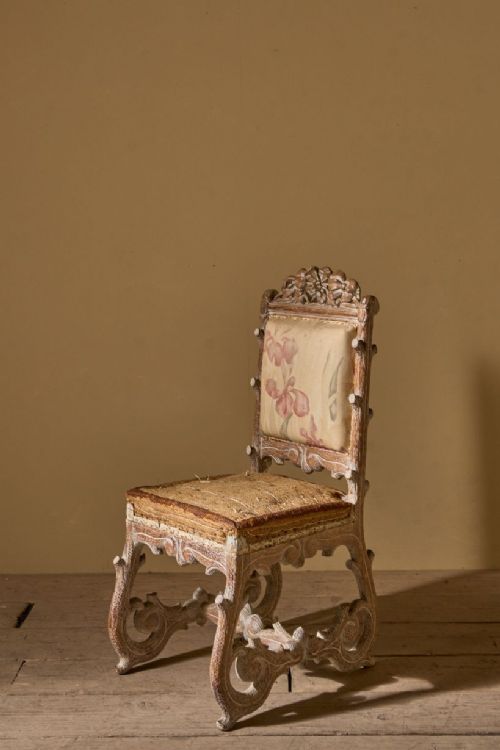
Surfaces were finished with natural polish or left in original timber patination, occasionally incorporating upholstered panels in fabric or tapestry.
Bodgers working in remote woodlands turned chair legs on pole lathes, sometimes using green timber that seasoned as the joints tightened.
What varies in quality
The standard of timber selection largely dictates the grade of the piece, with figured mahogany and well-matched yew and elm grains marking out superior examples.
The crispness of hand-carved details, such as ropebacks or balloon frames, separates standard workshop production from finer cabinet work.
Structural integrity depends on the original tightness of the joinery and whether the chair retains its original surface finish without excessive timber replacement.
Philip Clissett
The 19th Century Wooden Chairs Glossary
- Windsor
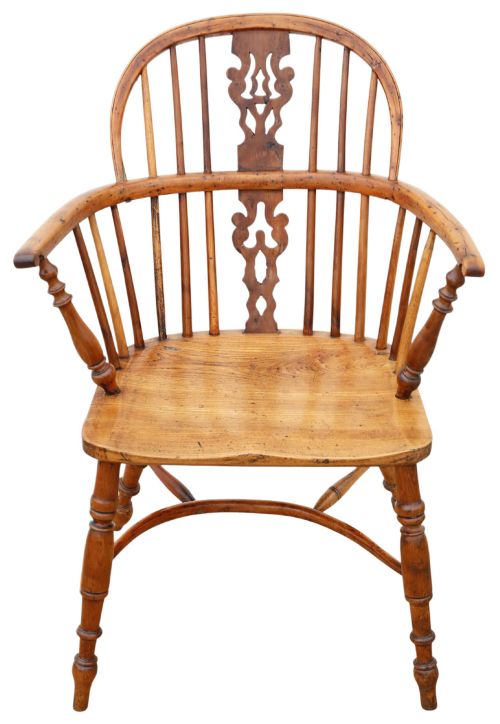
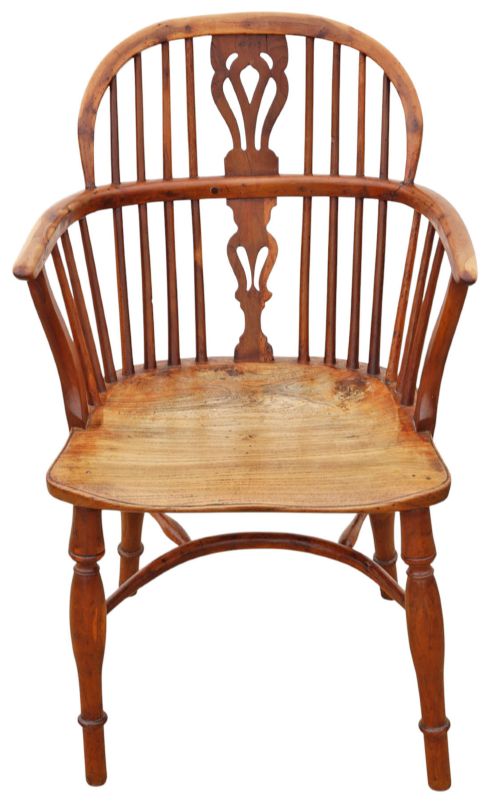
- A traditional wooden chair built with a solid sculpted seat into which the legs and back spindles are wedged directly. These country pieces often combine elm seats with ash or yew frames.
- Carver
- An armchair, typically designed as an elbow chair to match a set of single dining chairs. They frequently appear at the heads of dining tables.
- Balloon Back
- A rounded, curved dining chair back shape popular during the Victorian era. This upholstered or open wooden form resembles the silhouette of a hot air balloon.
- Lathe Back
- A chair back constructed using horizontal turned wooden spindles held between uprights. This vernacular style appears frequently in kitchen and country dining seating.
- Sgabello
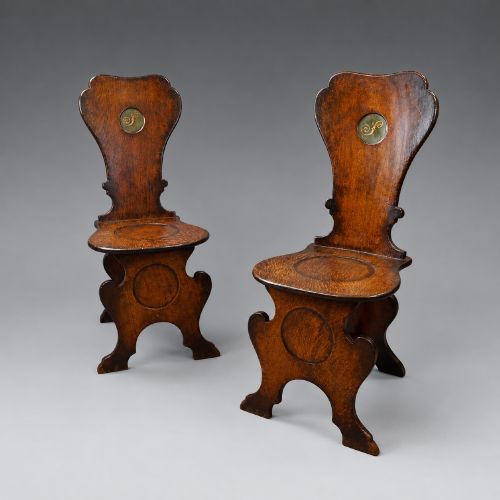
- A rigid, high-backed wooden hall chair featuring flat slab supports instead of conventional legs. These Italian-inspired seats were often placed in entrance halls.
- Smoker's Bow
- A low-backed Windsor armchair with a continuous curved arm rail, often utilised in vernacular settings or smoking rooms.
19th Century Wooden Chairs: Frequently Asked Questions
How do I identify a Windsor chair?
Windsor chairs are identifiable by their solid wooden seats, which act as the central hub into which the legs, back spindles, and bow are tenoned directly.
They usually combine different native timbers, using elm for the carved seat and ash or yew for the steam-bent framing.
What is the difference between a carver and an armchair?
A carver typically refers to an elbow chair designed to accompany a matching set of single dining chairs at a table.
General armchairs are standalone seating pieces intended for reading, parlours, or hallways rather than formal dining arrangements.
Are mahogany and walnut chairs from the same period?
Mahogany and walnut both appear across various 19th-century styles, though walnut gained particular popularity during earlier Georgian eras and later Victorian revival periods.
Mahogany remained the dominant timber for formal dining and library chairs throughout the Regency and Victorian decades.
How should I care for antique wooden chairs?
Maintain these chairs in stable room environments away from direct heat sources to prevent the timber from drying and splitting.
Apply occasional traditional wax polish to nourish the surface and preserve the historic patina.