



19th Century Wine Pitcher
These 19th century wine pitcher examples bring unmistakable nineteenth-century character to the table, combining functional glassware with decorative metalwork.
19th Century Wine Pitcher
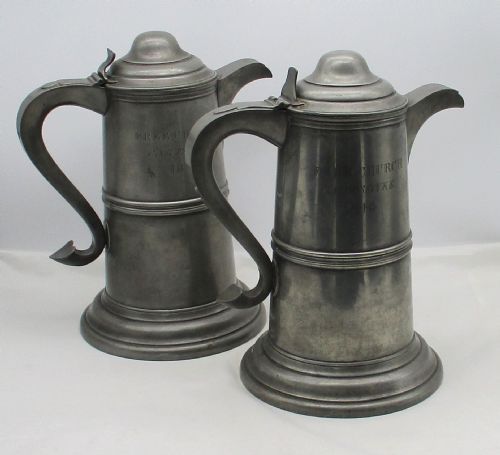
When you search for a 19th century wine pitcher, you encounter diverse forms including claret jugs, ewers, decanters, and flagons. Most pieces date from the Victorian era and the latter decades of the nineteenth century, reflecting varied dining traditions.
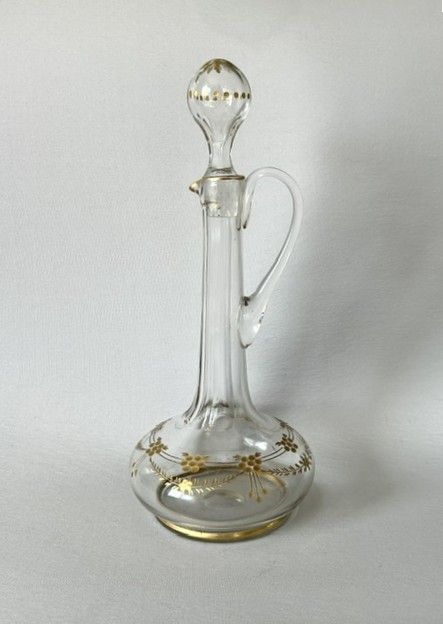
The objects take many shapes, from Bohemian cut glass vessels and Italian hand-blown glass footed ewers to English crystal champagne jugs. Makers utilised clear glass, overlaid glass, and coloured varieties like cranberry, often pairing them with silver, silver plate, or ormolu mounts.
Stylistic influences range widely across the period, taking in French Rococo Revival, Victorian Classical Revival, and French Second Empire designs. These pieces served practical roles at the dining table while doubling as decorative table centrepieces.
Materials and construction
Glassmaking techniques of the period involved hand-blowing, cutting, etching, and engraving, producing vessels adorned with motifs such as fruiting vines and grapes. Craftsmen also applied intricate latticinio decoration and enamel painting directly onto the glass surfaces.
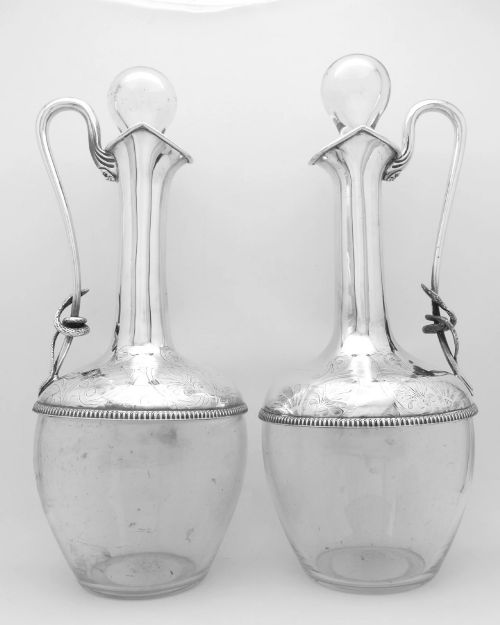
Metal mounts in solid silver, silver plate, Old Sheffield plate, and ormolu were cast, chased, and secured around handles, necks, and bases. Artisans frequently incorporated figural elements like serpents and monkeys into the metal mounts and handles.
English and French makers dominate these nineteenth-century listings, alongside notable examples from Bohemian and Italian workshops.
Qualities of craftsmanship
The distinction between standard domestic wares and superior examples rests in the depth of glass cutting, the clarity of the crystal, and the crispness of etched or engraved botanical motifs. Hand-blown pieces with specialised glass coloration or overlaid layers require advanced technical skill.
Mount quality depends heavily upon the weight of the silver or metal plating, the precision of the fit against the glass body, and the sculptural detail found in figural handles.
Charles Meigh·Elkington·Baccarat
The 19th Century Wine Pitcher Glossary
- Ewer
- A large jug with a wide spout and a decorative handle, historically used for holding and pouring wine or water. They often appear with matched basins or as standalone display pieces.
- Claret jug
- A specialised vessel designed specifically for serving red Bordeaux wine at the Victorian dinner table. These typically combine a glass body with a hinged metal lid and handle.
- Latticinio
- A glassblowing technique involving opaque white or coloured glass threads twisted or embedded within clear glass. This creates delicate web-like or lace patterns inside the vessel wall.
- Old Sheffield plated
- A composite material made by fusing a thin sheet of silver to a thicker copper base. This method preceded modern electroplating techniques and produces a warm metallic tone.
- Cranberry glass
- A rich red transparent glass coloured by the addition of gold chloride to the molten batch. It gained immense popularity during the Victorian period for decorative tableware.
19th Century Wine Pitcher: Frequently Asked Questions
What is a claret jug?
A claret jug is a specific type of pouring vessel created for serving red wine during formal Victorian meals. They combine glass bodies with hinged metal mounts for easy pouring.
These pieces frequently feature elaborate silver or silver-plated handles and lids shaped to match the prevailing decorative styles of the nineteenth century.
How do I clean an antique wine pitcher?
Antique glass and silver plate require careful hand washing in lukewarm water with mild soap. Avoid soaking pieces with metal mounts or applied enamels for extended periods.
Dry the metal components promptly to prevent spotting, and use a soft cloth on the glass to maintain clarity without scratching.
Were these pitchers used for wine?
Many of these vessels served wine at the table, while others functioned as water jugs, cider decanters, or communion vessels. The presence of spouts, hinged lids, and generous capacities suited them for various liquids.
Glass jugs with elaborate cut crystal and silver mounts typically held wine or champagne during dining occasions.
How can I date my piece?
Dating relies upon stylistic clues such as Victorian revival motifs, maker marks on silver mounts, and manufacturing techniques like hand-blowing or cut glass patterns. Mid and late nineteenth-century pieces often display specific aesthetic traits typical of those decades.
Comparing the form, materials, and decorative motifs against known periods helps narrow down the decade of production.