





19th Century Wine Chest
A 19th century wine chest is a heavy wooden box designed to keep bottles cool or secure, offering both period presence and practical storage.
19th Century Wine Chest
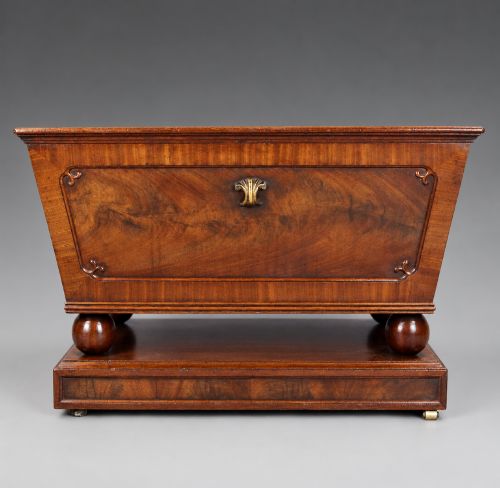
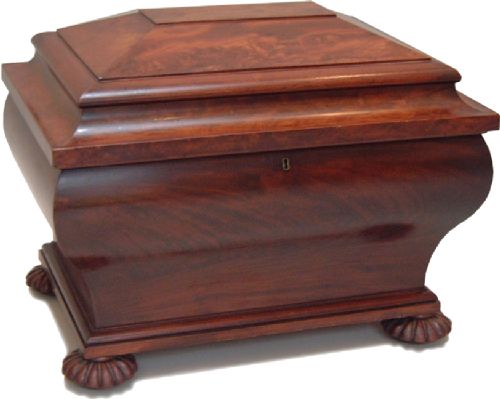
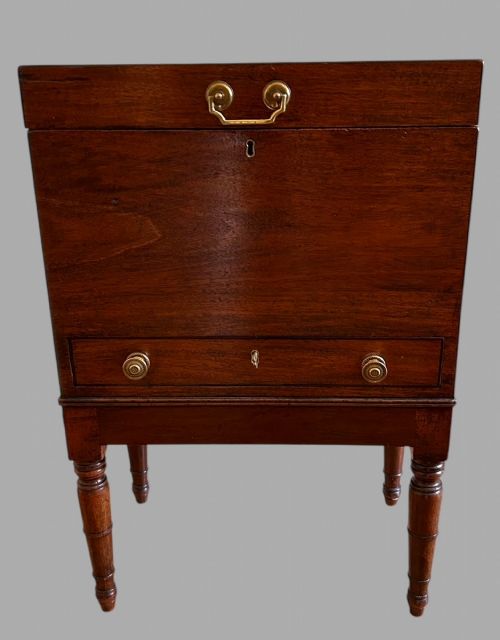
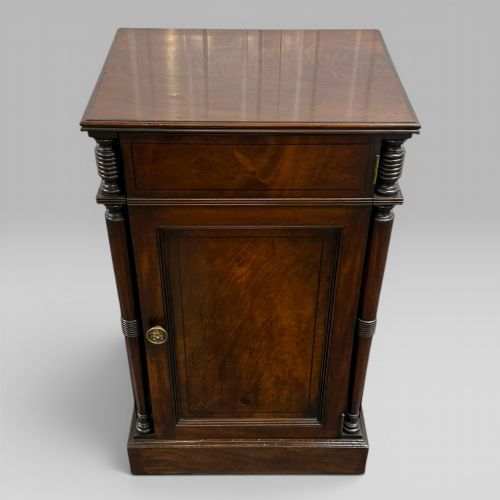
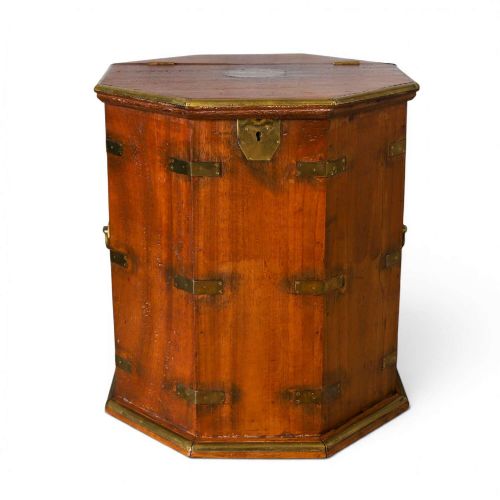
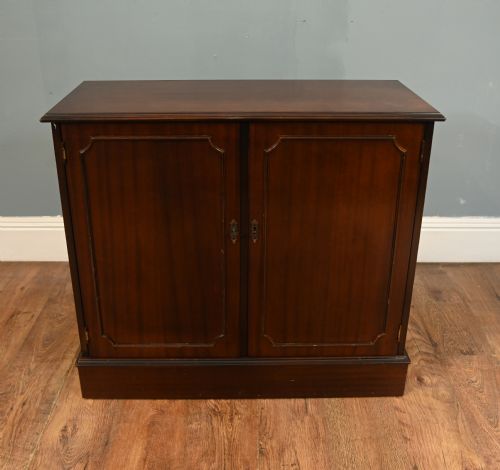
A 19th century wine chest typically takes the form of a sarcophagus-shaped cellarette or wine cooler designed to hold bottles securely in dining rooms. These pieces originate from Georgian, Regency, William IV, and Victorian periods, often taking the shape of low boxes on feet or stands.
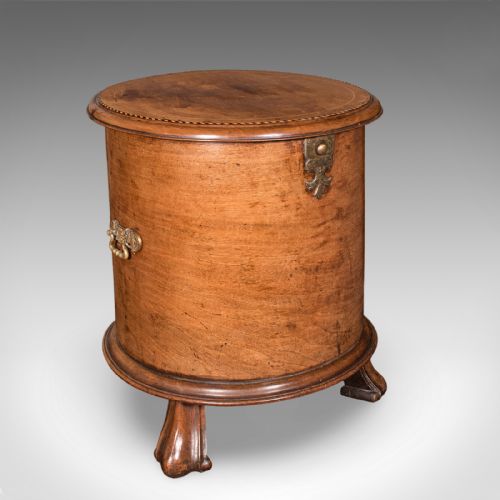
The versions most commonly met on this page are mahogany cellarettes featuring hinged lids, carved details, and occasional brass fittings or paw feet. Makers and cabinetmakers produced these in styles ranging from formal Regency to ornate Victorian walnut.
Materials and construction
Construction relies heavily on solid mahogany and flame mahogany veneer, chosen for rich grain patterns and durability in domestic settings. Cabinetmakers also utilised walnut, rosewood, and amboyna for more decorative examples.
Metal components such as brass handles, lead linings, and ormolu mounts served functional and decorative roles, keeping ice and bottles contained while adding architectural contrast to the dark timber.
Some chests contain hidden lead linings designed to keep wine cold while guests dined.
Distinctions in quality
The standard of timber selection largely dictates quality, with matched flame mahogany veneers and burr elm or walnut marking out superior examples. Cabinetmaking skill shows in the precision of the sarcophagus curves and carved paw feet.
Internal fitting sophistication also separates pieces, particularly the presence of original lead linings or divided bottle compartments designed to protect glass during the Georgian and Regency eras.
Gillows·Freemans of Norwich
The 19th Century Wine Chest Glossary
- Cellarette
- A lockable container or box used to store wine bottles near the dining table. They frequently feature lead-lined interiors to hold ice.
- Sarcophagus
- A tomb-like box shape with a sloping lid, popular for Regency and Georgian wine coolers. This architectural form allowed for generous interior depth.
- Flame mahogany
- A timber cut to reveal a flamelike pattern in the grain. Cabinetmakers prized this veneer for high-status furniture.
- Ormolu
- Gilt bronze mounts applied to furniture for decoration. This technique appeared on finer Regency and French-influenced pieces.
- Teapoy
- A small box on a pillar and claw feet used for storing tea. These occasionally appear alongside wine chests in period inventories.
19th Century Wine Chest: Frequently Asked Questions
What is a 19th century wine chest?
A 19th century wine chest is a specialised storage box used in dining rooms to keep wine cool or secure before serving. They were built in various timber types to match the dining furniture of the period.
Most examples operate as freestanding boxes with hinged lids, often lined with lead to hold ice around the bottles.
How were cellarettes used?
Cellarettes sat beneath sideboards or beside dining tables during grand meals to provide easy access to bottled wine. Servants would fill the interior with ice to chill the bottles.
They also served to lock away expensive vintages from household staff when not in active use.
How do I date a wine chest?
Dating relies on observing the prevailing style, such as Georgian proportions, Regency sarcophagus curves, or heavy Victorian carving. Timber choices like flame mahogany or burr walnut also point to specific decades.
Foot styles, including carved paw feet or brass castors, help narrow down the manufacturing period within the century.
Where should I place one?
These chests function well in modern dining rooms as bottle storage, side tables, or decorative statement pieces. Their deep interiors accommodate blankets or books.
Placing them away from direct heat sources protects the timber and veneer from drying out over time.