



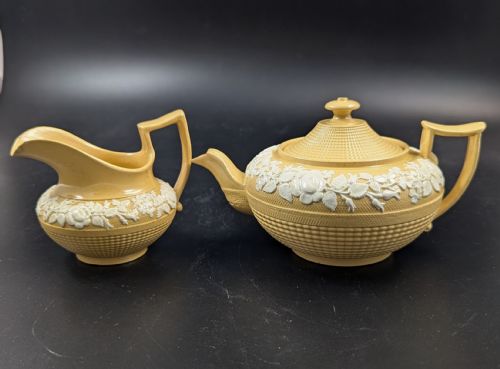


19th Century Wedgwood Pottery
These pieces of 19th century wedgwood pottery bring tactile relief work, fine stoneware, and neoclassical grace straight into a modern room.
19th Century Wedgwood Pottery
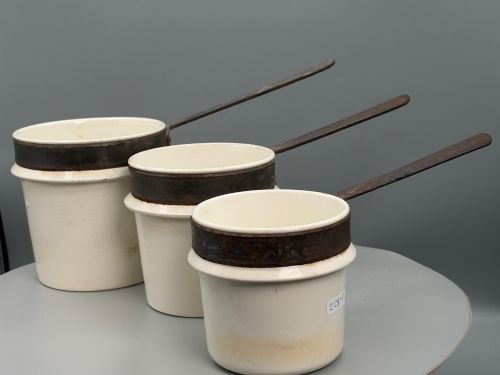
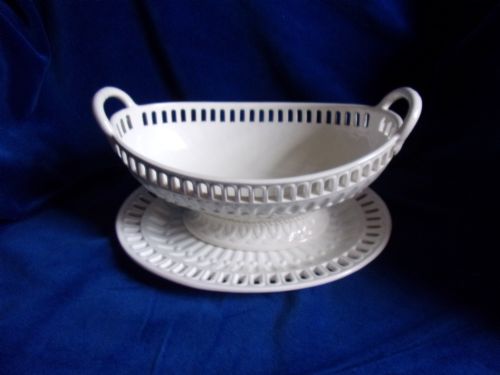
Buyers seeking 19th century wedgwood pottery encounter a diverse range of functional and decorative ceramic forms produced across the Georgian and Victorian eras. The selection on this page centres on tea sets, teapots, vases, and serving vessels such as cheese domes and game pie dishes.
The objects span varied aesthetic movements, including Regency, Victorian Neoclassical, and Aesthetic styles. Common material expressions include blue jasperware, white stoneware, drabware, and caneware, alongside hand-painted dessert services and creamware lustre jugs.
How these pieces were made
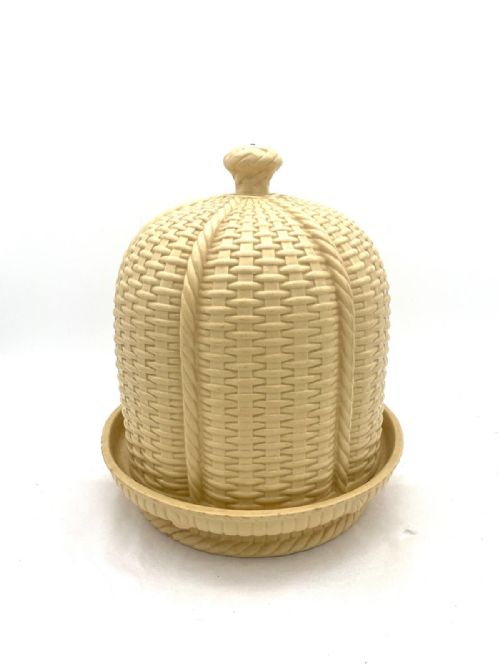
Makers utilised dense ceramic bodies such as stoneware and earthenware, frequently shaping them into basket weave textures or smooth neoclassical profiles. Specialised bodies like caneware, buff stoneware, and drabware provided distinct foundational colours for the vessels.
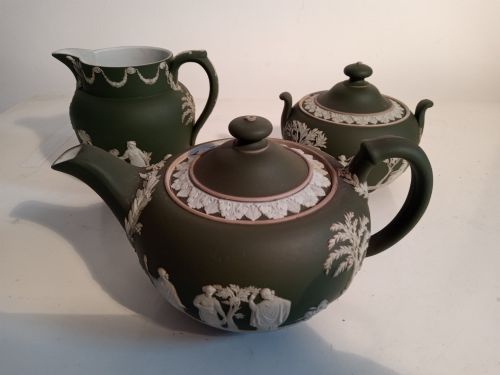
Surface decoration involved applied relief work in contrasting clays, as seen on jasperware, alongside hand-painted details and occasional accents of gold leaf. Glazes were applied to creamware lustre jugs and earthenware to achieve specific reflective finishes.
19th Century Wedgwood Pottery Retail Price Guide 2026
Typical asking prices for 19th century wedgwood pottery among the pieces listed under this phrase on Sellingantiques today, from the lower quarter to the upper quarter. They describe what is for sale here now, not the wider market.
The listings show pieces spanning the 19th century, incorporating Georgian and Victorian eras, alongside specific styles like the Aesthetic Movement.
What varies in quality
Quality rests in the crispness of the moulded reliefs and the precision of the hand-painted or glazed surfaces. Sharply defined details on jasperware figures and clean lines on basket weave mouldings distinguish finer examples from softer, less distinct production.
The complexity of the form and the ambition of the design also set pieces apart, moving from utilitarian tea sets to elaborate Persian style vases with specific designer attributions or comprehensive dinner services.
Thomas Allen Design
The 19th Century Wedgwood Pottery Glossary
- Jasperware
- A fine-grained, unglazed stoneware developed by Josiah Wedgwood, commonly featuring white clay reliefs applied against a coloured ground such as blue or olive green.
- Caneware
- A yellowish, buff-coloured earthenware body produced to resemble bamboo or cane, frequently utilised for utilitarian kitchen and tableware.
- Drabware
- A muted, brownish-grey earthenware body favoured for nineteenth-century domestic serving pieces like cheese domes.
- Creamware
- A refined light-coloured earthenware perfected in the eighteenth century and continued into the nineteenth, often finished with a clear glaze or lustre.
- Stoneware
- A hard, vitreous ceramic fired at high temperatures, impervious to liquids and durable enough for daily service.
19th Century Wedgwood Pottery: Frequently Asked Questions
How do I care for nineteenth-century ceramics?
These pieces require gentle hand washing in warm water without harsh detergents to protect their unglazed surfaces and delicate hand-painted details.
Avoid soaking items with gold leaf or lustre finishes to preserve the metallic sheen over time.
Were cheese domes used daily?
Nineteenth-century households utilised ceramic cheese domes on the dining table to keep large blocks of cheese moist and protected from insects.
The matching underplates caught crumbs and allowed the heavy covers to be moved easily.
How are pieces dated?
Dating relies on stylistic shifts, recorded pattern names, and impressed factory marks stamped into the ceramic body beneath the glaze.
Changes in body composition, such as the use of drabware or caneware, also help narrow down the period of manufacture.