




19th Century Trumeau
A 19th century trumeau brings architectural presence and reflected light to a room through its integrated mirror and painted or carved panel above.
19th Century Trumeau
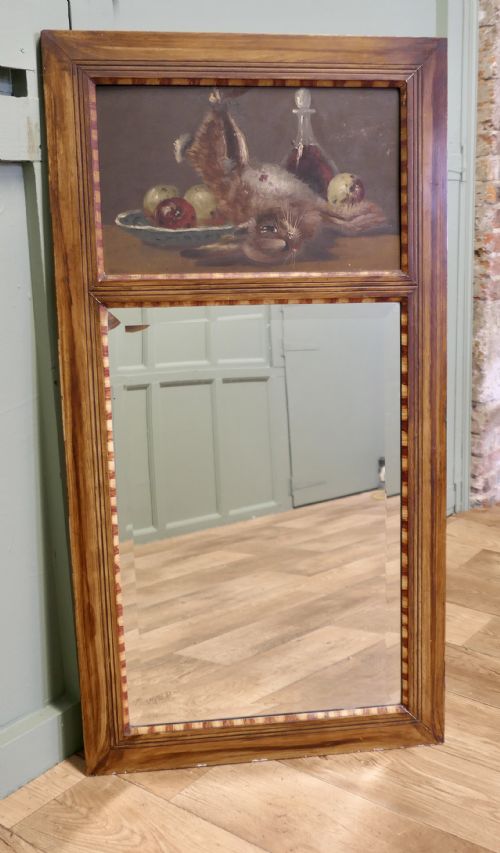
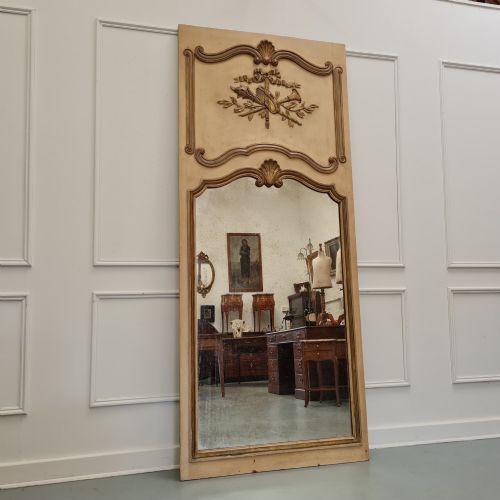
A 19th century trumeau is a decorative wall mirror featuring an upper panel containing an oil painting, a relief carving, or a decorative painted surface. These architectural fittings were designed to hang between windows or above mantelpieces in French salons, country houses, and town residences.
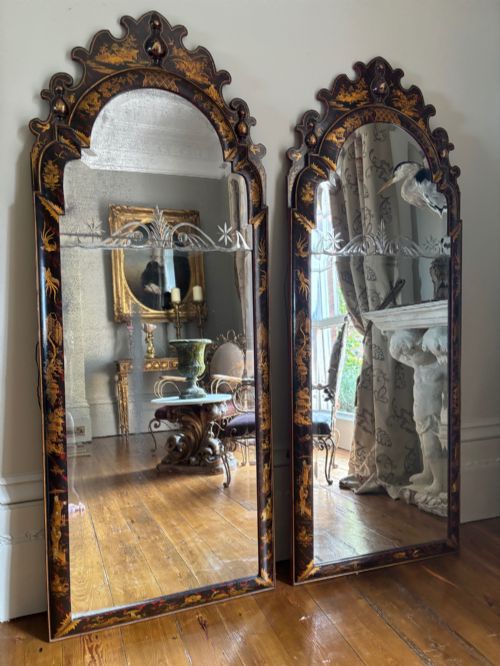
The pieces on this page span the 19th century, with examples originating from the Regency period through to 1900. Alongside standard wall-hung formats, buyers will find tall pier mirrors intended for narrow wall spaces and overmantel mirrors designed to sit directly above fireplaces.
Many variants incorporate console tables, creating a unified set for an entryway or reception room. The decorative vocabulary draws heavily from French chateau styles, Neoclassical symmetry, and Empire Revival motifs.
How they were made
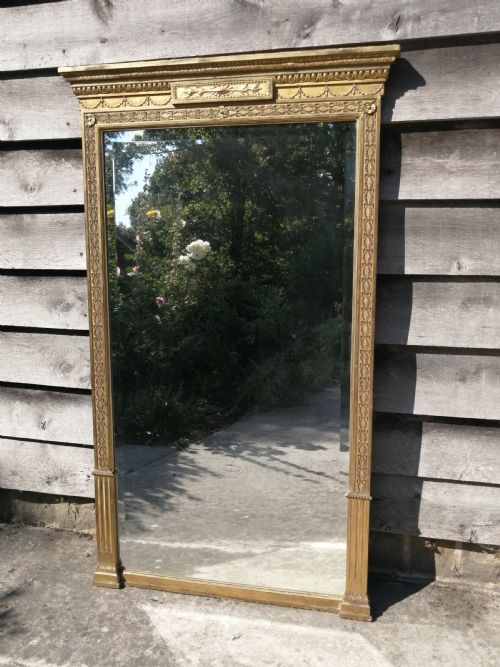
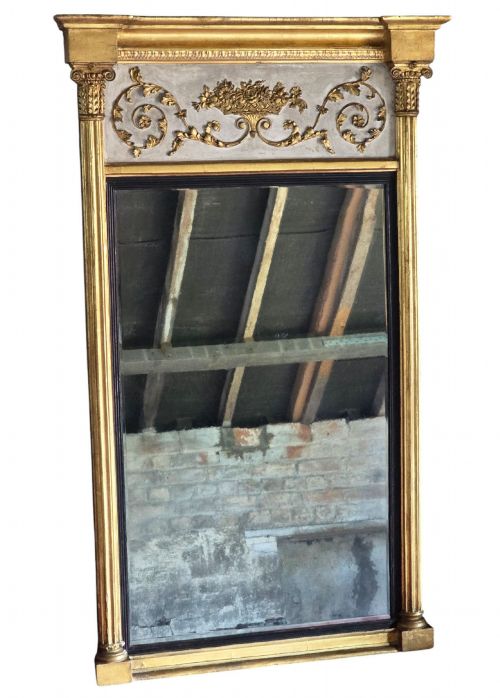
Makers constructed the primary frames from carved wood and gesso, applying layers of gold leaf or paint directly over the plaster ground. Many examples employ flame mahogany or incorporate contrasting ebonised details to create visual depth within the timber.
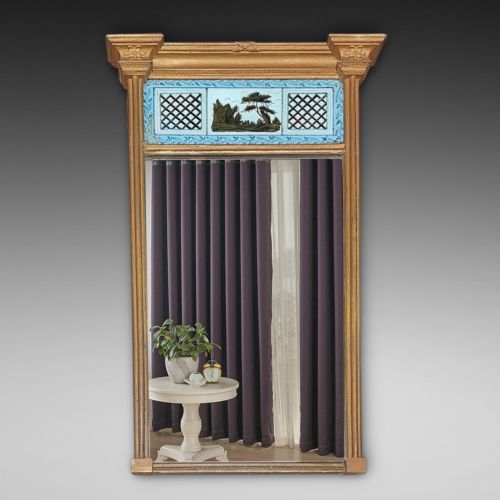
The upper panels frequently display integrated oil paintings, canvas inserts, or decorative relief panels depicting figures such as Bacchus and cherubs. Verre eglomise techniques appear on specific Regency and later pieces, adding gilded designs onto the reverse of the glass plate.
What varies in quality
The depth and crispness of the carved wood and gesso ornamentation separate standard production from finer work. Superior examples exhibit finely modelled relief panels, subtle gilding transitions, and original silvered glass plates retaining their historic character.
Proportion and structural integrity dictate the standing of a piece within the range. Tall, narrow formats and items retaining matching console tables or original oil paintings represent the more ambitious output of the period.
The 19th Century Trumeau Glossary
- Trumeau mirror
- A decorative wall mirror incorporating a painted, carved, or panelled section above the glass plate. This architectural form originated in France to fill the pier wall between two windows.
- Pier mirror
- A tall mirror designed specifically to hang on the narrow section of wall between windows. These pieces often coordinate with low console tables placed directly below them.
- Verre eglomise
- A cold decoration technique involving the application of gold or silver leaf onto glass, combined with painted details. It creates a reflective, metallic panel with a muted historic sheen.
- Gesso
- A plaster-based mixture applied over a wooden frame to provide a smooth ground for carving and gilding. Historic examples show fine cracking beneath the gold leaf or paint layer.
- Overmantel mirror
- A large horizontal mirror built to sit on the chimney breast directly above a fireplace. These frames frequently echo the architectural mouldings of the room.
19th Century Trumeau: Frequently Asked Questions
Where should a trumeau be hung?
These mirrors suit placement above a fireplace mantel or between tall windows to maximise natural light in a room. They also function well in hallways above console tables.
The vertical proportions of a pier mirror require high ceilings to sit comfortably without dominating the surrounding wall space.
What is the difference between a pier mirror and an overmantel mirror?
Pier mirrors are typically taller and narrower, designed for the wall space between windows or doors. Overmantel mirrors are wider and built to sit horizontally above a fireplace.
Both forms belong to the trumeau family when they incorporate an upper decorative panel above the main glass.
Do these mirrors have original glass plates?
Many surviving 19th century examples retain their original silvered glass plates, which often display light foxing and oxidation. This natural ageing process creates a softer reflection than modern glass.
Listings specify whether a plate is original or a later replacement.
How do I identify French Empire style in these mirrors?
French Empire pieces often feature classical architectural elements such as columns, pilasters, and symbolic relief panels depicting figures or motifs from antiquity. The timber framing frequently uses mahogany or bold gilding.
These elements reflect the classical revival movements of the early 19th century.