

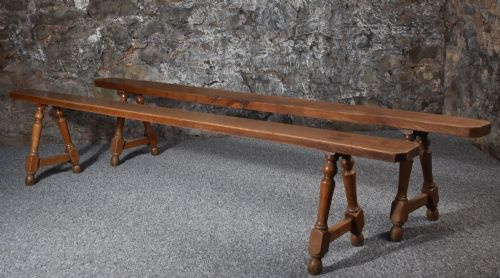


19th Century Trestle Bench
A 19th century trestle bench brings robust utility and honest vernacular character to a room, offering enduring practical seating through sturdy timber construction.
19th Century Trestle Bench
A 19th century trestle bench is a long, linear seat supported by end frames or trestles, built primarily for domestic or communal utility. These pieces encompass rustic country forms, French provincial designs, and Arts and Crafts creations intended for practical everyday use.
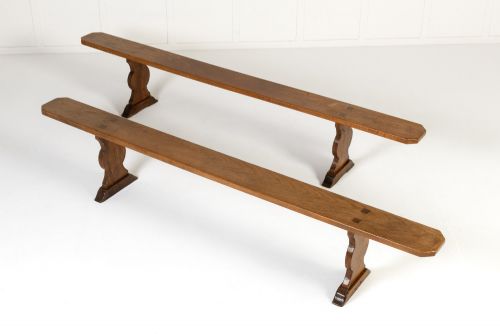
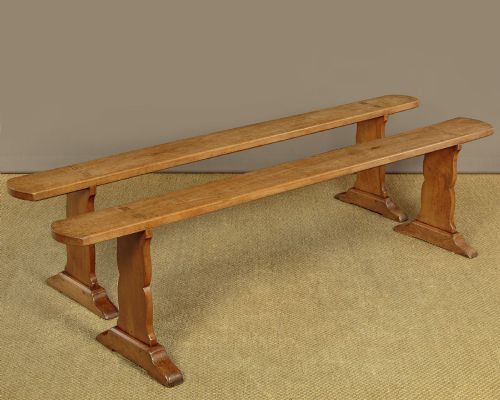
The version most commonly met on this page is the utilitarian wooden bench shaped from domestic timbers like oak, elm, and pine. They appear frequently in pairs or as long single seats suited for halls, dining areas, and windows.
Originating across England, France, Sweden, and China, these benches range from simple scrubbed pine surfaces to elaborately carved oak or cherrywood examples. Their diverse styles reflect regional vernacular traditions spanning the Victorian era and the late nineteenth century.
How they were made
Construction relies heavily on solid native hardwoods and softwoods, utilising oak, elm, pine, sycamore, cherrywood, and fruitwood. Carpenters selected these timbers for their density and grain, ensuring the seating could withstand heavy daily wear.
Joinery methods prioritize structural strength, employing pegged tenons, thick plank tops, and sturdy trestle supports. Surfaces often show the honest marks of hand planing and scrubbing rather than excessive decorative veneer.
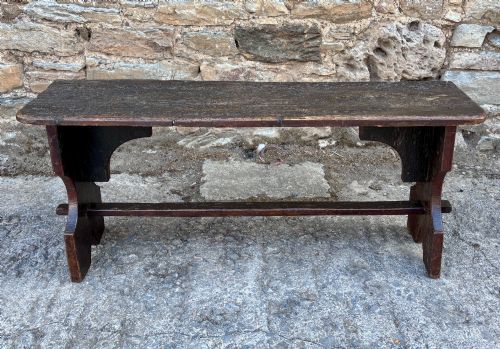
A genuine nineteenth century pig bench brings stubborn agricultural charm straight into a modern hallway.
What varies in quality
The standard of a 19th century trestle bench depends on the selection of timber and the integrity of its original construction. Denser woods like oak and cherrywood, combined with thick plank tops and robust trestle ends, distinguish the sturdier examples from lighter utility pieces.
Proportion and surface finish dictate the refinement of the piece, ranging from untouched scrubbed sycamore and elm to deeply carved Flemish oak. Greater visual harmony and honest, patinated timber surfaces elevate certain benches above simpler workshop iterations.
The 19th Century Trestle Bench Glossary
- Trestle
- A structural support consisting of a horizontal beam fixed to two splayed legs at each end. This design provides maximum legroom and stability beneath long bench tops.
- Vernacular
- Architecture or furniture built by local craftsmen using traditional regional methods and materials. These pieces prioritize local utility over high-style academic design.
- Scrubbed
- A timber surface washed repeatedly with water and a stiff brush to remove accumulated grime and finish. This process leaves a pale, clean grain characteristic of working kitchen and dairy tables.
- Pig bench
- A low, sturdy wooden bench historically used in agricultural settings for butchery preparation. These examples are prized for their thick elm or pine tops and low, stable profiles.
- Refectory
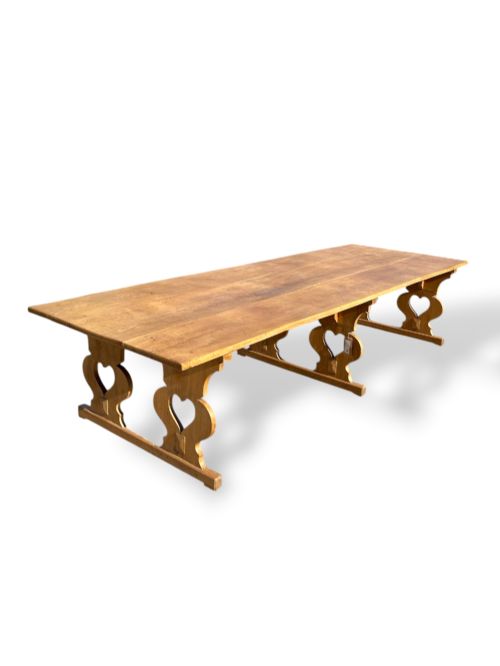
- A long dining hall style associated with communal eating spaces. Benches matching this form are built to run alongside similarly proportioned heavy dining tables.
19th Century Trestle Bench: Frequently Asked Questions
How were these benches originally used?
These benches served daily domestic and agricultural purposes, providing communal seating around farmhouse dining tables or serving as wash and preparation surfaces in sculleries.
Shorter hall benches and window seats provided practical spots for removing muddy boots and coats near home entryways.
Where do these benches fit at home?
A long trestle bench slides neatly beneath a kitchen or dining table, keeping floor space open when not in use. They also fit well against a hallway wall or beneath a window.
Shorter pairs function effectively as low coffee tables or extra seating in living spaces.
How do I spot a Victorian period bench?
Victorian examples often display specific stylistic markers like carved oak details, Green Man motifs, or Arts and Crafts influences. Timber choice also offers clues, with native oak and heavy elm frequently appearing in British pieces from the mid to late nineteenth century.
Construction traits such as hand-planed plank tops and traditional pegged joinery help confirm the period of manufacture.
Are these benches sturdy enough for daily use?
Solid timber construction using dense hardwoods like oak, cherrywood, and elm ensures these benches remain exceptionally strong. Their simple trestle framework distributes weight evenly across the floor.
Routine care involves keeping the dry wood nourished and checking that structural joints remain firm over time.