

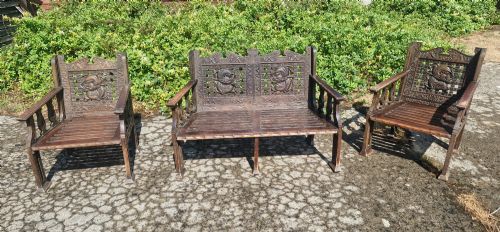
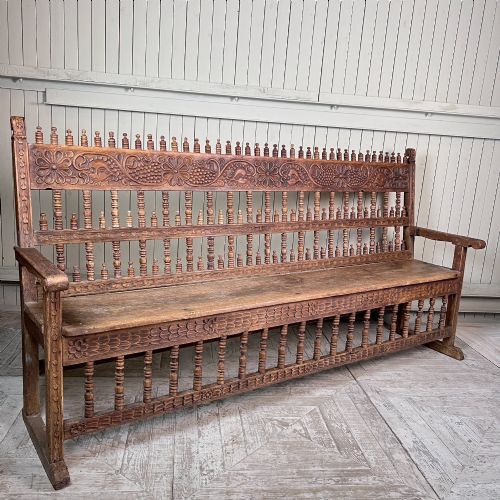
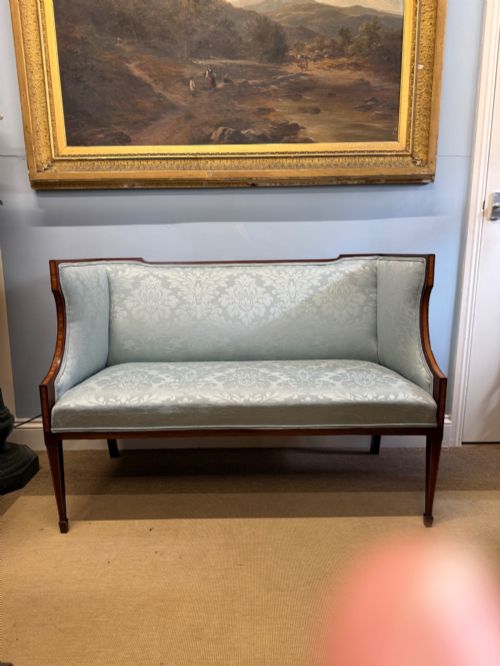
Antique Wood Bench Seat
An antique wood bench seat brings honest craftsmanship and historic character to a hallway, bedroom or garden.
Antique Wood Bench Seat
An antique wood bench seat combines practical domestic seating with traditional joinery spanning several centuries. Buyers searching this phrase encounter everything from rustic pine pews and oak settles to refined mahogany window seats and giltwood day beds.
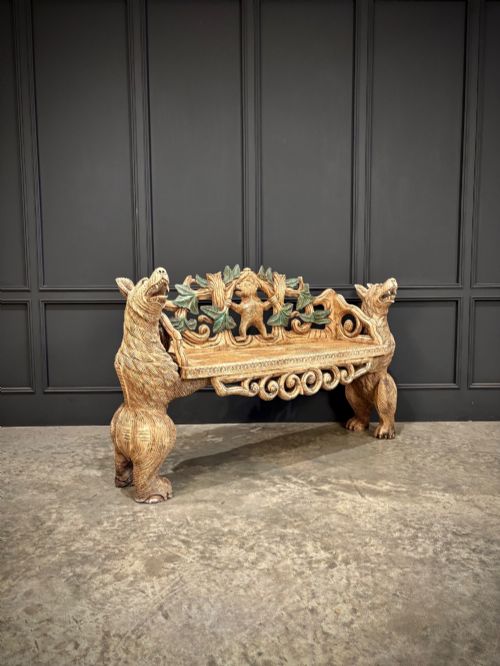
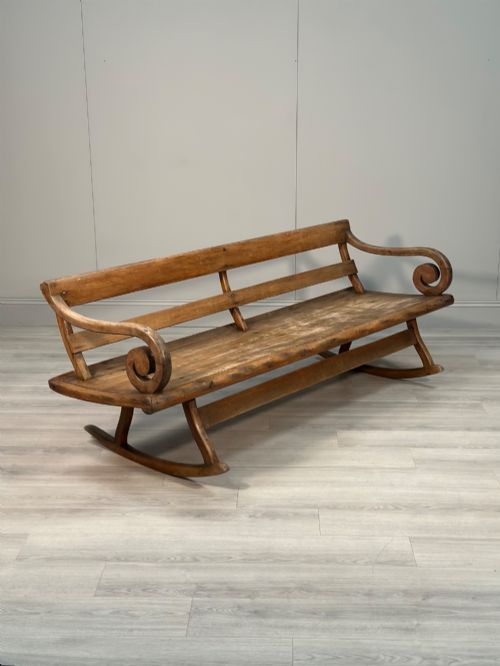
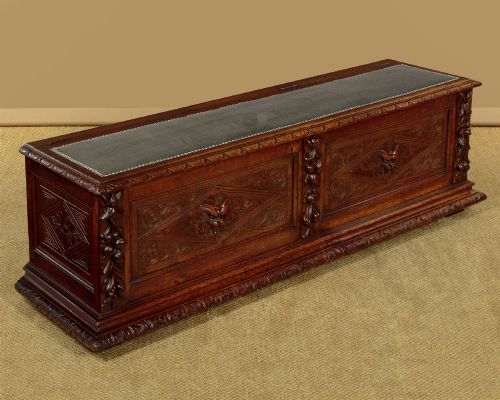
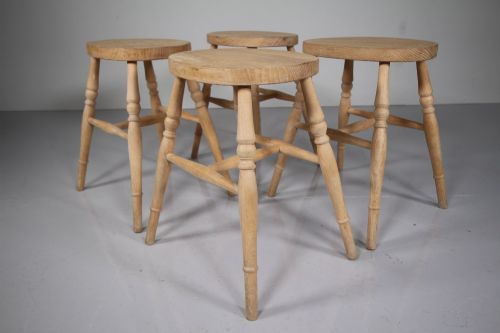
The selection here encompasses robust 19th-century examples alongside Edwardian and earlier vernacular pieces. Forms range from simple three-legged milking stools and chapel pews to elaborate carved hall benches and duets.
Origins vary widely across English country houses, French salons, and European workshops. Whether placing a carved oak box seat in a boot room or a neoclassical window seat in a drawing room, these items serve functional and decorative roles.
Materials and Construction
Makers utilised solid timbers such as oak, mahogany, pine, walnut, and ash, often pairing them with natural materials like cane, silk, and woven fabric. Iron and cast-iron components appear primarily on garden benches and faux bois outdoor seating.
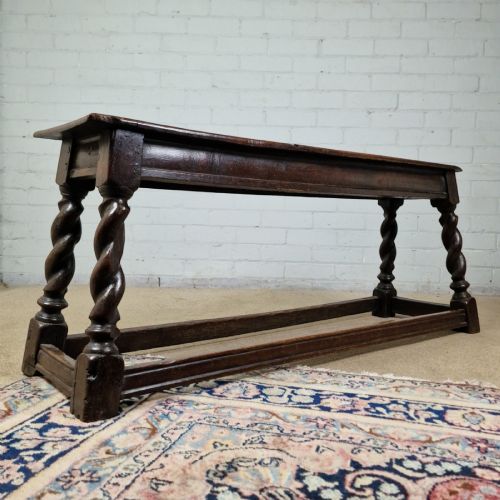
Carpenters relied on traditional joinery methods including pegged mortise and tenon joints, dovetailing, and hand-carving to ensure structural endurance. Surfaces show the marks of hand planes, saws, and chisels, supplemented by original paint, ebonising, or gilding.
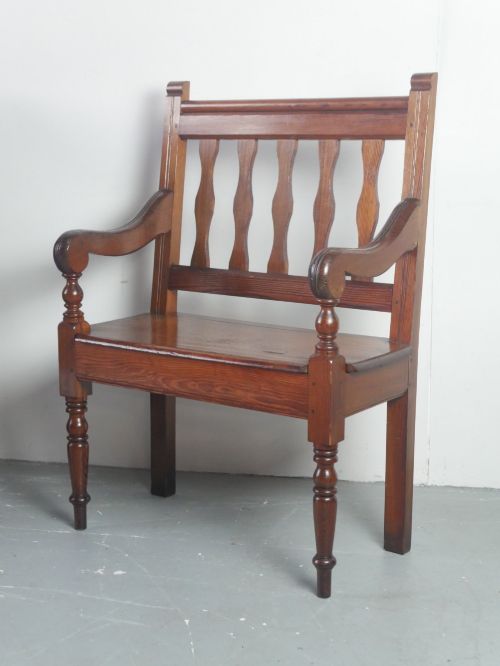
Listings feature 19th-century pieces alongside Edwardian designs, constructed from mahogany, oak, pine, and cast-iron.
Factors of Quality
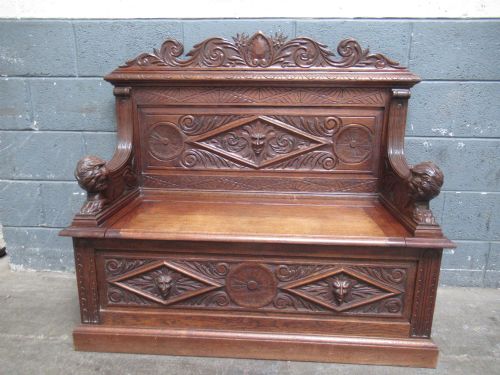
Superior examples display crisp, deep hand-carving and well-proportioned frames that maintain strict architectural harmony. The choice of timber grain and the survival of original surface finishes, such as ochre paint or patinated polish, elevate a piece's standing.
Integrity of construction separates ordinary items from exceptional ones. Tight joints, minimal structural timber replacement, and authentic period hardware demonstrate superior workshop practice and long-term durability.
James Shoolbred & Co.
The Antique Wood Bench Seat Glossary
- Settle
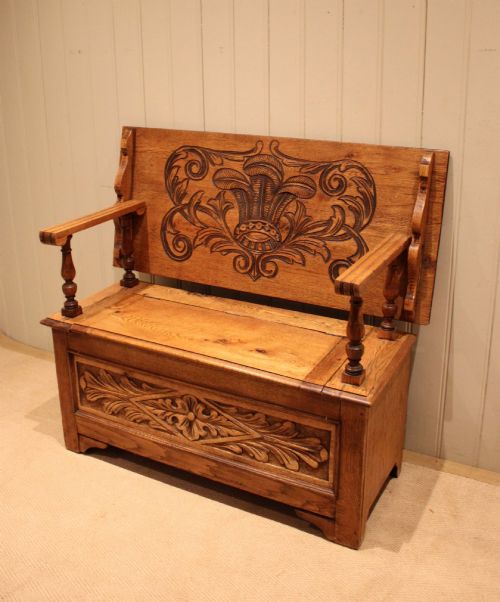
- A wooden wooden bench with a high back, solid arms, and often a box compartment beneath the seat to block cold drafts. These functional seats originated in vernacular domestic interiors.
- Window Seat
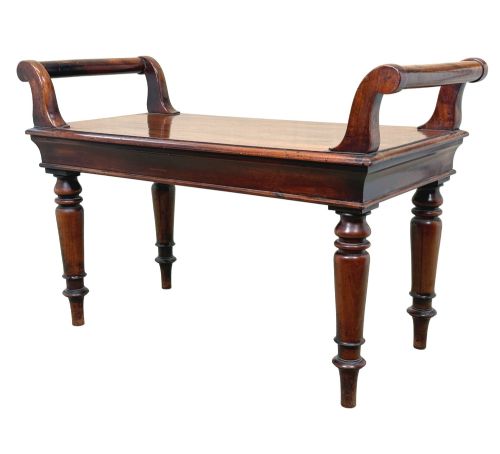
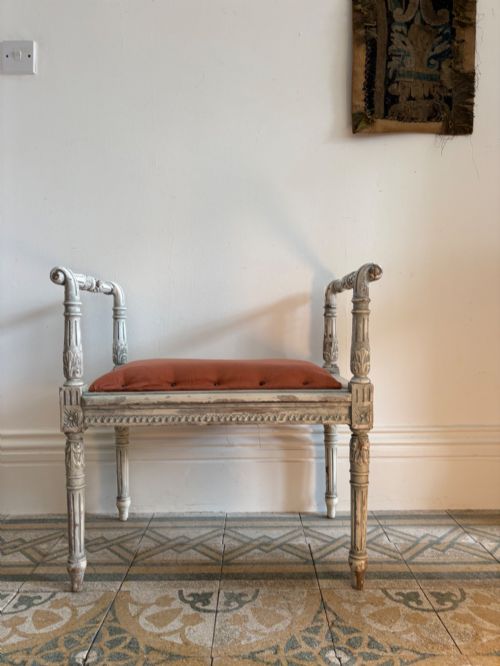
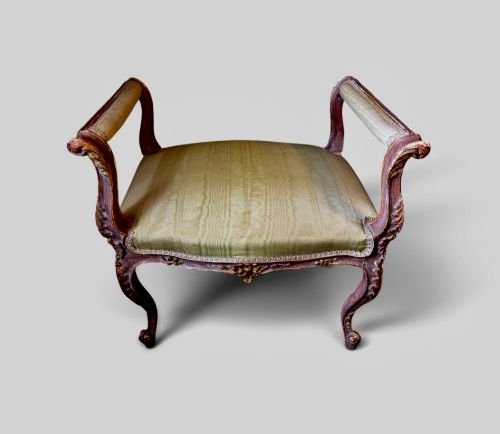
- A long, narrow seating form specifically proportioned to fit beneath a bay or sash window recess. They frequently feature upholstered tops or cane panels.
- Box Settle
- A form incorporating a hinged lid beneath the seat for storage. This dual-purpose design maximises space in smaller rooms.
- Faux Bois
- A decorative technique mimicking the natural appearance of tree branches and wood grain. It appears frequently on 19th-century cast-iron and concrete garden furniture.
- Vernacular
- Objects made by local craftsmen using regional materials and traditional styles rather than high-fashion metropolitan designs. These pieces reflect local building customs.
Antique Wood Bench Seat: Frequently Asked Questions
Where should I place a hall bench?
A hall bench suits narrow entryways, corridors, and boot rooms where visitors need a sturdy surface to sit while removing shoes. Models featuring integrated box seats or cabinets provide hidden storage for household clutter.
Position the bench against a solid wall to balance its weight and anchor the entrance space. Pairing it with coat hooks above creates a practical and welcoming transitional area.
How do I care for antique wood furniture?
Maintain wooden surfaces by dusting regularly with a soft, dry cloth and avoiding silicone-based polishes that build up residue over time. Keep pieces away from direct heat sources and strong sunlight to prevent timber warping and finish fading.
Apply a traditional beeswax paste occasionally to nourish exposed timber and preserve the historic patina. Handle upholstered silk or cane sections with care to avoid punctures.
What is the difference between a settle and a bench?
A settle incorporates a solid high back and enclosed sides designed originally to shield occupants from cold floor drafts in older homes. Many traditional settles also feature a hinged seat lid hiding a storage box underneath.
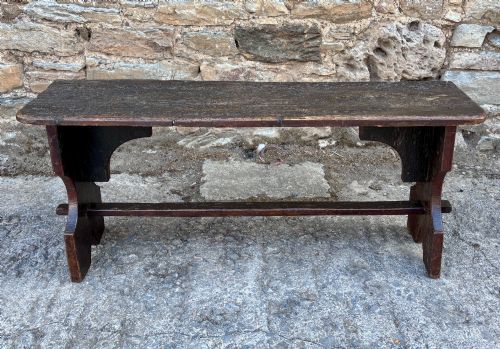
A standard bench offers open sides and a lower back, focusing primarily on communal seating rather than draft exclusion. Settles tend to possess a more architectural silhouette within a room.
How do I identify a Victorian piece?
Victorian seating often displays heavier proportions, dark ebonised or walnut finishes, and deep machine-assisted or hand-carved ornamentation. Styles from this era frequently revive earlier aesthetic movements like Gothic, Jacobean, or Rococo.
Examine the underside and hidden framing components for tool marks and construction methods consistent with mid-to-late 19th-century manufacturing. Original upholstery webbing and padding materials can also help confirm the production timeframe.