


19th Century Teak Chest
When you handle a 19th century teak chest, you encounter sturdy timber built to travel across oceans and withstand tropical climates.
19th Century Teak Chest
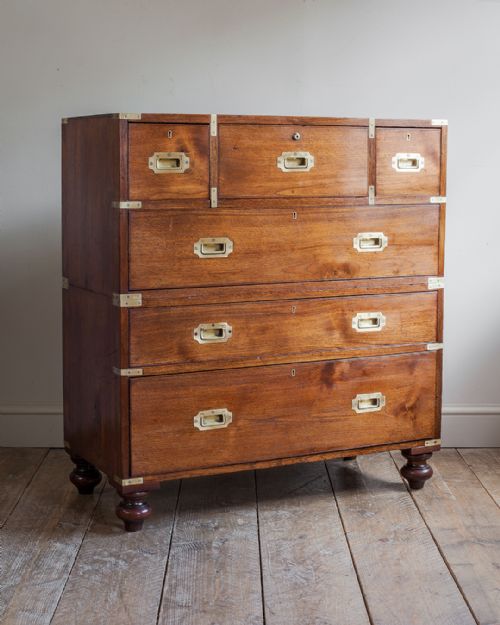
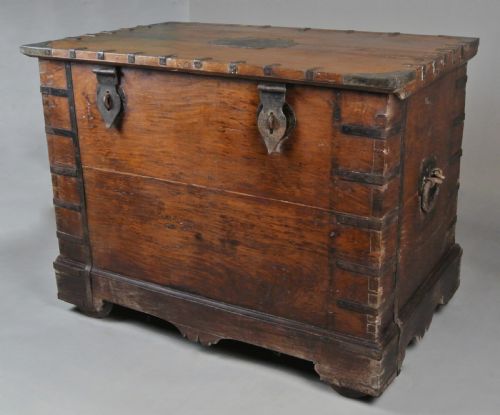
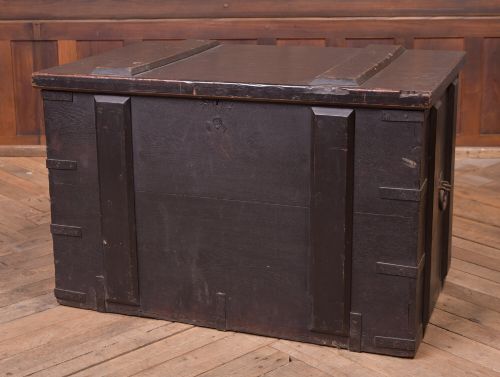
A 19th century teak chest generally takes the form of a campaign chest of drawers, a storage trunk, or an Anglo-Indian dowry box designed for military officers and merchants on the move. These pieces span periods from the Regency era through the Victorian decades, originating from British colonial outposts, naval assignments, and international trade routes. You meet two-part sectional chests built for easy transport alongside heavy iron-bound storage coffers and multi-drawer cabinets.
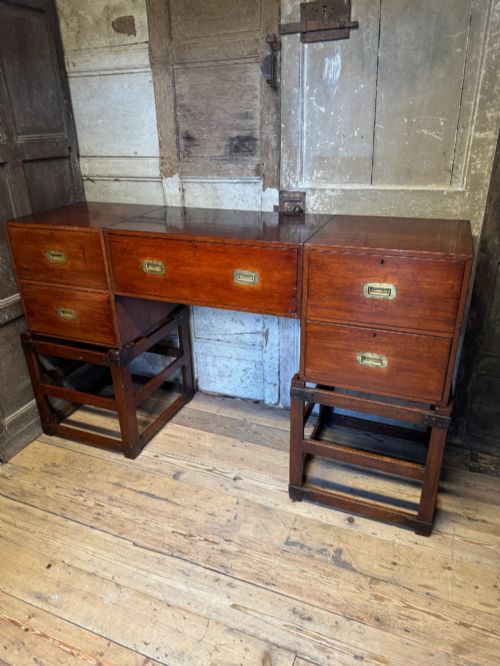
The practical nature of these objects dictates their construction, separating modular writing desks and secretaire chests from simple lift-top blanket boxes and strong boxes. Many examples display the influence of Anglo-Indian, Dutch colonial, and military campaign styles adapted for life at sea or in distant stations. Buyers select these items for their robust storage capacity and the historical narrative carried in their brass mountings and timber grain.
Materials and construction
Cabinetmakers utilised dense tropical teak, frequently supplemented by secondary hardwoods like mahogany, padouk, and cedar for internal drawers and linings. This heavy timber resists moisture and warping, making it ideal for maritime environments and distant colonial postings.
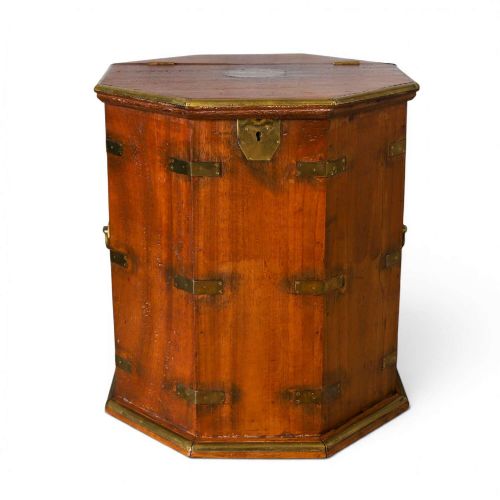
Metal reinforcements define the manufacturing technique, employing heavy brass corners, straps, and flush-mounted carrying handles designed to protect edges during transit. Iron binding and intricate brass studwork appear on larger storage coffers and Zanzibar chests, securing the structural integrity of the box.
Listings feature teak combined with brass, iron, and secondary hardwoods across Victorian, Regency, and mid-nineteenth-century periods.
Judging the standard
The standard of a piece rests on the precision of its dismantling mechanism, particularly in two-part campaign chests where the sections must join seamlessly with original flush brass fittings. Superior examples maintain the structural integrity of their internal drawers, secretaire compartments, and hidden pigeonholes without replacement components.
Artisanal detail distinguishes regional output, ranging from plain military utility boxes to heavily carved Burmese boxes or elaborate brass-studded Zanzibar trunks. The crispness of the ripple moulding, the weight of the brass hardware, and the uninterrupted grain of the solid teak separate standard utility items from exceptional workshop productions.
The 19th Century Teak Chest Glossary
- Campaign chest
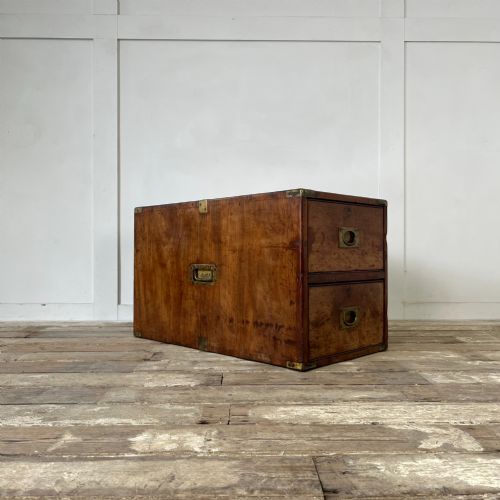
- A modular chest of drawers built in two or more separate sections with recessed brass handles for military transport. These units stacked securely for travel by ship or wagon.
- Zanzibar chest
- A heavy storage trunk featuring elaborate brass studding, strapwork, and often a concealed internal compartment known as a candle box. They reflect trade connections across the Indian Ocean.
- Secretaire chest
- A cabinet containing a pull-out drawer with a fitted writing surface and small pigeonholes. This hybrid form combined storage with a fold-down desk for correspondence.
- Flush handle
- A metal handle inset into the wood surface so it does not protrude during transport. This feature protects the surrounding timber from impact.
- Padouk
- A dense reddish-brown hardwood utilised in colonial furniture making. It provides a stable alternative to teak for specific internal and external elements.
19th Century Teak Chest: Frequently Asked Questions
What is a campaign chest?
A campaign chest is a modular piece of furniture built in sections so military officers could pack and move their belongings easily during reassignment. These units typically feature recessed brass handles and protective corner brackets.
Divided into upper and lower halves, they allowed efficient transport on ships and carriages while retaining the domestic comfort of a standard chest of drawers.
How do I identify a Zanzibar chest?
Zanzibar chests are distinguished by heavy brass studwork, intricate geometric strapwork, and a domed or flat hinged top over a deep storage well. They frequently include a small internal till or candle box.
These trunks arrived via trade routes connecting India, the Middle East, and the East African coast during the nineteenth century.
Why was teak used for these chests?
Teak contains natural oils that render the wood highly resistant to moisture, rot, and insect damage in tropical environments. This stability made it the preferred material for naval and colonial use.
Makers relied on its dense grain to withstand the rigours of long sea voyages and fluctuating humidity without warping.
How are two-part chests assembled?
Two-part chests consist of an upper and lower cabinet that lock together using concealed metal brackets or drop-in pins on the sides. This modular arrangement halved the weight for lifting.
Removable feet or bun bases often accompanied these sections to keep the lower drawers clear of damp floors during campaign deployment.