

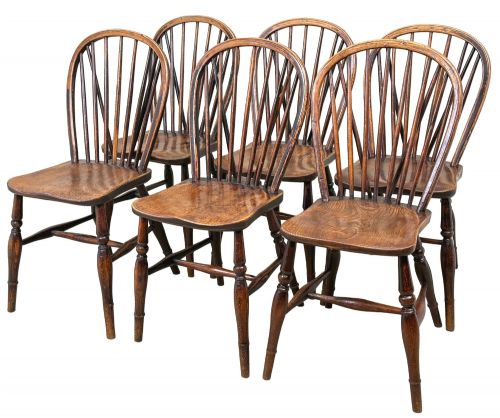


19th Century Stick Back Chair
A 19th century stick back chair brings robust regional craft and honest timber into daily domestic use.
19th Century Stick Back Chair
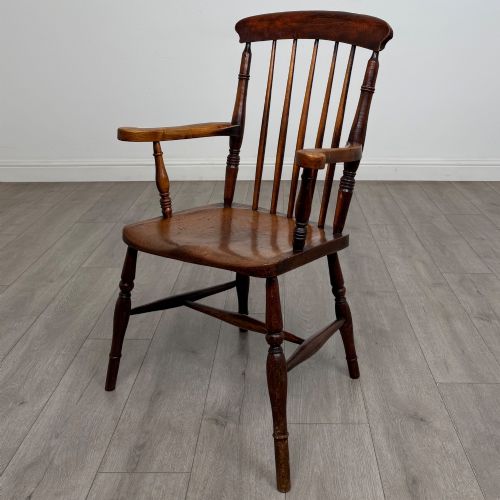
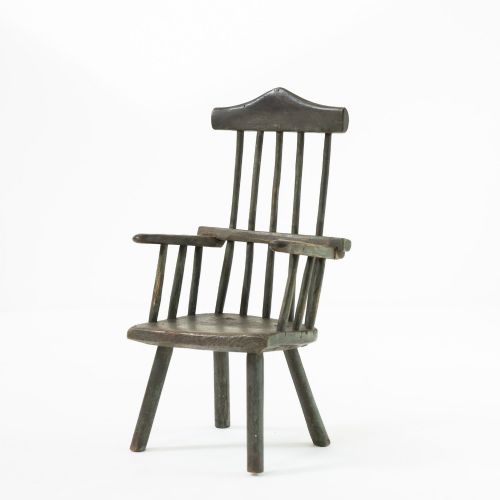
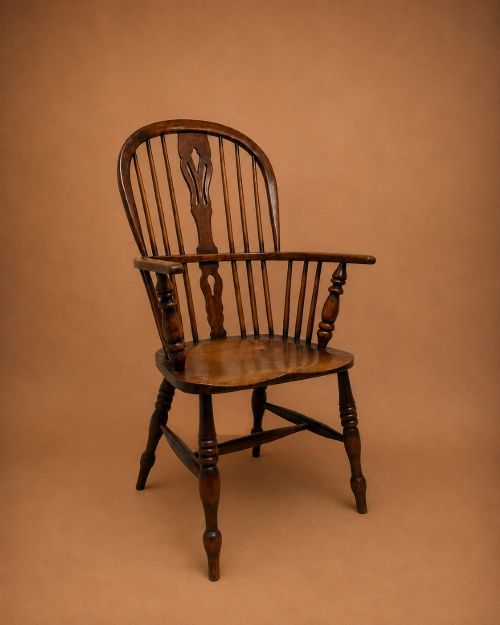
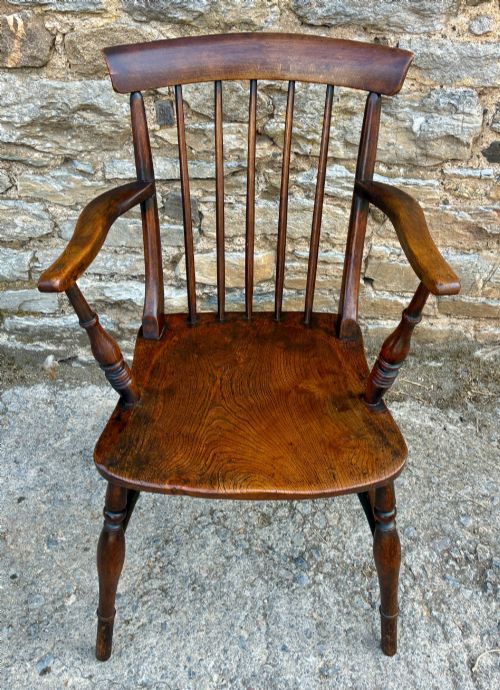
A 19th century stick back chair is a utilitarian seating form rooted in vernacular traditions across English regions like the West Country, Yorkshire, and Wales. These seats encompass domestic dining chairs, kitchen armchairs, low backs, high backs, and smaller children's variants made for daily household service.
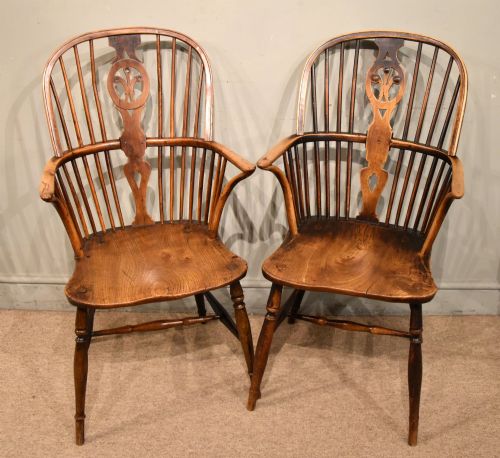
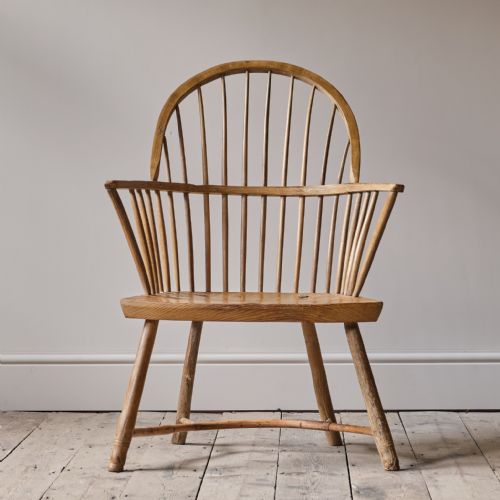
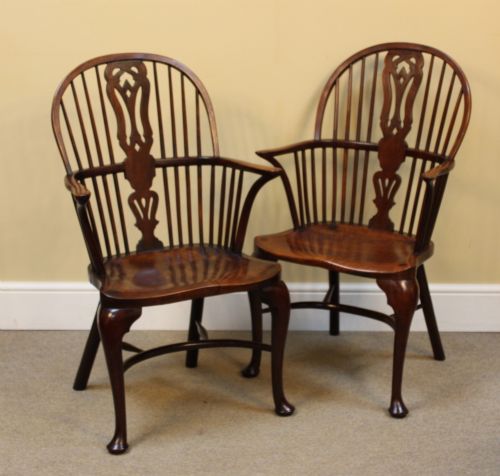
The selections span the Georgian, Regency, and Victorian eras, demonstrating how local cabinet makers and rural bodgers adapted traditional forms into robust domestic furnishings. Common configurations include hoop backs, comb backs, and Windsor frames designed around a solid wooden seat saddle.
Regional variations dominate the selection, showing distinct turning patterns, back shapes, and arm styles that identify where a piece was built. Buyers encounter single armchairs, matched pairs, and larger sets originating from rural farmhouses, kitchens, and cottages.
How They Were Made
Construction relies on a combination of contrasting timbers selected for specific structural properties, predominantly pairing resilient ash or oak frames with elm seats and yew wood components. Central elements like spindles, legs, and bow backs utilise turned or steam-bent hardwoods to achieve structural tension and resilience.
The traditional method involves boring tapered holes directly into a thick wooden seat slab to receive the undercarriage legs and upper back spindles without metal fasteners. This Windsor technique locks the wedged components permanently into place as the green wood dries and tightens around the tenons.
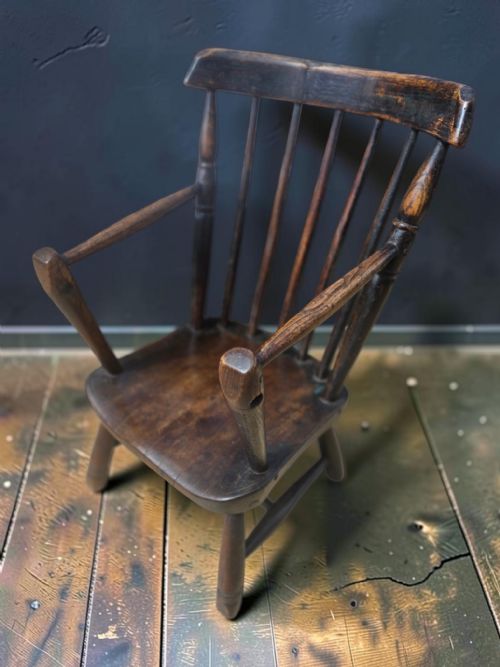
Makers occasionally sized these chairs down for the nursery, leaving miniature stick backs for tiny Victorians to command the breakfast table.
What Varies in Quality
Quality rests upon the selection of timber figure, such as richly grained yew wood or burr elm, alongside the fluidity of the turned spindles and the sculpted comfort of the saddle seat. Examples displaying crisp joinery and balanced proportions from regional workshops command greater interest than plain utility versions.
The integrity of the original surface patina and the survival of untouched structural components dictate the standing of an individual piece within the field. Chairs retaining traces of early paint or a deep, warm wax finish demonstrate superior historical preservation.
Gabbitass of Worksop
The 19th Century Stick Back Chair Glossary
- Windsor
- A chair built with a solid wooden seat slab into which the legs, back spindles, and bow are separately inserted. This construction method provides immense strength without relying on a conventional box frame.
- Stick back
- A chair design featuring slender turned wooden spindles forming the backrest, secured into the seat and top rail. These components offer lightweight support while maintaining rigid structural integrity.
- Comb back
- A Windsor chair variation where the vertical back spindles extend upward into a horizontal crest rail resembling the teeth of a comb. This regional style often incorporates shaped arms carved from a single piece of timber.
- Hoop back
- A continuous bentwood bow that forms both the arms and the top rail of the chair in a single flowing curve. This shape distributes sitting pressure evenly across the upper framework.
- Vernacular
- Objects shaped by local traditions, available materials, and practical utility rather than formal academic design rules. These rural pieces reflect the distinct regional habits of their makers.
19th Century Stick Back Chair: Frequently Asked Questions
What is a stick back chair?
A stick back chair is a traditional wooden seat where turned spindles form the backrest above a solid carved timber saddle. These utilitarian pieces were built in rural workshops across Britain for everyday domestic use.
They appear in various forms including kitchen armchairs, dining sets, and low back seating. The design prioritises structural durability through pegged joints and shaped wooden components.
How do I identify a West Country chair?
West Country chairs are recognised by specific regional turning styles, distinctive arm designs, and the choice of local timbers like elm and ash. Makers in these southern counties developed particular profiles for their spindle backs and saddle seats.
These characteristics separate them from northern examples produced in regions like Yorkshire or Wales. Examining the undercarriage turning and wood grain helps pinpoint the geographical origin.
Were these chairs used in kitchens?
Kitchens served as the primary setting for these robust chairs due to the hardwearing nature of elm seats and ash frames. Families relied on them for daily dining and household tasks around the hearth.
Their sturdy construction handled heavy domestic service without requiring delicate maintenance. Surviving examples often display the warm patina earned through generations of active use.
How should I care for a yew wood chair?
Yew wood chairs benefit from occasional applications of traditional wax polish to nourish the timber and maintain its rich surface patina. Keeping the chair away from direct heat sources and sudden temperature changes protects the aged joints from drying out.
Gentle dusting with a soft cloth preserves the natural finish without harming the historic wood. Regular inspection of the wedged joints ensures the structure remains stable during daily use.