
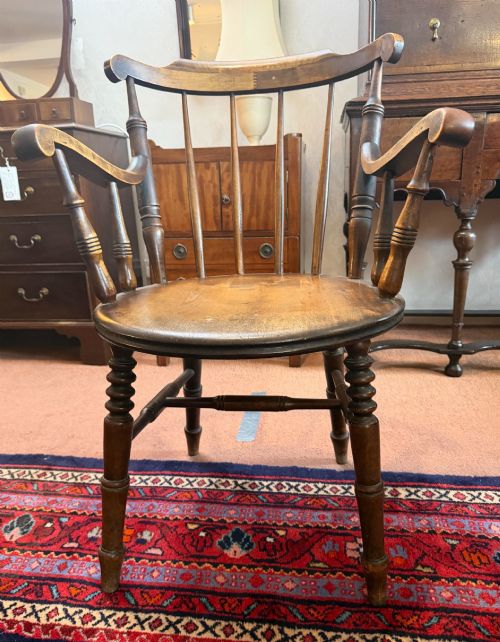
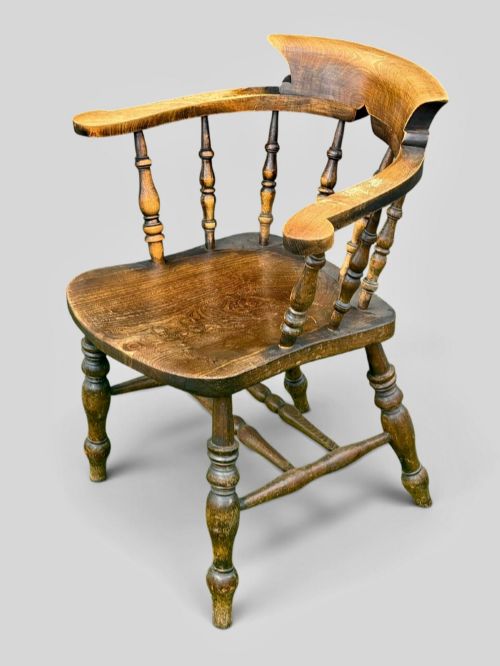
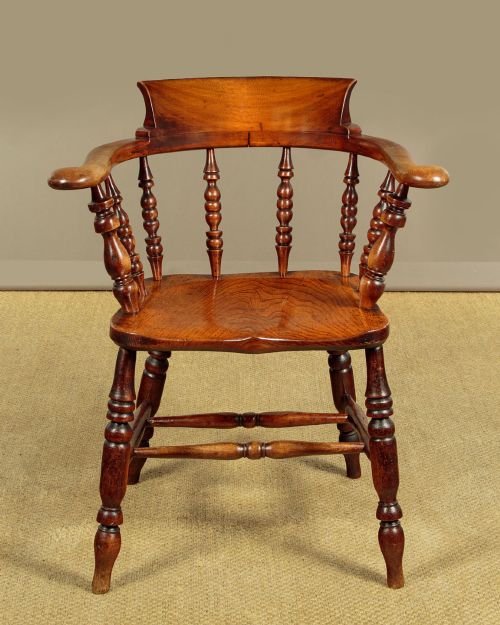
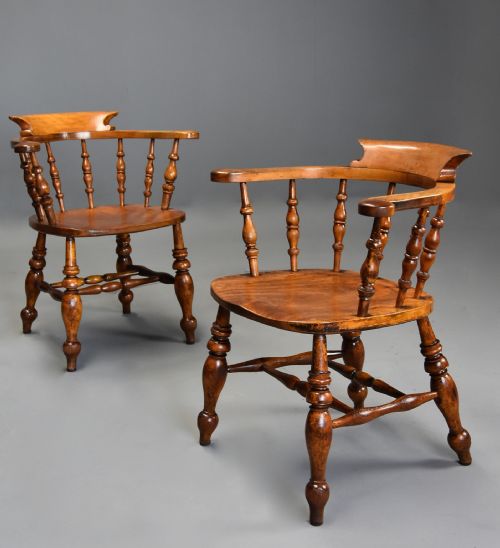
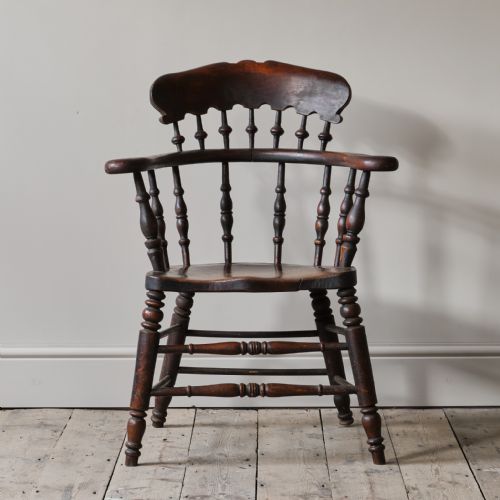
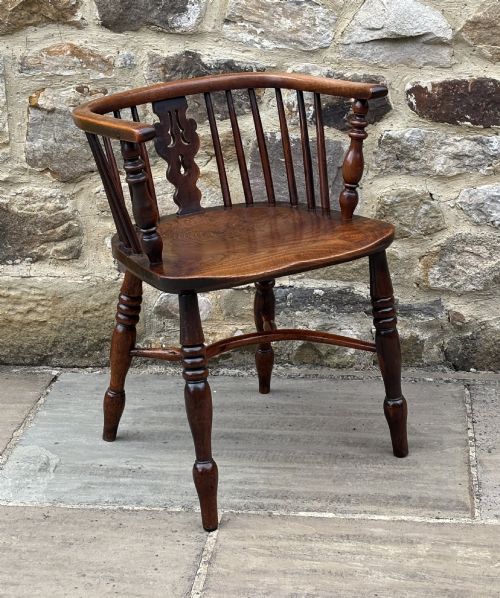
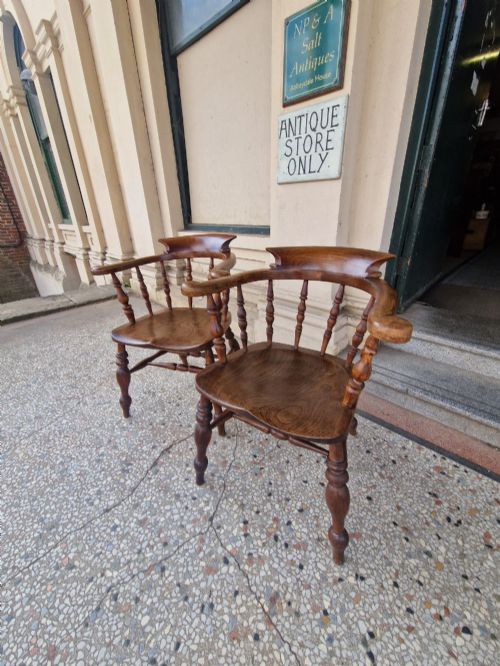
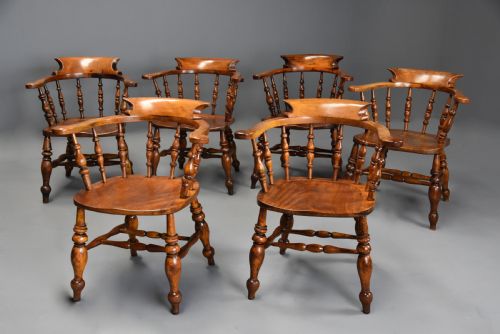


19th Century Smokers Bow
When you search for a 19th century smokers bow, you are looking at sturdy vernacular armchairs designed for comfort and enduring domestic use.
19th Century Smokers Bow
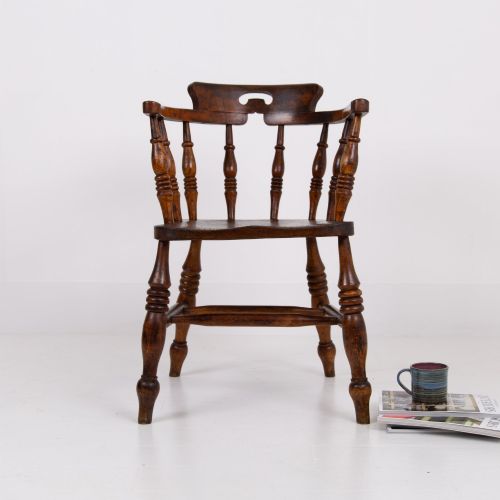
The version most commonly met on this page combines a shaped elm seat with a bentwood arm bow in beech, ash, or birch. Examples range from single desk chairs to large matched sets intended for dining or office tables.
Materials and construction methods
Chair makers utilised a combination of native timbers, pairing durable elm for solid saddle seats with steam-bent beech, ash, birch, or fruitwood for the continuous arm bows. This selection provided the necessary flexibility for curving the wood and the density required for heavy daily use.
Frameworks rely on traditional Windsor joinery, where legs and spindles are wedged directly into bored seats. Selected pieces incorporate brass fittings, leather upholstery, or mahogany surfaces when adapted for formal desk use.
Recorded materials span elm, beech, ash, oak, leather, mahogany, brass, yew, birch, walnut, fruitwood, and satin birch.
Distinctions in quality and execution
Quality rests in the selection of timber figure, particularly the depth of grain in elm seats and the choice of yew or satin birch for finer examples. Distinctive turning on the spindle supports and well-proportioned arm bows elevate standard provincial seating.
Structural integrity and the survival of an original surface finish determine desirability. Chairs retaining untouched patination and robust joinery stand apart from examples altered by heavy restoration or replacement parts.
The 19th Century Smokers Bow Glossary
- Smokers Bow
- A low-backed wooden armchair related to the Windsor tradition, featuring a curved continuous arm rail. This form saw widespread use in vernacular homes and offices.
- Captain's Chair
- An alternative descriptor for a low-backed wooden armchair utilised at desks or tables. These pieces share identical construction methods with smokers bows.
- Windsor Chair
- A chair built with a solid wooden seat into which the legs and back spindles are directly tenoned. The design distributes weight efficiently using turned wooden components.
- Steam Bending
- A woodworking technique using moisture and heat to make timber pliable for forming curves. This process creates the characteristic rounded arm bow.
- Patina
- The surface sheen and colour developed by wood through age, wear, and polishing. It marks the gradual accumulation of character over decades.
19th Century Smokers Bow: Frequently Asked Questions
How do I tell a smokers bow from a Windsor chair?
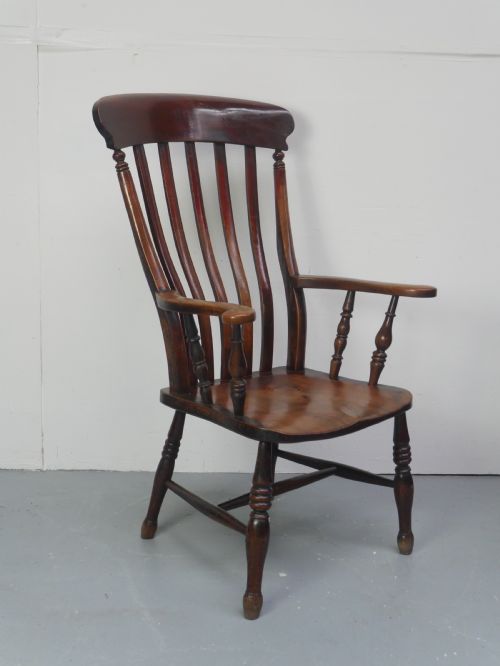
A smokers bow is specifically a low-backed variant within the broader Windsor family. While traditional Windsors often feature high backs with central splats, smokers bows keep a low, wraparound arm rail.
Both types share the same solid-seat construction and turned underframe assembly characteristic of vernacular chair making.
What woods were used to make these chairs?
Makers constructed these chairs using accessible native hardwoods. Elm typically formed the thick, shaped seats because of its resistance to splitting.
Bows and spindles relied on flexible timbers such as beech, ash, birch, and fruitwood, while select examples utilised yew or mahogany.
Can I use an antique smokers bow at a modern desk?
Many of these chairs function well as desk seating due to their supportive arm rails and comfortable proportions. Buyers frequently select them for home offices and studies.
It is important to check the seat height against your desk clearance before regular daily use.