
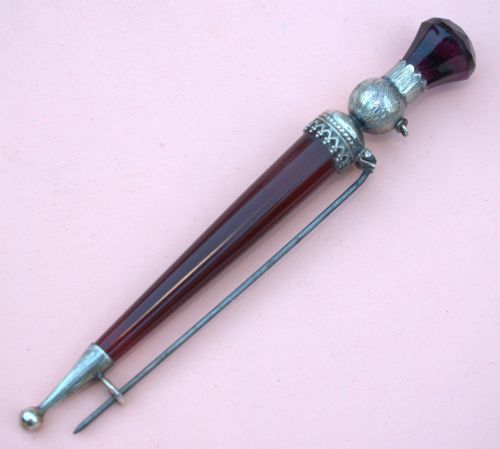


19th Century Silver Brooch
A 19th century silver brooch offers tangible historical charm, bringing together period craftsmanship and wearable nineteenth-century design.
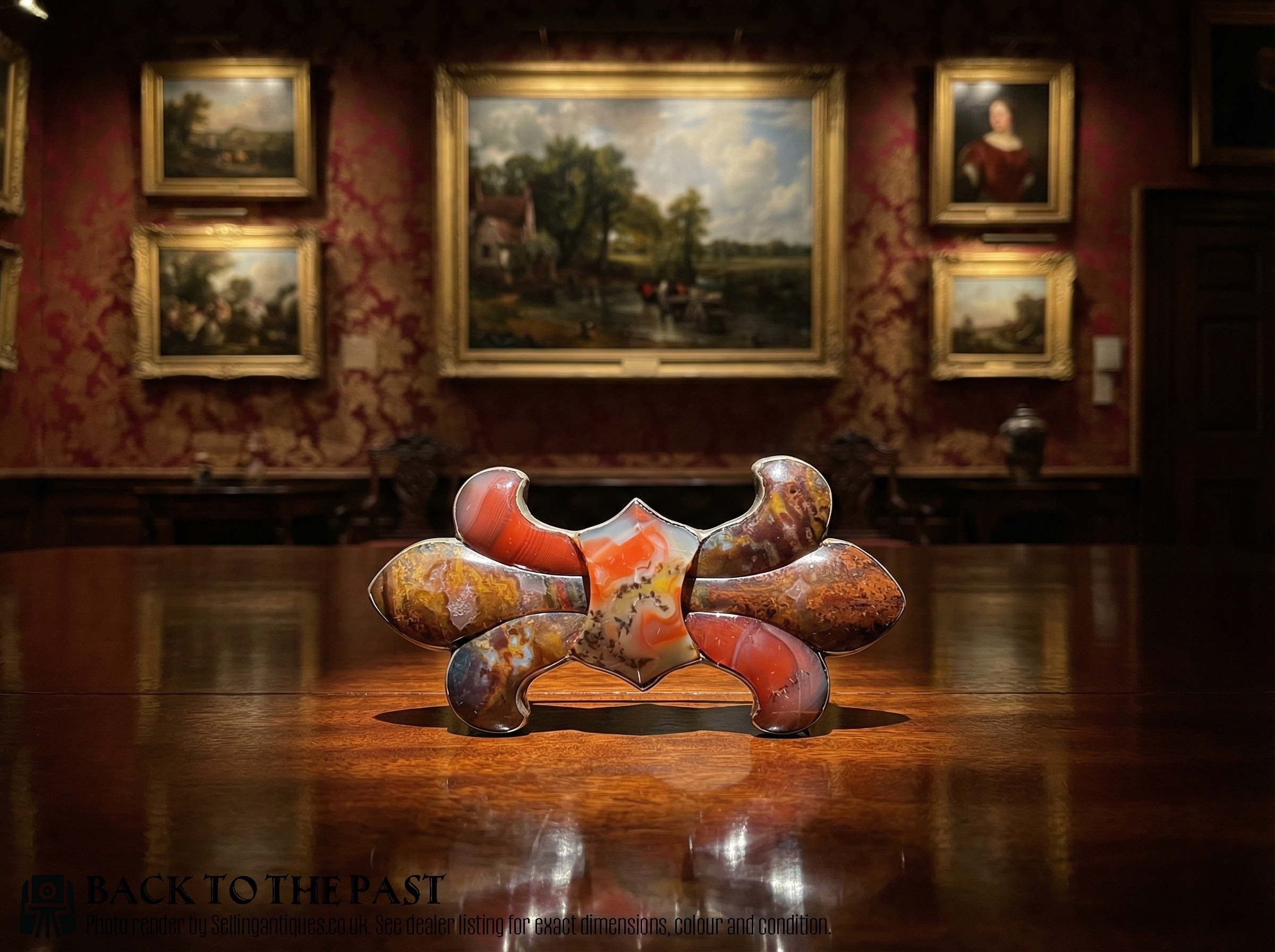
19th Century Silver Brooch
A 19th century silver brooch encompasses diverse Victorian and French forms, from Scottish pebble designs to diamond-set stars. Buyers seeking these pieces encounter varied functional formats, including convertible pendant brooches, kilt pins, and classical cameos.
The Victorian era dominates the selection, bringing specific regional aesthetics such as Scottish Revival agate work alongside continental French floral sprays and Second Empire pieces. These items served both decorative and fastening purposes in historical wardrobes.
Materials and construction methods
Silversmiths combined sterling and solid silver mounts with contrasting gold accents, often utilising 18kt yellow gold alongside silver-set gemstone faces. Gemstones including diamonds, rubies, sapphires, and amethysts were integrated directly into the metalwork.
Lapidary techniques defined the stone-set varieties, shaping hardstones like agate, chalcedony, jasper, and labradorite into smooth geometric or figurative elements. Carvers also utilised volcanic lava for detailed classical cameo reliefs.
Listings feature Victorian and 19th century French items incorporating diamonds, rubies, sapphires, agates, chalcedony, and lava.
Distinguishing quality across the range
Quality rests upon the precision of stone setting and the complexity of the underlying metalwork, distinguishing simple stamped mounts from intricately hand-forged frames. Superior examples display balanced gemstone proportions and precise lapidary work in hardstone specimens.
The artistic execution of carved elements, such as shell, stone, or lava cameos, separates ordinary production from masterwork pieces. Original conversion mechanisms on dual pendant brooches also indicate higher manufacturing ambition.
The 19th Century Silver Brooch Glossary
- Agate
- A variety of chalcedony quartz frequently utilised in Scottish Revival pieces for its banded, multicoloured natural patterns.
- Cameo
- A method of carving where a raised relief subject is sculpted from a multi-layered stone, shell, or lava material.
- Convertible pendant brooch
- An adaptable piece designed to function securely either pinned to garments or suspended from a neck chain.
- Silver gilt
- Silver base metal coated with a fine layer of gold, providing a rich dual-tone appearance on select French items.
- Scottish Revival
- A Victorian design movement inspired by traditional Celtic motifs, Dirk patterns, and local Scottish hardstones.
19th Century Silver Brooch: Frequently Asked Questions
How do I wear a 19th century silver brooch?
These pieces suit heavy fabrics such as wool coats, scarves, and structured lapels due to their substantial weight and size. Pin placement requires careful consideration of the cloth thickness to protect the historic fastening pin.
Many variants feature integrated loops that allow conversion into a pendant, offering alternative display options on chains.
Are these brooches convertible into pendants?
Several examples feature hidden bails or loops on the reverse designed for chain suspension. This dual functionality was popular during the Victorian period.
Checking the reverse reveals whether a suspension loop folds down or remains fixed behind the pin mechanism.
What styles are common in these brooches?
Victorian Scottish Revival designs featuring banded agates and dirk shapes appear frequently alongside French floral sprays. Classical motifs, including lava cameos depicting mythological figures, also form a distinct group.
Diamond star bursts and gem-set insect or bird motifs represent the more formal end of the period output.
How do I date a silver brooch from this era?
Dating relies on stylistic clues, gemstone cuts, and regional manufacturing traits recorded across the pieces. Victorian and continental French aesthetics each display distinct choices in metal weight and stone arrangement.
Documented examples often point toward specific decades between 1850 and 1890 based on motif evolution.