
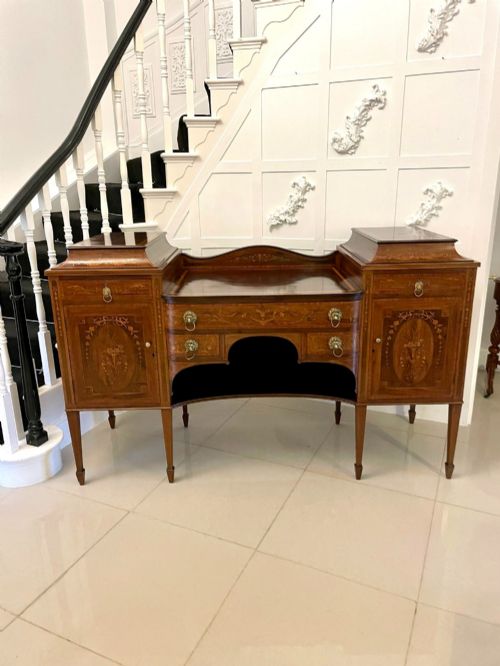
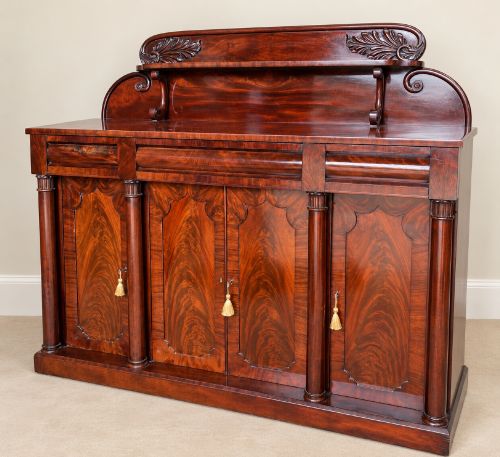
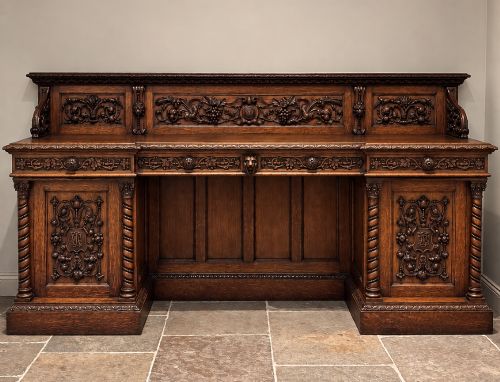
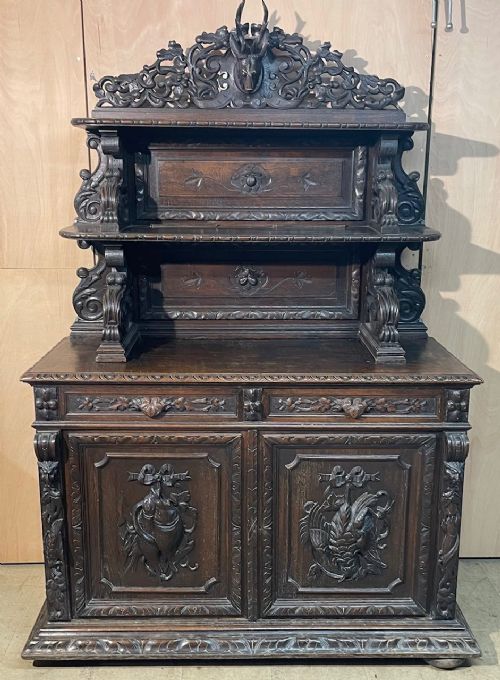

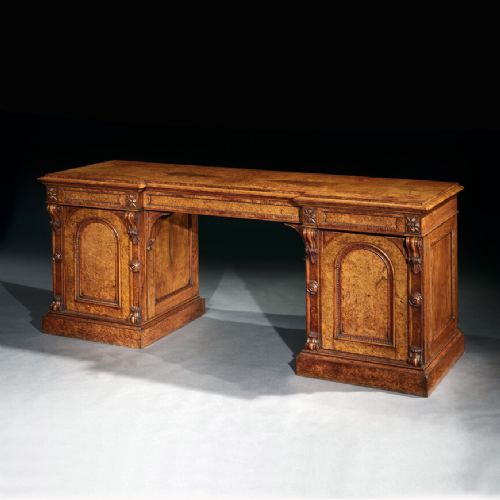
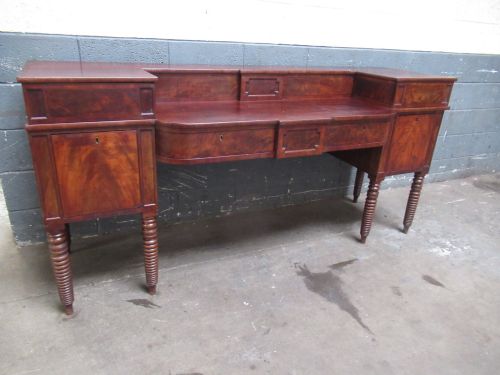
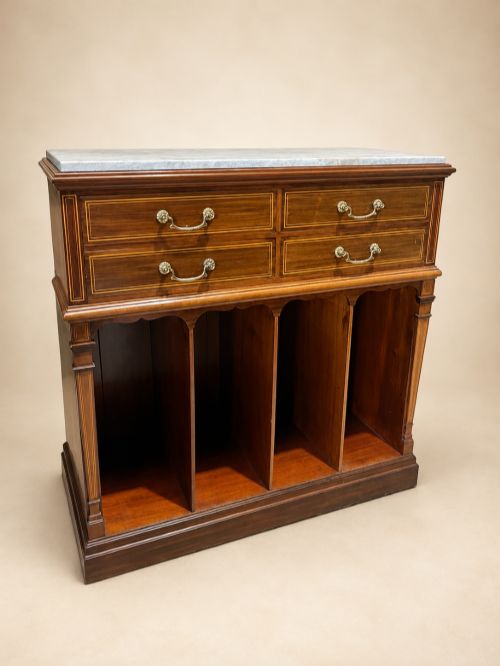
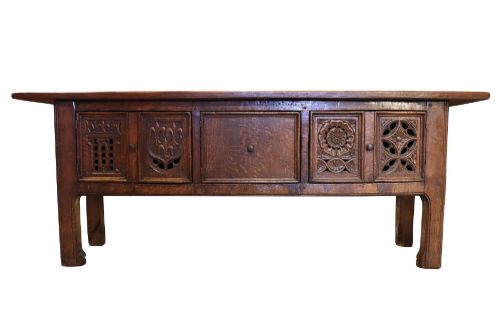
19th Century Server Cabinet
When you want a 19th century server cabinet, you are looking at substantial dining furniture designed to hold silver, linen, and service ware.
19th Century Server Cabinet
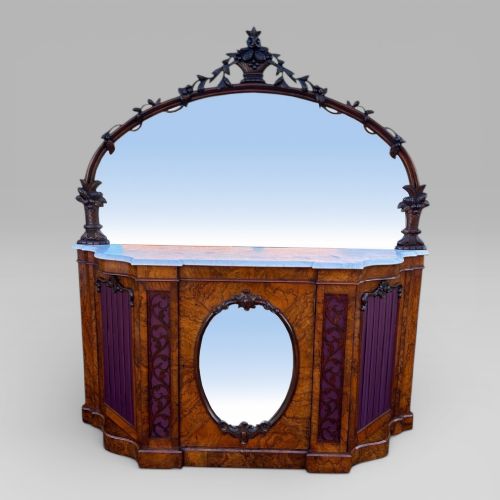
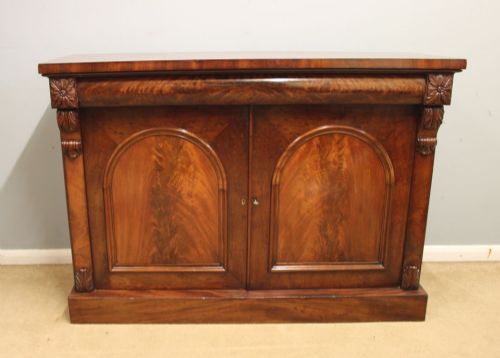
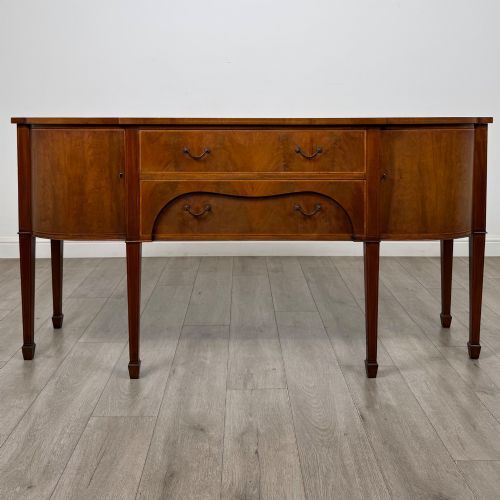
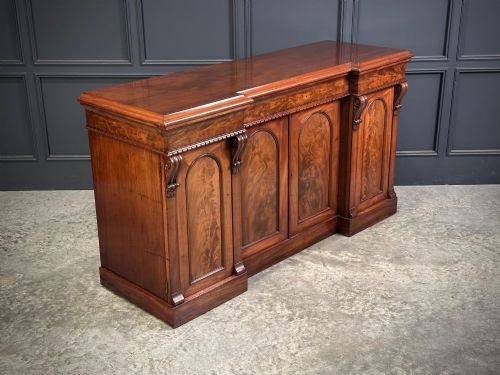
A 19th century server cabinet encompasses a broad family of dining and serving furniture, including sideboards, chiffoniers, buffets, and cupboards. These pieces bridge the gap between utility and display, emerging primarily during the Victorian and Regency periods.
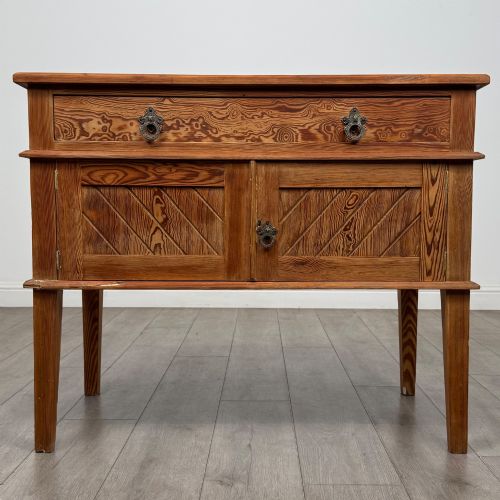
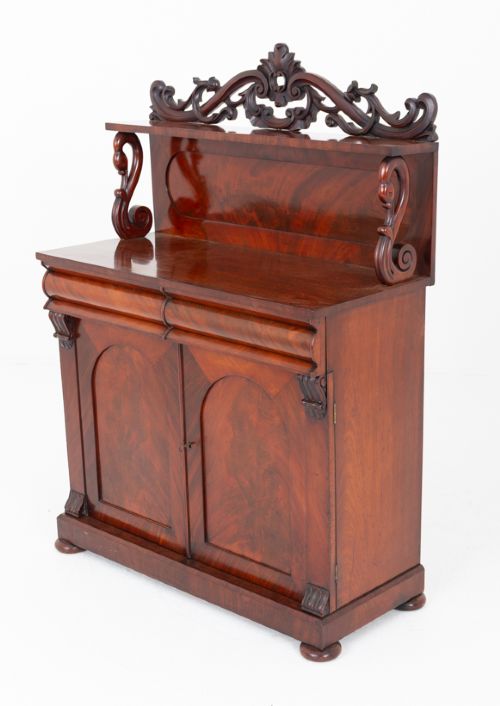
The version you are most likely to meet on this page is the mahogany sideboard or chiffonier, though examples in oak, pine, and rosewood frequently appear. They span formal English dining rooms to rustic provincial kitchens, reflecting varied regional tastes and domestic needs.
Makers adapted these forms across decades, shifting from architectural Regency lines to heavily carved Victorian exuberance, or incorporating Gothic and French revival influences.
Materials and construction
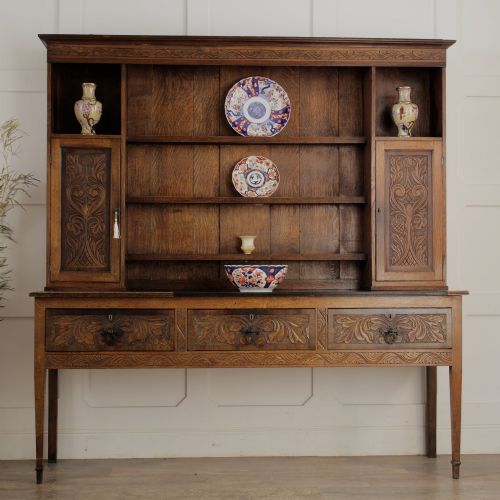
Cabinet makers relied heavily on solid mahogany and flame mahogany veneers, often enhanced with marquetry inlay, brass hardware, and glass panels. Oak and pine served structural roles or formed the basis of provincial dressers and cupboards.
Techniques combined sturdy carcass construction with applied decorative elements, such as mirror backs, turned columns, and deep hand-carvings seen in oak and walnut pieces. Surfaces were frequently polished to a high sheen or finished with wax to highlight the natural grain of the timber.
Listings feature woods including mahogany, pollard oak, rosewood, walnut, and cherry.
Judging the range of execution
Quality in these pieces is dictated by the selection of timbers, such as figured flame mahogany or pollard oak, and the precision of joinery in drawers and doors. Finer examples display meticulous marquetry, balanced proportions, and integrated decorative carvings rather than superficial ornamentation.
The depth of detailing, from original brass fittings to the architectural integrity of mirror backs and cornices, separates standard utility furniture from exceptional cabinet work.
Hewetsons London
The 19th Century Server Cabinet Glossary
- Chiffonier
- A low sideboard or cabinet featuring shelves or a raised back, popular in the 19th century for storing dining accessories.
- Marquetry
- Decorative inlay work using various woods to create geometric or floral patterns on cabinet surfaces.
- Flame mahogany
- Timber cut from the fork of the mahogany tree, producing a distinctive flickering grain pattern prized by cabinet makers.
- Dresser base
- A low, heavy table with drawers and cupboards beneath, functioning as a primary serving and storage surface.
- Gothic Revival
- A 19th-century style drawing on medieval architectural motifs, characterised by pointed arches and heavy carved oak.
19th Century Server Cabinet: Frequently Asked Questions
What is a 19th century server cabinet used for?
These cabinets were designed for dining rooms to store silverware, linen, and heavy serving platters.
They also provided a flat top surface for serving food and displaying decorative items during meals.
How do I distinguish a chiffonier from a sideboard?
A chiffonier is typically smaller and often includes a raised shelf or mirror back sitting upon a low enclosed cabinet.
Sideboards are generally larger, longer pieces built with multiple cupboards and drawers specifically for larger dining spaces.
Which woods are most common in these cabinets?
Mahogany and flame mahogany veneer dominate the formal English and Scottish pieces from this era.
Oak and pine appear frequently in regional dressers, kitchen pieces, and Gothic revival designs.
How do I live with a large 19th century server?
These pieces function brilliantly as media consoles, hallway storage, or traditional dining room credenzas.
Ensure you measure your wall space carefully, as 19th-century proportions can be surprisingly deep and long.