

19th Century Secretaire Cabinet
A 19th century secretaire cabinet combines practical workspace with enclosed storage, offering drop-down writing surfaces and clever hidden drawers that appeal to traditional study spaces.
19th Century Secretaire Cabinet
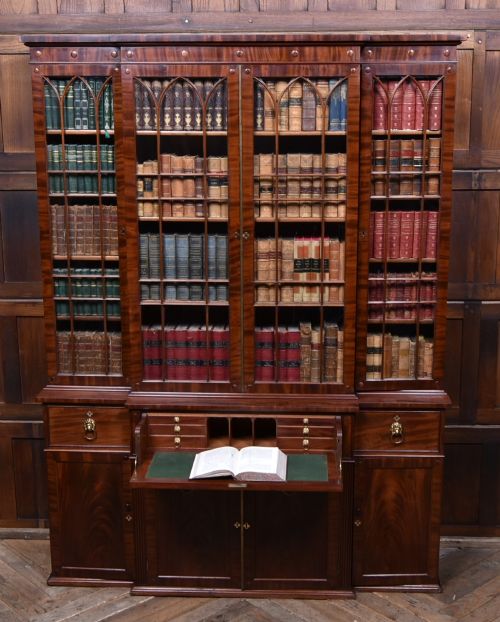
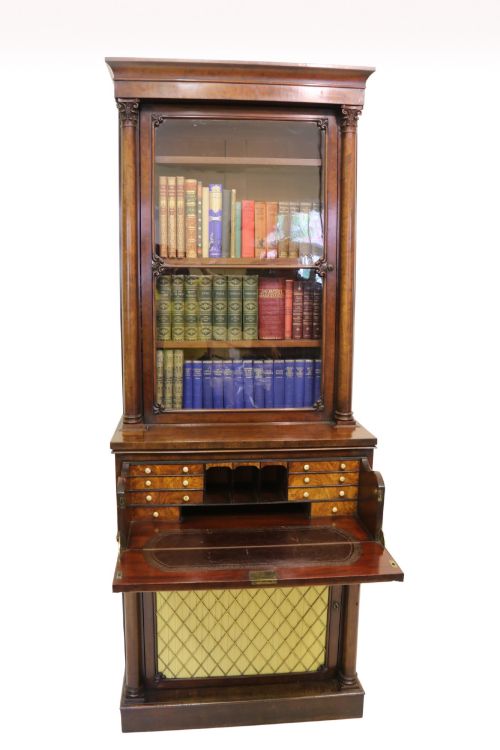
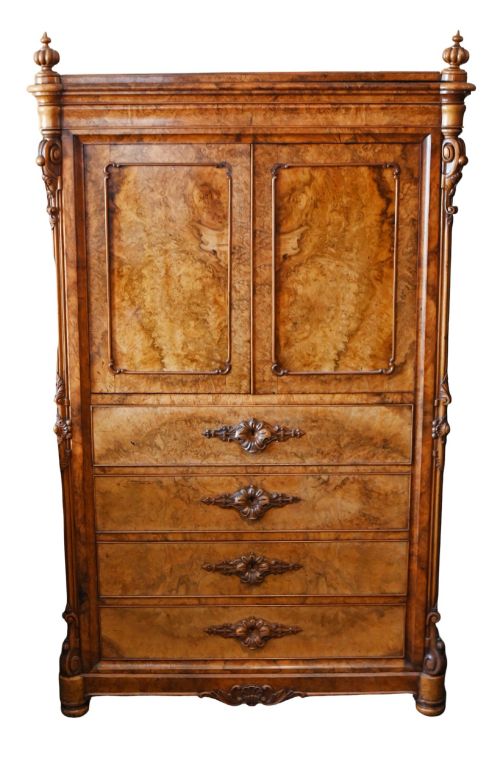
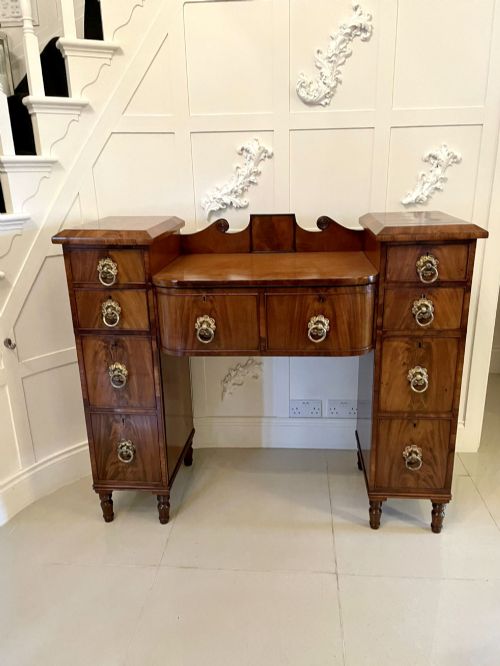
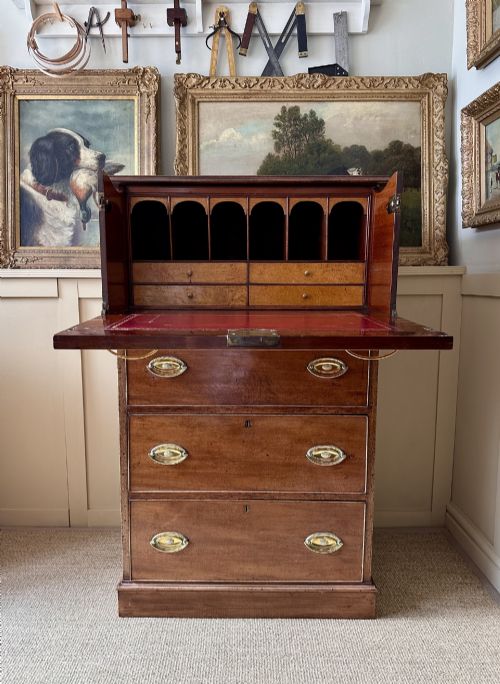
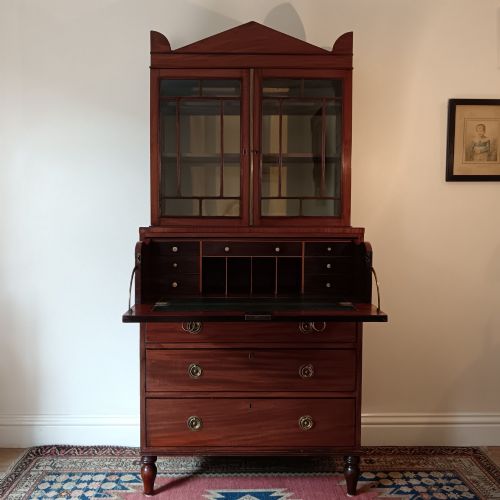
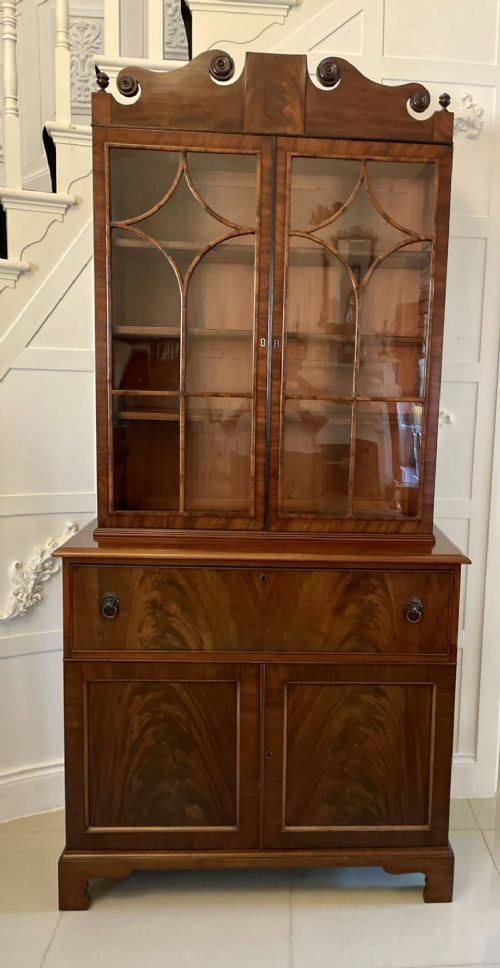
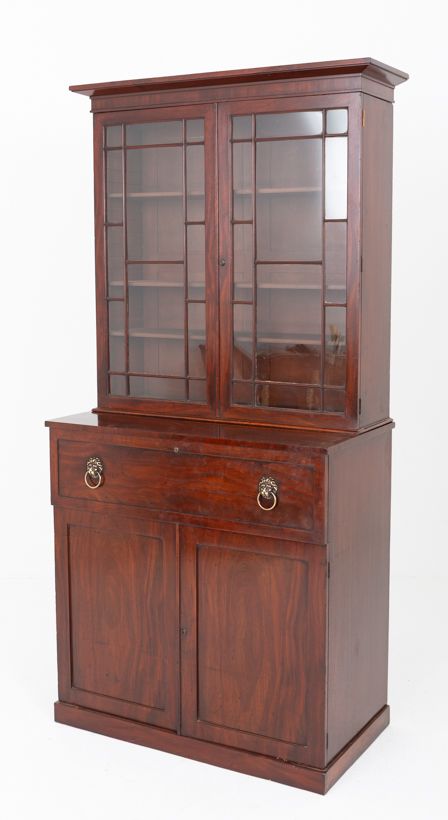
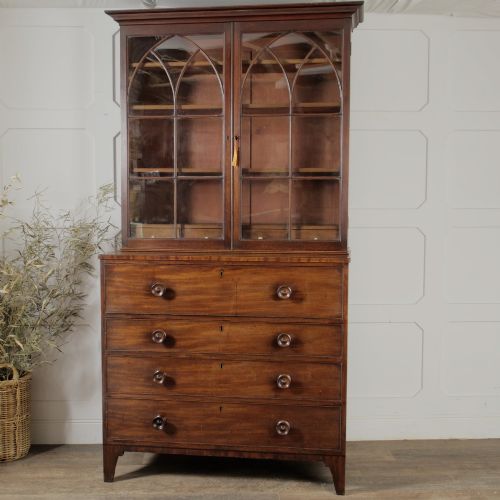
A 19th century secretaire cabinet encompasses tall bookcases, chest forms, and abattant writing desks featuring hinged writing flaps. These items serve domestic writing and storage needs across multiple historical periods.
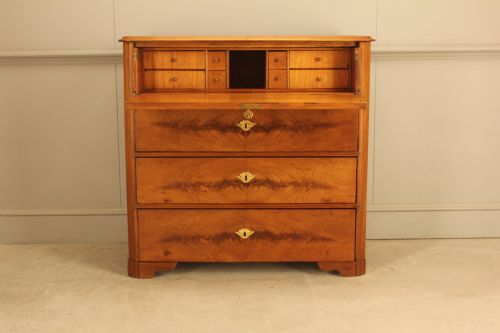
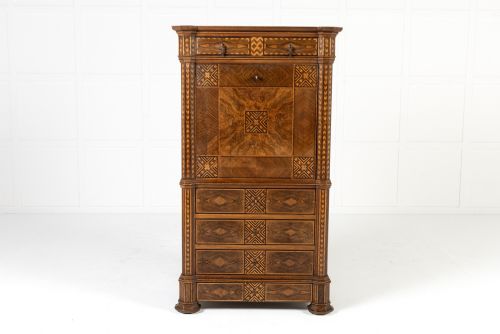
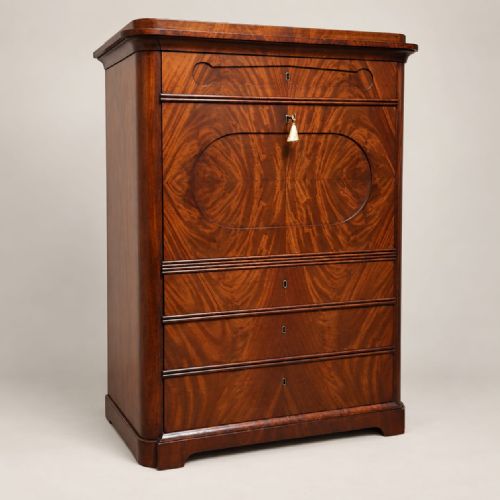
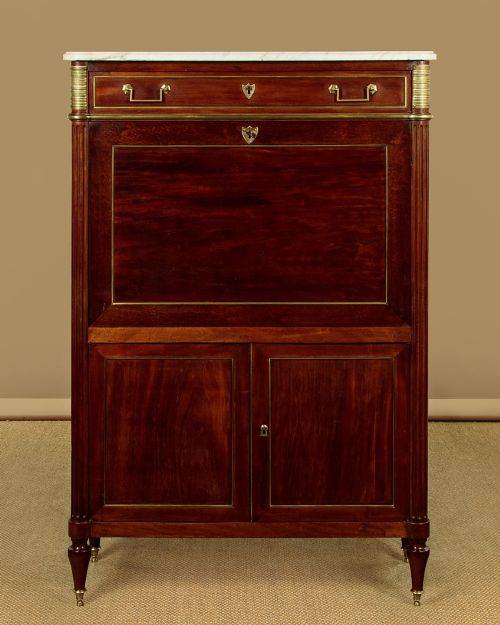
The varieties encountered on this page span British Regency and Victorian designs alongside continental European pieces including Biedermeier, French Empire, and marquetry-decorated abattants. Buyers frequently select between tall bookcase combinations and compact drawer chests.
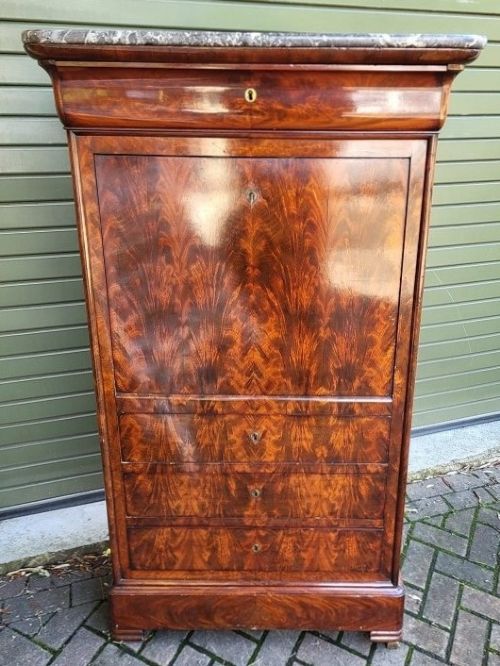
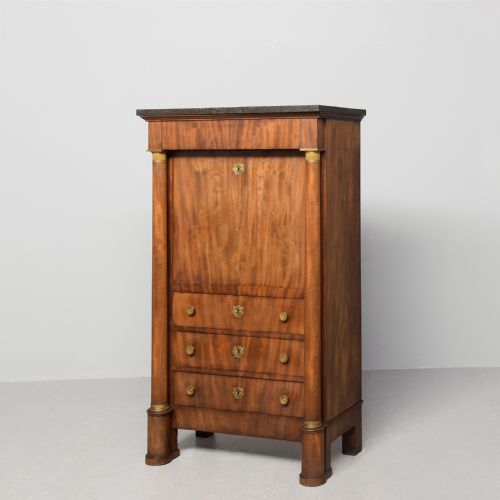
Origin details shape the visual character, from English mahogany and rosewood to Swedish birch and French walnut examples fitted with marble tops or gilt bronze mounts.
How they were made
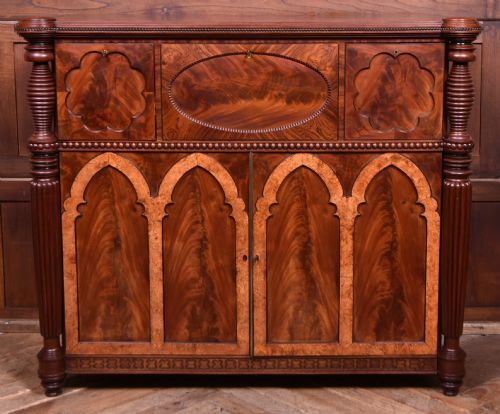
Cabinet makers utilised dense timber foundations such as mahogany, walnut, rosewood, and oak, often applying flame mahogany or burr birch veneers to visible surfaces. Brass hardware, ormolu mounts, and glass doors complete the structural execution.
Writing compartments integrate fitted pigeonholes, small drawers, and secret compartments behind drop fronts or cylinders. Surface decoration relies on marquetry, parquetry, and delicate inlay work alongside carved architectural details.
19th Century Secretaire Cabinet Retail Price Guide 2026
Typical asking prices for 19th century secretaire cabinet among the pieces listed under this phrase on Sellingantiques today, from the lower quarter to the upper quarter. They describe what is for sale here now, not the wider market.
Several cabinets conceal clever secret drawers behind dummy book spines and sliding panels.
What varies in quality
The standard of execution depends upon the precision of the veneer matching, the complexity of the interior fittings, and the integrity of the secret mechanisms. Pieces featuring matched flame grains or detailed marquetry demonstrate higher workshop ambition.
Structural refinement shows in the smoothness of the fall front action, the integration of original marble tops, and the quality of the cast bronze or brass mounts.
George Oakley·Gillows·Maison Krieger
The 19th Century Secretaire Cabinet Glossary
- Escritoire
- A writing cabinet or desk designed for correspondence and storage. The term is frequently used interchangeably with secretaire.
- Biedermeier
- A Central European style dating to the first half of the 19th century focusing on clean lines and rich domestic wood grains. It prioritises utility and polished timber surfaces over heavy ornamentation.
- Ormolu
- Gilded bronze mounts applied as decorative ornaments on French cabinets. The technique adds metallic contrast to dark wood surfaces.
- Wellington chest
- A tall chest of drawers secured by a locking vertical side bar. Some variations incorporate a secretaire drawer within the stack.
19th Century Secretaire Cabinet: Frequently Asked Questions
What is a secretaire cabinet?
A secretaire cabinet is a piece of furniture featuring a concealed writing desk surface, typically hidden behind a drop-front panel or cylinder drawer. These designs allow owners to write letters and store documents securely when not in use.
Inside, they generally offer a collection of small pigeonholes and hidden compartments. The exterior often resembles a bookcase, a chest of drawers, or a tall cabinet.
How do I identify a Regency secretaire?
Regency secretaire pieces date from the early 19th century and typically display classical English styling in mahogany or rosewood. They often incorporate brass inlay, elegant proportions, and restrained architectural details.
Cabinet makers of this era focused on clean lines and figured timber grains. Many examples combine a bookcase top with a fitted writing drawer at counter height.
What is a secretaire a abattant?
A secretaire a abattant is a vertical wall cabinet originating from France and continental Europe with a folding front panel. When lowered, this panel creates a horizontal writing surface supported by the cabinet frame.
These pieces frequently include a marble top and sophisticated parquetry or marquetry patterns. The upper and lower sections usually house concealed shelving behind solid doors.
How were secret drawers used?
Secret drawers and compartments provided secure storage for currency, private letters, and small valuables during the 19th century. Cabinet makers designed intricate spring-loaded releases or hidden panels requiring specific sequences to open.
These concealed spaces demonstrate the high skill level of period joiners. Today, discovering these hidden compartments remains a central appeal for collectors.