



19th Century Secretaire Abattant
A 19th century secretaire abattant brings upright elegance and a concealed writing surface to a room.
19th Century Secretaire Abattant
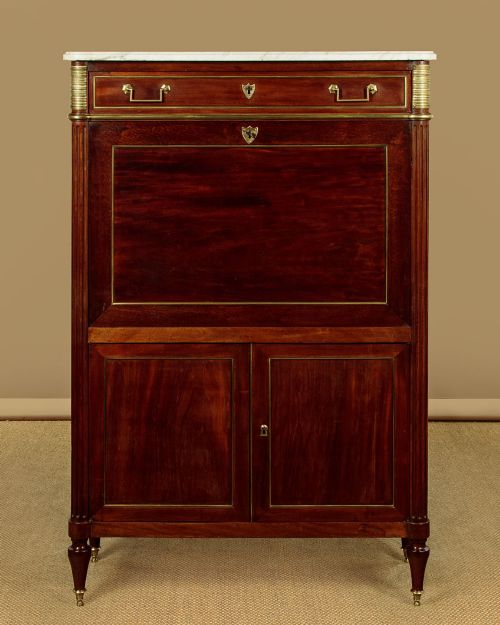
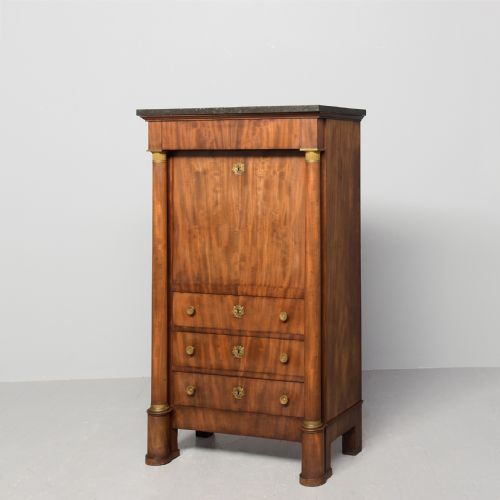
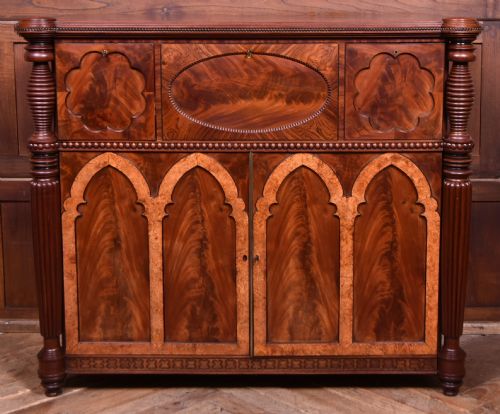
A 19th century secretaire abattant is an upright cabinet designed with a hinged drop-front panel that conceals a writing surface and small interior compartments. Buyers encounter many variations of these tall case pieces across continental Europe and Britain, spanning multiple decades of the nineteenth century.
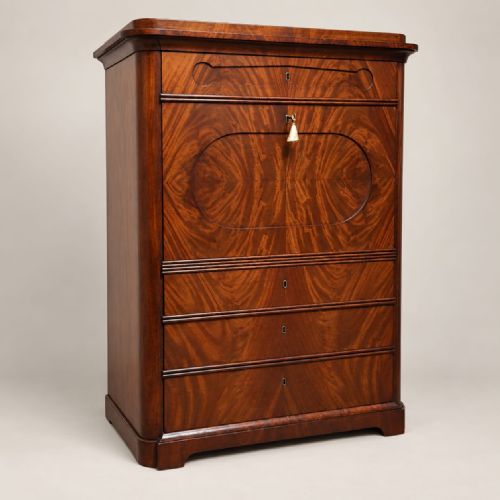
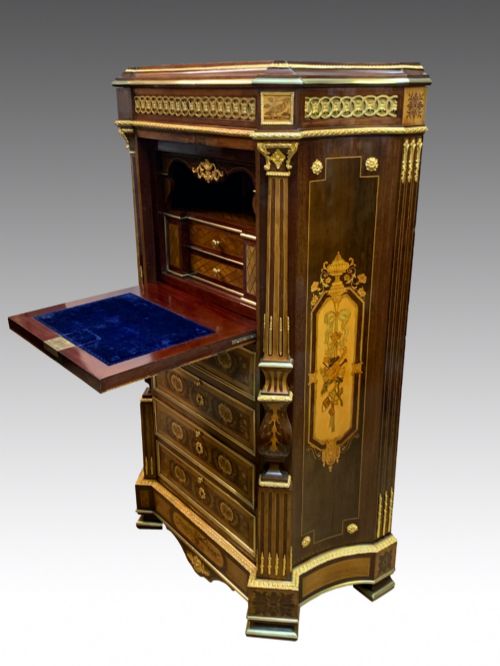
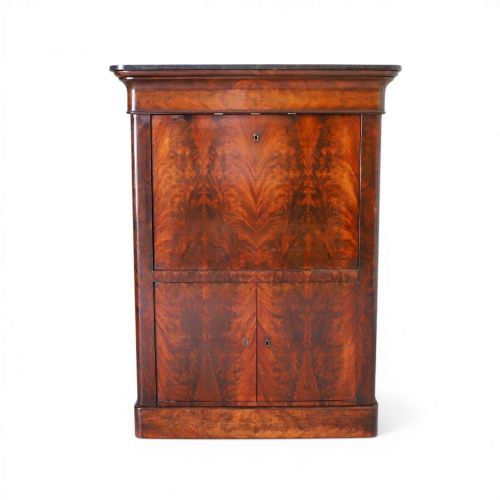
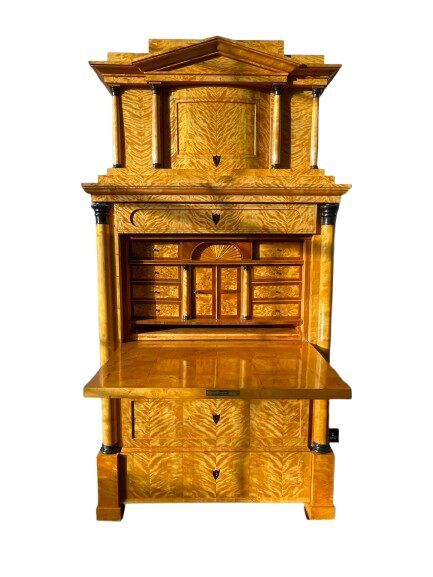
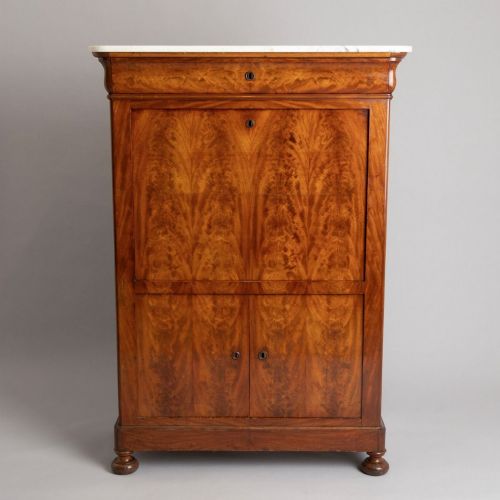
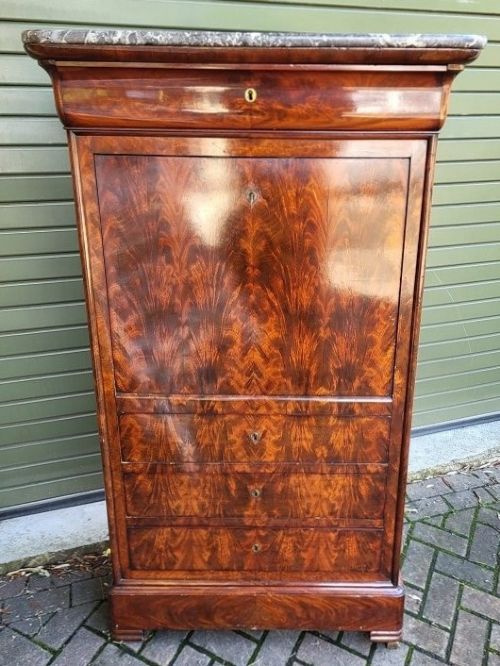
French examples frequently combine rich veneers with marble tops and gilt bronze mounts, while Biedermeier interpretations focus on clean architectural lines and figured timbers like mahogany and birch. Most pieces stand tall against a wall, offering concealed storage behind the fall-front desk and lower cabinet doors.
The form bridges the gap between a chest of drawers and a writing desk, making it practical for rooms where floor space is limited. The interior layout typically contains pigeonholes and hidden drawers tailored for correspondence and papers.
How They Were Made
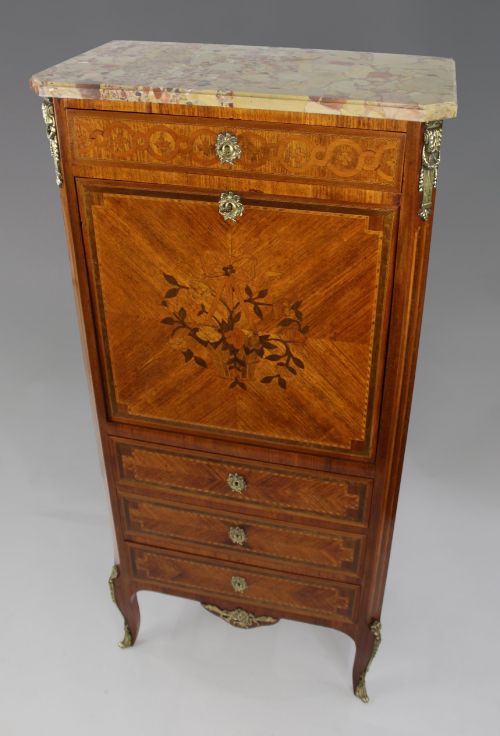
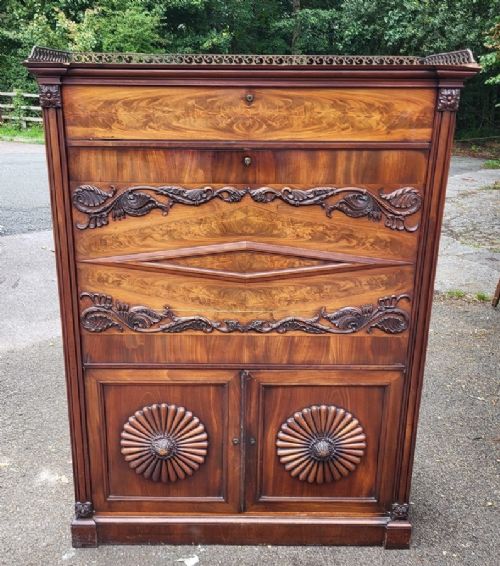
Cabinet makers built these pieces using solid pine or oak carcases covered in choice veneers of mahogany, rosewood, kingwood, and walnut, often arranged in symmetrical flame patterns or intricate marquetry. Brass inlay, ormolu mounts, and Vernis Martin painted panels decorate the surfaces of high-status French and continental pieces.
Carved details, ebonised columns, and contrasting fruitwood stringing define the visual character across different regional workshops. Marble slabs, fitted securely to the upper surface, provide a durable, cool top that balances the weight of the taller case.
Some cabinets hide secondary secret drawers behind dummy partitions, requiring a specific sequence of pushes to reveal hidden compartments.
What Varies in Quality
The choice and execution of timber veneer dictate the visual appeal, ranging from plain mahogany boards to densely figured flame veneers and meticulous floral marquetry. The precision of the joinery around the fall-front mechanism and the interior pigeonholes reveals the skill of the cabinet maker.
Original hardware, including working locks, brass keys, and fire-gilt bronze mounts, separates standard production from exceptional pieces. The presence of undamaged marble tops and properly functioning secret drawers adds significantly to the integrity of the piece.
Gillows·Maison Krieger·Adriano Brambilla
The 19th Century Secretaire Abattant Glossary
- Abattant
- The drop-front panel that folds down to create a writing surface. This hinged door conceals the inner compartments when closed.
- Escritoire
- An alternative term for a writing desk or cabinet. These pieces serve the same functional purpose as a secretaire.
- Ormolu
- Gilt bronze mounts used for decorative enrichment on furniture. Makers cast and chased these metal elements before applying them to the wood.
- Marquetry
- Inlaid wood veneers forming pictorial or geometric designs. Craftsmen cut contrasting timbers together to fit flush into the surface.
- Parquetry
- Geometric patterns formed by small pieces of wood veneer. Squares and triangles create tiled wooden mosaics on the cabinet exterior.
19th Century Secretaire Abattant: Frequently Asked Questions
What is a secretaire abattant?
A secretaire abattant is an upright cabinet featuring a hinged drop-front panel that opens to reveal a writing surface and small compartments.
Unlike traditional side-by-side desks, this tall furniture format saves floor space while keeping writing materials neatly hidden behind closed doors.
How were these desks used?
Owners used these cabinets for correspondence, storing stationery, and keeping private documents secure within the hidden interior compartments.
The drop-front surface provided a dedicated writing slope that could be closed immediately to hide unfinished letters or paperwork.
Where do most pieces originate?
Many examples originate from France and central Europe, reflecting regional preferences in cabinet making during the nineteenth century.
French workshops favoured marble tops and gilt bronze mounts, whereas Biedermeier pieces from Germanic regions emphasised minimalist wood grains.
How do I identify a Biedermeier secretaire?
Biedermeier pieces are distinguished by restrained architectural lines, minimal ornamentation, and beautifully figured timbers like mahogany, birch, and cherry.
They rely on the natural grain of the wood rather than heavy brass mounts or intricate marquetry to create visual interest.