



19th Century Sea Trunk
A 19th century sea trunk offers sturdy travel storage built from robust timbers, holding the practical history of maritime voyages.
19th Century Sea Trunk
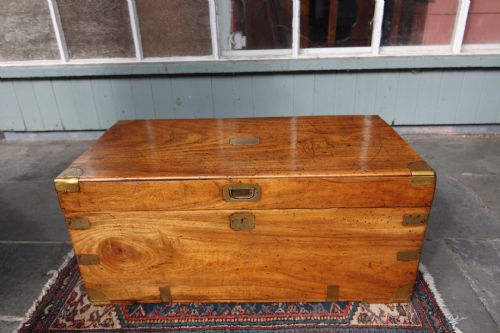
A 19th century sea trunk provides durable storage formed for life on the water and military movement across distant territories. These utility pieces served officers, captains, and seamen, holding personal belongings during long voyages. The pieces appearing here span the Georgian and Victorian periods, extending into early twentieth-century examples.
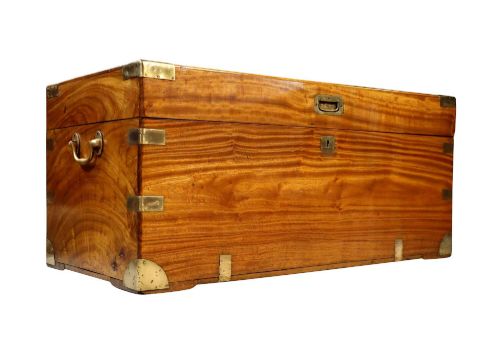
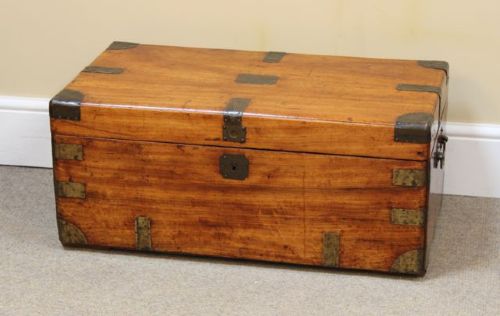
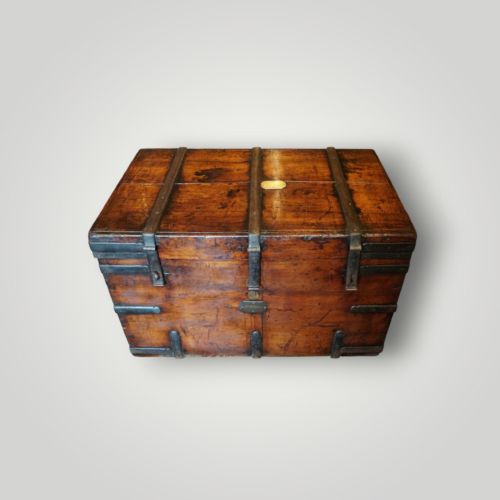
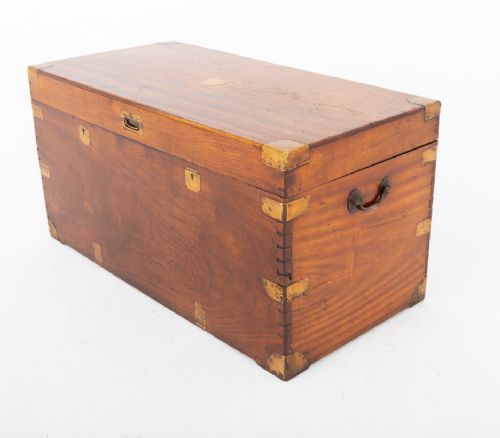
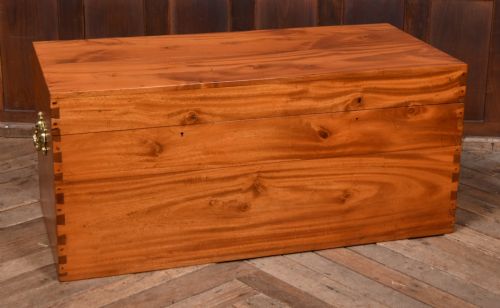
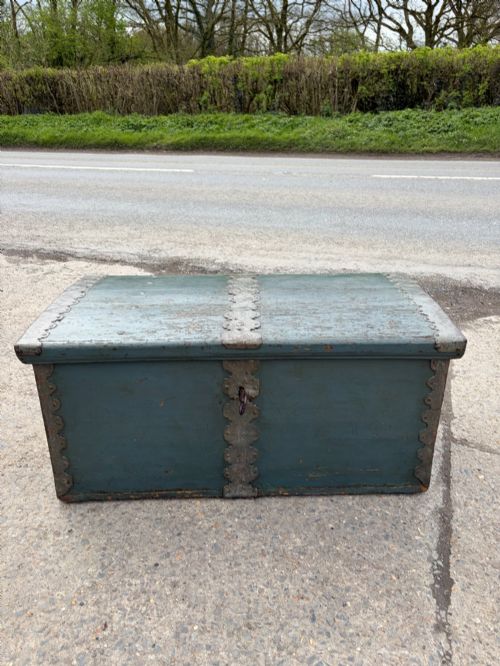
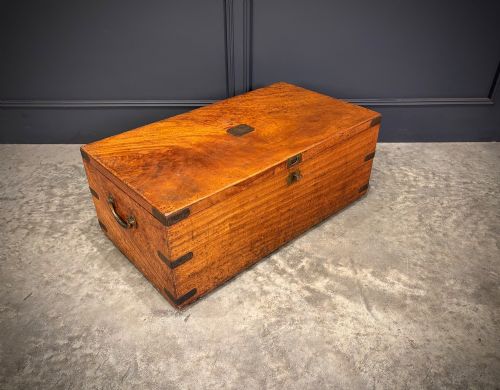
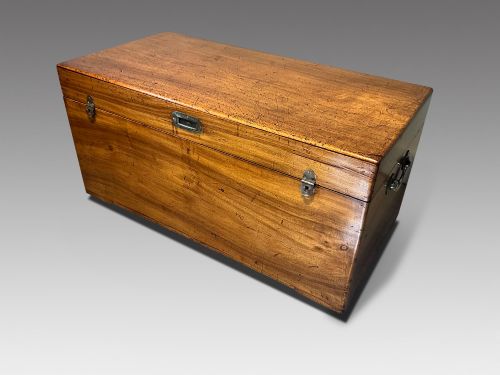
Camphor wood forms the backbone of these items, often reinforced with brass corners, straps, and protective banding. Alongside camphor, makers utilised teak, pine, oak, and walnut, sometimes applying leather or paint finishes. Styles range from utilitarian military campaign designs to rustic country pine and Chinese export pieces.
Buyers encounter various formats including blanket boxes, dome top chests, and fitted campaign trunks with internal compartments. Most examples belong to the broader category of maritime and campaign furniture, shaped by practical travel needs.
How they were made
Carpenters constructed these storage pieces using durable tropical and domestic woods designed to withstand damp conditions at sea. Camphor wood naturally repelled insects and moisture, making it the preferred timber for maritime transport, while pine and teak provided alternative structural strength.
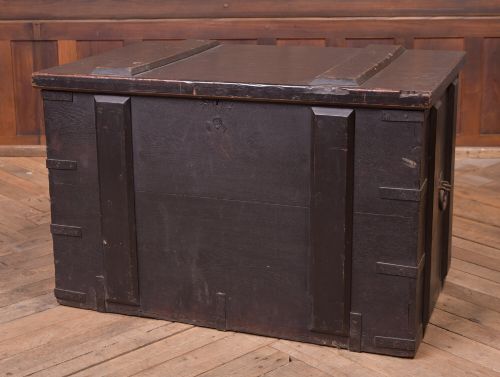
Brass corners, iron straps, and secure locking mechanisms protected the wooden joints from heavy handling during transport. Leather bindings and surface paint offered additional protection against the elements, while recessed brass drop handles allowed efficient stacking in ship cabins.
Listings demonstrate a strong presence of camphor wood and pine, alongside teak, oak, and walnut timbers.
What varies in quality
The sophistication of the internal fittings and the integrity of the original hardware distinguish standard utility boxes from superior officer's pieces. Superior examples incorporate clever compartment layouts, dovetail joinery, and heavy brass binding that remains tight to the timber.
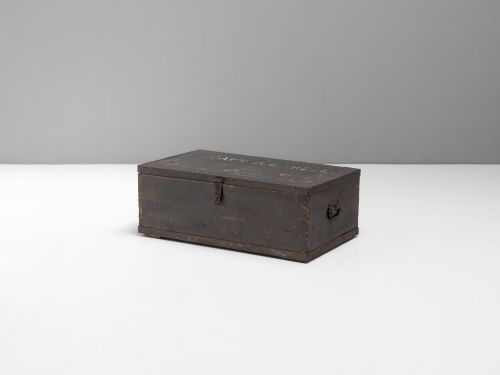
The preservation of original surface finishes, whether scumble paint, polished teak, or untouched camphor, dictates the integrity of the piece. Trunks retaining authentic maker markings, inscribed ownership details, or untouched interior compartments carry greater historical depth.
Sir Randolph Isham Routh KCB
The 19th Century Sea Trunk Glossary
- Campaign trunk
- A portable storage chest designed for military officers on the move, typically featuring recessed brass hardware and carrying handles.
- Camphor wood
- An aromatic tropical timber valued in maritime furniture for its resistance to insects and damp conditions.
- Scumble paint
- A decorative surface finish applied to pine chests to imitate more expensive grained woods or create patterned textures.
- Dovetail joinery
- An interlocking corner joint formed by precision-cut pins and tails, providing exceptional strength for heavy transport boxes.
19th Century Sea Trunk: Frequently Asked Questions
What is a 19th century sea trunk?
A 19th century sea trunk is a robust wooden chest utilised by sailors, officers, and travellers for storing personal belongings during maritime voyages. These pieces were built to withstand harsh conditions at sea and frequent movement.
Most surviving examples utilise durable timbers like camphor wood or pine, often reinforced with brass or iron hardware to protect the corners and edges during transit.
How were campaign trunks used?
Campaign trunks served as portable wardrobes and storage units for military personnel and colonial officers travelling across distant territories. Their design allowed personal gear to remain organised and protected during long journeys.
Many of these pieces feature specialised internal compartments and recessed brass handles to facilitate stacking and lifting inside cramped ship cabins or tents.
Why was camphor wood used for trunks?
Camphor wood naturally repels insects and resists moisture, making it the ideal timber for maritime storage in tropical climates. The distinctive aromatic quality helped protect woollens and uniforms from moth damage during long sea voyages.
Carpenters favoured this stable wood for campaign furniture because it handled temperature shifts well without warping excessively.
How do I identify a Victorian sea trunk?
Victorian sea trunks often feature specific structural markers such as dovetail joinery, brass corner brackets, and iron banding characteristic of mid to late nineteenth-century craftsmanship. Examining the type of wood, such as camphor, teak, or scumble-painted pine, helps establish the period.
Inscribed ownership details, brass plaques, or maker stamps can sometimes provide further clues regarding the original maritime or military context.
Where can I place a sea trunk at home?
Sea trunks function effectively as living room coffee tables, bedroom blanket boxes, or hallway storage benches. Their sturdy construction allows them to support everyday items while concealing bulkier household linens inside.
Placing a camphor wood chest in a bedroom also provides natural scent protection for stored blankets and winter garments.