



19th Century Sea Chest
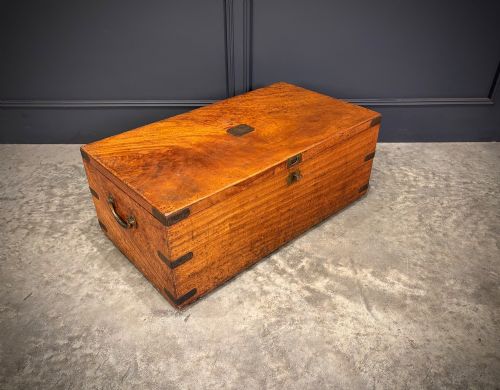
These heavy timbers carried uniforms and kit across oceans, and a 19th century sea chest brings rugged maritime history straight into a modern hallway.
19th Century Sea Chest
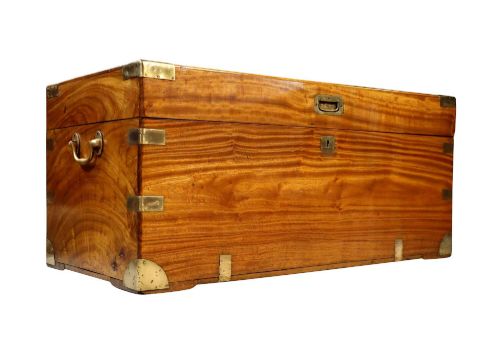
A 19th century sea chest is a robust storage piece built to endure long voyages on ships and military campaigns. Buyers examining this page encounter sturdy trunks designed for officers, sailors, and travellers crossing the seas.
Forms range from simple dome top boxes to fitted interior trunks with rope handles. These boxes served primarily on ships and military expeditions before finding a permanent place in domestic interiors as blanket boxes or coffee tables.
Materials and construction
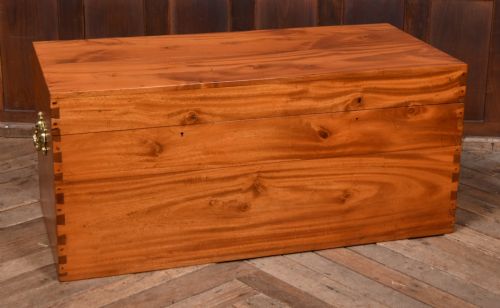
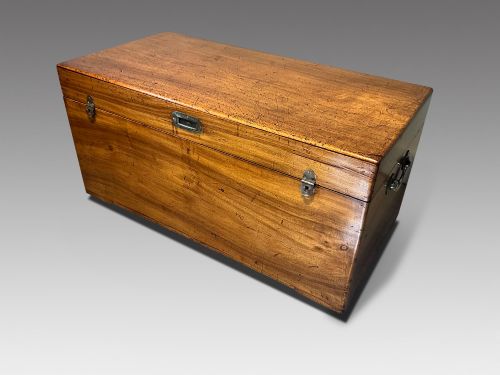
Makers relied heavily on camphor wood for its natural insect-repellent properties, alongside resilient pine, teak, and oak. These timbers were selected to withstand moisture, salt air, and rough handling in transit.
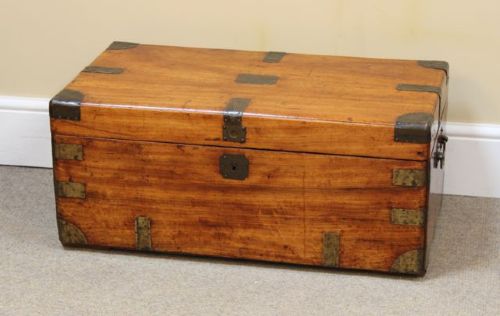
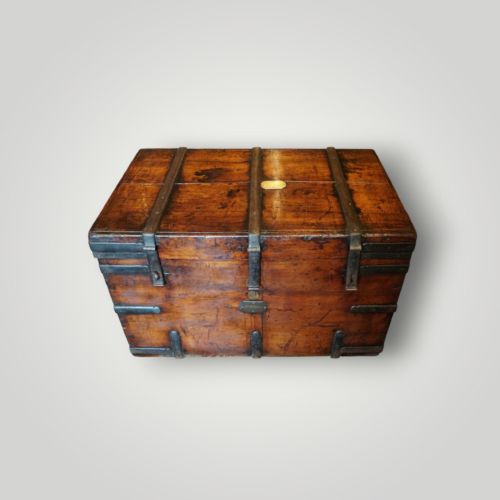
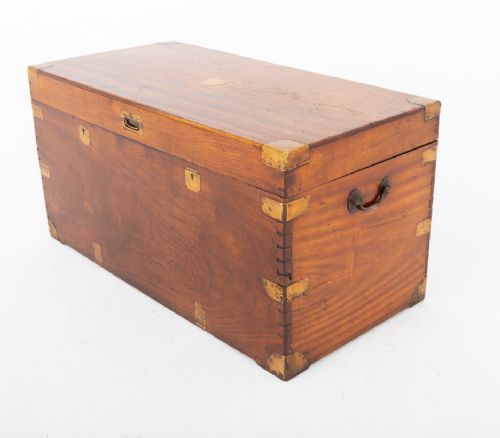
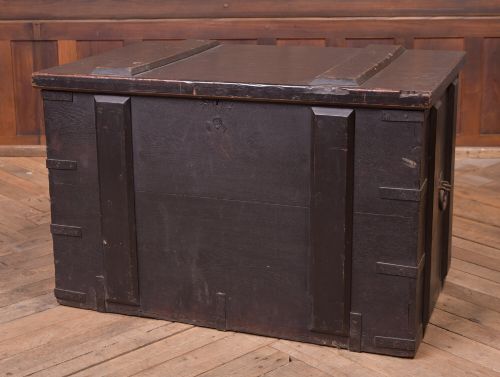
Joints were reinforced with heavy brass corners, straps, and iron bands to secure the carcass against heavy seas. Iron and rope handles facilitated lifting onto vessel decks and wagon beds during military deployments.
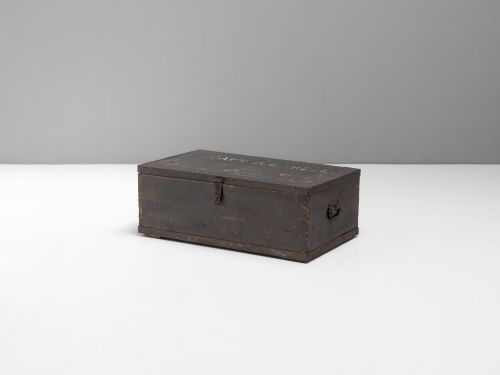
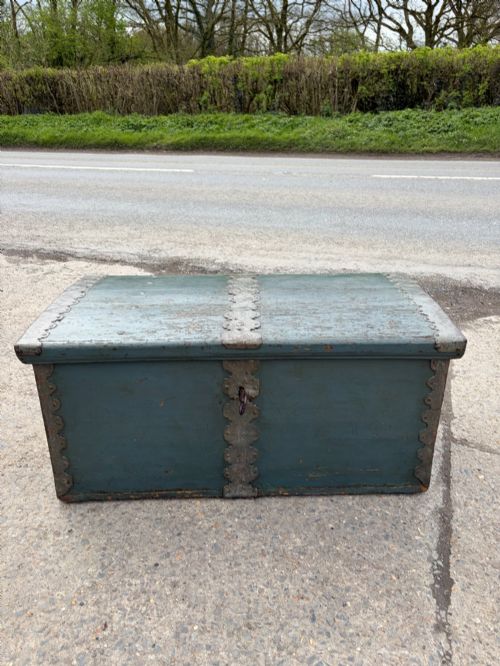
Surfaces were frequently finished with original paint, scumble glazes, or left as plain polished wood. Leather coverings and polychrome details occasionally added status for officers and export trade merchants.
19th Century Sea Chest Retail Price Guide 2026
Typical asking prices for 19th century sea chest among the pieces listed under this phrase on Sellingantiques today, from the lower quarter to the upper quarter. They describe what is for sale here now, not the wider market.
One exceptional military trunk carried the name of a Waterloo Commissary General across the channel.
Quality variations
The distinction between standard transport trunks and superior examples lies in the integrity of the original hardware and timber. Original brass bound edges and intact fitted interiors command greater attention from collectors than heavily restored or replaced elements.
Construction details such as dovetail joints and the presence of maker inscriptions or historical provenance elevate certain pieces. Condition of the original paintwork or the depth of the camphor wood grain separates utilitarian storage from exceptional officer-grade equipment.
Lambs of Manchester
The 19th Century Sea Chest Glossary
- Camphor wood
- A fragrant tropical timber naturally resistant to insects, commonly used for campaign trunks. Its distinct aroma protects stored woollens and uniforms.
- Campaign trunk
- A sectional or reinforced chest designed for easy dismantling and transport by military officers. These pieces feature recessed brass handles to prevent catching.
- Scumble pine
- Pine painted with a translucent glaze and manipulated with combs or brushes to imitate finer grain woods. This technique was popular for decorative rustic furniture.
- Brass bound
- Edges and corners secured with brass strips and corner brackets to prevent splitting. This method protected trunks from heavy knocks aboard ship.
- Seaman's chest
- A utilitarian pine or hardwood box used by sailors to store personal belongings on long voyages. They often feature rope beckets for lifting.
19th Century Sea Chest: Frequently Asked Questions
What is a campaign trunk?
A campaign trunk is a portable chest built for military officers on active service abroad. These pieces use sturdy timbers and reinforced metal corners to survive harsh travel conditions.
Many examples include compartmentalised interiors for storing uniforms, papers, and personal effects during long expeditions.
How do I clean camphor wood?
Camphor wood requires gentle care to preserve its natural oils and characteristic aroma. Dust the surface regularly with a soft, dry cloth rather than using harsh liquid polishes.
Avoid placing the wood in direct sunlight, which can dry out the timber and fade the rich grain over time.
Are these chests waterproof?
While originally designed to protect contents from sea spray and rain on ship decks, antique chests are no longer considered fully weather-tight. Timbers expand and contract over decades, creating small gaps.
Keep them in stable indoor environments away from dampness and extreme humidity fluctuations to protect the structure.
How do I identify a seaman's chest?
Seaman's chests typically feature plain pine construction, original painted finishes, and thick rope handles known as beckets. These practical elements allowed sailors to secure and haul the box in cramped quarters.
Look for signs of heavy use, maritime motifs, and robust iron or brass reinforcement on the corners.