


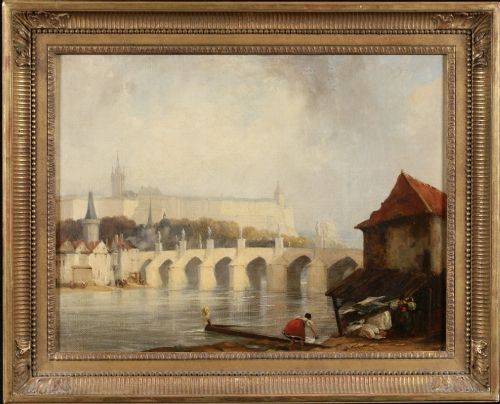

19th Century River Canvas
Discover a 19th century river canvas to bring historic pastoral atmosphere and traditional British landscape artistry directly into your interior.
19th Century River Canvas
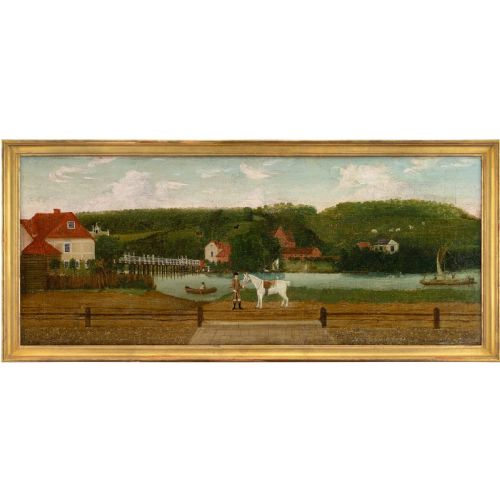
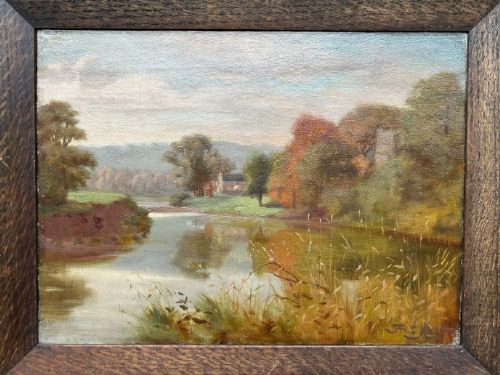
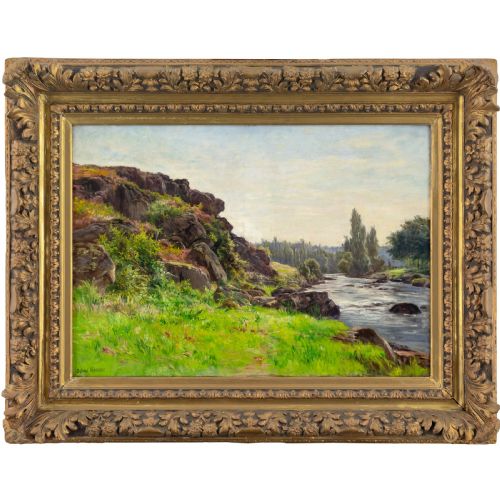
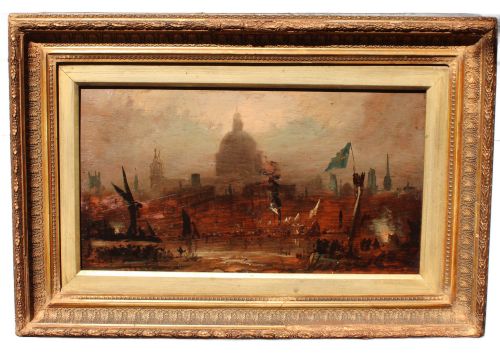
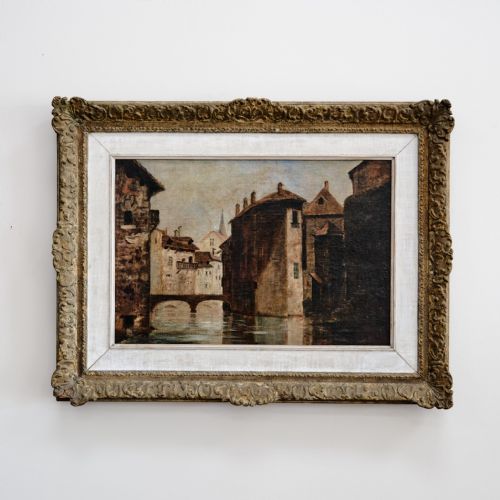
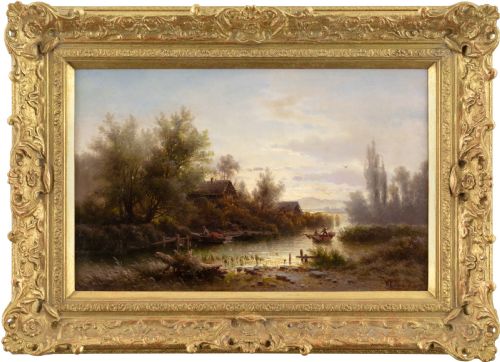
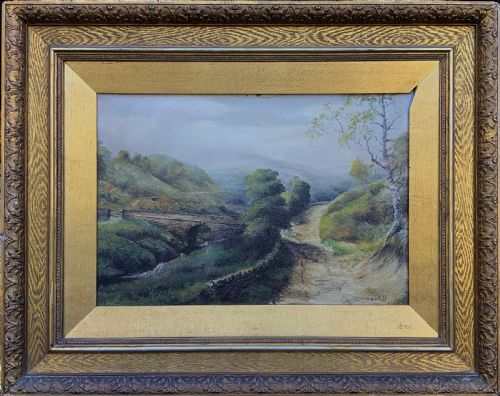
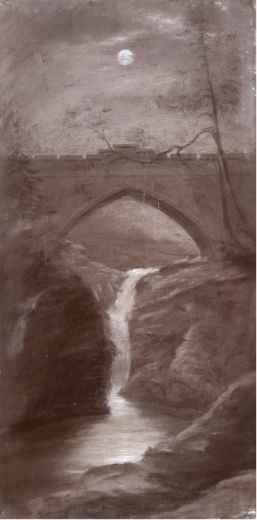
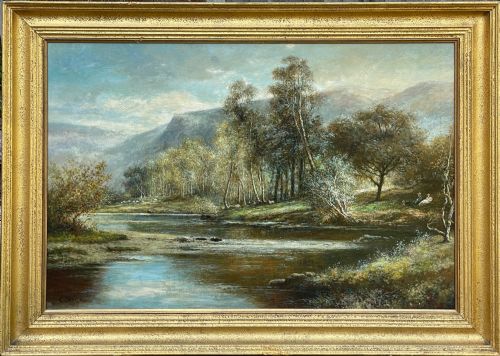
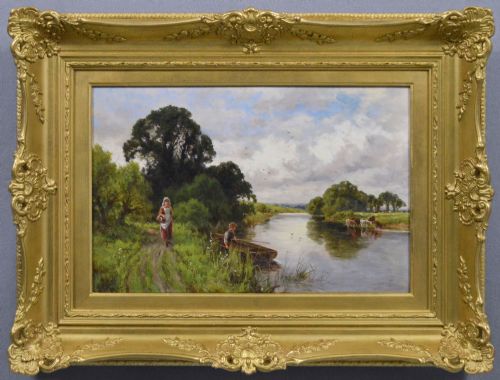
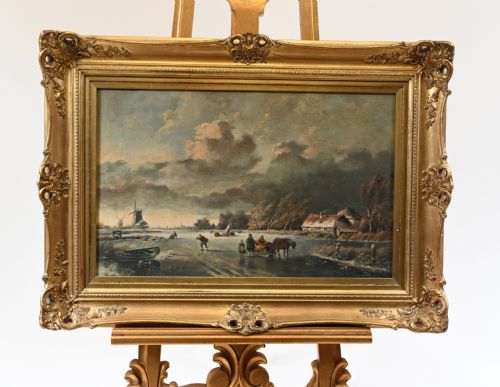
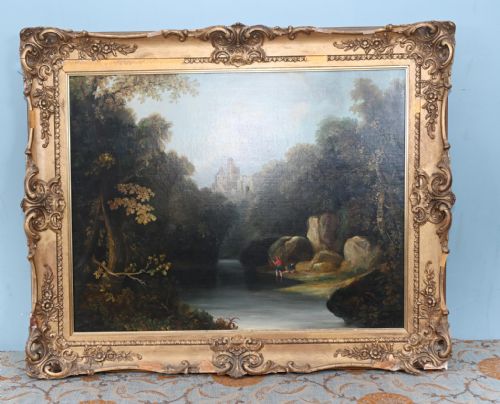
A 19th century river canvas brings historic waterways, pastoral riverbanks, and maritime scenes into a collection through original oil paintings. These works capture British and continental landscapes executed during the Victorian period, often featuring figures fishing, cattle watering, or watermills beside moving water.
The pieces available include both signed works by known artists and unsigned examples from regional British and European schools. Subjects range from quiet rural streams in Wales and Yorkshire to bustling scenes along the Thames and continental waterways.
Buyers encounter framed works that span various artistic movements, including Romanticism, Barbizon School influences, and Victorian Naturalism. These paintings serve as primary examples of period landscape art created during the 1800s and early 1900s.
How They Were Made
Artists painted these works using oil paint applied to woven canvas supports, sometimes later laid onto board for structural stability. Pigments were layered to build depth in water, foliage, and atmospheric skies.
Many canvases are housed in their original surrounds constructed from wood, embellished with gesso mouldings, and finished in gold leaf or gilt paint. These period frames complement the depth and tonal range of the oil paintings they enclose.
Common motifs include figures fishing beside watermills, cattle watering at riverbanks, and distant mountain backdrops.
What Varies in Quality
The skill of the brushwork and the precision of natural light dictate the visual strength of each composition. Finer works demonstrate a sophisticated handling of water reflections, atmospheric haze, and subtle colour transitions in the sky.
The integrity and preservation of the original canvas surface, alongside the matching period gilt frame, elevate the overall stature of a piece. Original maker stamps on stretchers and well-preserved giltwood surrounds contribute to the historical completeness of the artwork.
Frederick Marriott·Gabriel Mathieu·Albert Rieger·Paul Désiré Trouillebert·Henry H Parker·Charles William Wyllie·Alexandre Le Bihan·André Prévot-Valéri·Arthur Herbert Rigg·Alfred Augustus Glendening Jnr·William Sydney Cooper·George Vicat Cole·Thomas Spinks·Robert John Hammond·Frank Hider·William Mellor·James Edward Grace
The 19th Century River Canvas Glossary
- Oil on Canvas
- A painting medium where pigments suspended in drying oils are applied to a stretched woven fabric support. This combination allows for rich blending of tones and durable preservation over centuries.
- Giltwood
- Wood that has been coated with a thin layer of gold leaf or metallic gilt powder. It was commonly utilised for decorative Victorian picture frames.
- Barbizon School
- A French art movement focused on realism in landscape painting, emphasising mood and atmospheric en plein air observation. Practitioners often depicted rural river scenes and forests.
- Gesso
- A paint mixture consisting of a binder mixed with chalk, gypsum, or pigment used as a base layer on wood frames. It creates a smooth surface ready for gilding.
19th Century River Canvas: Frequently Asked Questions
How do I date a 19th century river canvas?
Dating relies on stylistic clues, artist signatures, biographical records, and framing materials. Victorian works often carry specific signatures or exhibition labels on the reverse.
Physical indicators such as the weave of the canvas and the construction style of the wooden stretcher bars also help narrow down the decade of creation.
Where were these river landscapes typically painted?
Artists worked across diverse locations throughout Britain and continental Europe. Popular spots included the River Thames, Welsh valleys, Yorkshire rivers, and French waterways frequented by Barbizon painters.
Many compositions were painted en plein air directly on site before being finished in the studio.
How should I frame and display an antique oil painting?
Antique oil paintings on canvas are best displayed away from direct sunlight and severe temperature fluctuations to protect the pigment and ground layer. Maintaining stable indoor humidity prevents canvas slackening.
Whenever possible, retain the original period giltwood frame, as it provides structural protection and historical context for the artwork.
What is the difference between British School and Continental School works?
British School pieces typically focus on regional topography, rural riversides, and pastoral domestic life influenced by local traditions. Continental School paintings frequently reflect French, Dutch, or German artistic movements.
These continental works often incorporate Barbizon or Impressionist techniques emphasising broader light effects and atmospheric mood.