



19th Century Pottery Tray
When you search for a 19th century pottery tray, you are looking for functional ceramics that served tables and desks across Georgian, Regency and Victorian households.
19th Century Pottery Tray
A 19th century pottery tray encompasses a broad variety of forms designed for domestic service and display, including large meat platters, serving plates, inkstands, and smaller trinket dishes. The listings show that these items span the Georgian, Regency, and Victorian periods, reflecting the shifting tastes in British and continental ceramics.
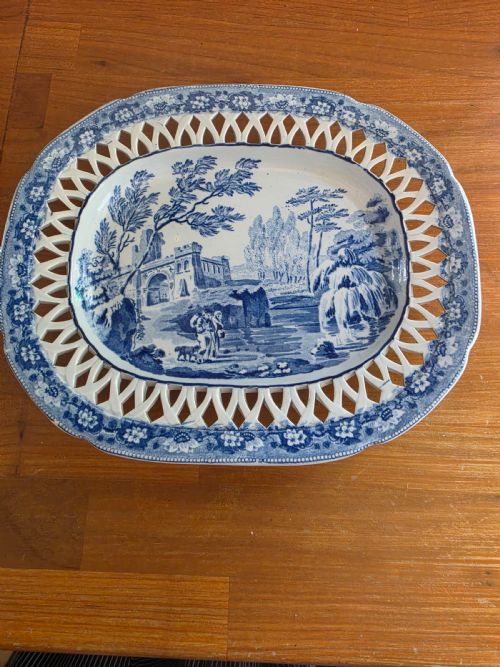
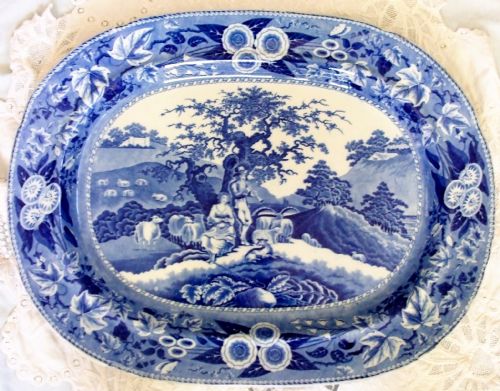
The most common examples you will encounter take the form of blue and white transfer-printed meat plates and serving platters. Alongside these utilitarian shapes, you will find specialised pieces such as desktop inkwells, vide-poche dishes, and pin trays originating from English potteries and continental makers.
Materials and methods
The pieces on this page are formed from earthenware, pearlware, and faience, reflecting the predominant ceramic bodies of the era. Makers utilised these clays to build durable domestic wares that could withstand daily use while providing a smooth surface for decoration.
Decoration was applied using cobalt pigment under the glaze, often through detailed transfer-printing techniques to create intricate blue and white patterns like the Piping Shepherd or Bridge of Lucano. Some examples also incorporate majolica glazes and hand-painted details in rich colour palettes.
19th Century Pottery Tray Retail Price Guide 2026
Typical asking prices for 19th century pottery tray among the pieces listed under this phrase on Sellingantiques today, from the lower quarter to the upper quarter. They describe what is for sale here now, not the wider market.
Listings feature earthenware, pearlware, and faience bodies decorated primarily with cobalt pigment in blue and white.
Assessing quality
Quality in a 19th century pottery tray is determined by the clarity and registration of the transfer-printed design or the precision of the hand-painting. Crisp lines and deep, even cobalt blue tones indicate superior production standards at the pottery.
The sophistication of the modelling and the crispness of moulded details, such as fretted borders or relief work, distinguish standard utilitarian items from finer decorative plates and stands.
Davenport·Spode·Copeland and Garrett·Don Pottery·John Rogers and Son·HR Quimper
The 19th Century Pottery Tray Glossary
- Transfer-printing
- A method of applying a detailed design to pottery by engraving a copper plate, pulling the design on tissue paper, and pressing it onto the ceramic surface before glazing.
- Pearlware
- A refined earthenware developed in the late 18th century featuring a bluish glaze that pooled in recesses, designed to mimic the appearance of Chinese porcelain.
- Faience
- Tin-glazed earthenware produced in France, the Netherlands, and other European regions, often characterised by hand-painted blue and white motifs.
- Vide-poche
- A small pocket-emptying dish used historically in hallways or desks to hold loose items, sometimes rendered in French faience.
- Majolica
- A type of pottery glazed with an opaque tin-lead enamel, noted for bright, colourful lead-glazed relief decoration popular in the Victorian era.
19th Century Pottery Tray: Frequently Asked Questions
What were 19th century pottery trays used for?
These ceramic pieces served multiple functions around the home, from presenting large joints of meat at the dining table to holding inkwells and pens on a desktop.
Smaller examples functioned as pin trays, vide-poche dishes, or trinket dishes in parlours and bedrooms.
How do I identify a Georgian pottery tray?
Georgian examples often feature deep blue and white transfer-printed landscapes, classical scenes, or romantic motifs produced by Staffordshire potteries.
The paste is typically heavy earthenware or pearlware, with characteristic glaze pooling and potting traits from the early part of the century.
Can I use these antique trays for serving food?
While many large platters were originally designed for serving meat and tableware, modern use requires careful consideration of the antique glaze stability and potential wear.
Most collectors prefer to display these pieces or use them for dry presentation rather than heavy daily dining.
How do English and continental trays differ?
English production during this period concentrated heavily on large-scale transfer-printed earthenware and pearlware from factories like Spode and Davenport.
Continental pieces, such as French faience or Dutch Delft, frequently showcase hand-painted blue and white designs or tin-glazed majolica bodies.