




19th Century Porthole
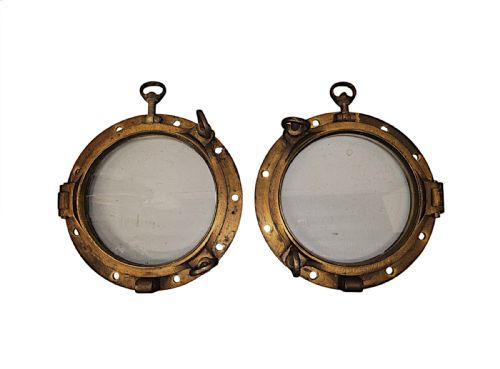
These 19th century porthole mirrors bring striking maritime presence and optical depth to a room through heavy brass and gilded frames.
19th Century Porthole
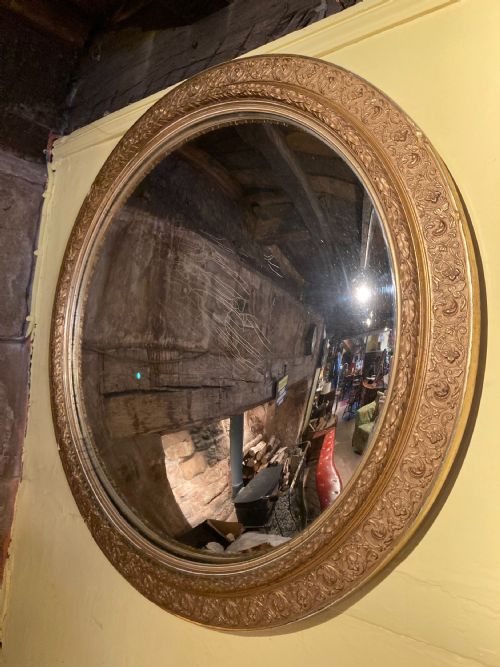
A 19th century porthole typically takes the form of a heavy convex mirror framed in giltwood, gesso, ebonised wood or solid brass. These circular wall mirrors manipulate light and space in a room by capturing a wide, curved reflection across the surface.
Most examples found on this page date from the Regency period through to the late Victorian era, often categorised broadly as maritime pieces, architectural salvage or grand hall mirrors. The heavy brass frames evoke nautical origins, while the gilded convex plates lean into Regency and Victorian decorative aesthetics.
Buyers will encounter both genuine Regency period pieces from around eighteen hundred and twenty alongside later revival works from the close of the century. Wall mirrors dominate the selection, functioning as practical hall glass as well as decorative focal points.
Materials and construction
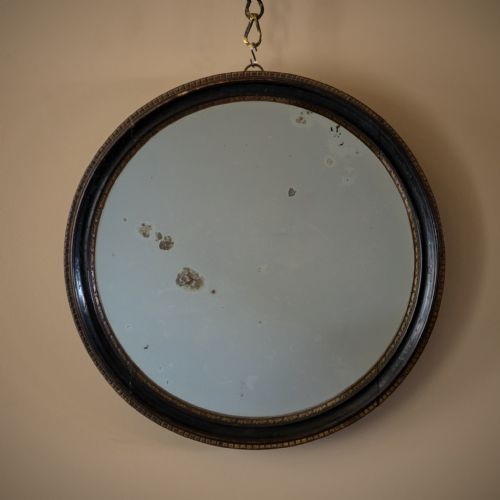
Frames combine traditional cabinetmaking woods with applied gesso and heavy gilding, or utilise solid cast brass for a pronounced maritime weight. Ebonised wood slips often sit inside the gilded outer moulding to create a sharp optical border around the glass.
The characteristic convex mirror glass requires specialised blowing or forming techniques to achieve a uniform curved surface that reflects an entire interior in miniature. Lead backing secures the mirror plate within the timber or brass housing, ensuring durability over centuries of hanging.
Listings feature pieces spanning the 19th century, Regency period, and 1900, constructed from glass, giltwood, gesso, ebonised wood, wood, brass, and mirror glass.
Judging quality in circular mirrors
Quality rests in the crispness of the gesso moulding and the depth of the original gilding, where hand-applied leaf catches light far differently than modern metallic paint. The weight and thickness of the brass housing also separate utilitarian pieces from high-status drawing room ornaments.
The clarity and distortion of the convex mirror plate itself dictate the visual success of the piece, with finer glass offering a sharper, brighter wide-angle reflection without distracting bubbles or surface ripples.
The 19th Century Porthole Glossary
- Convex mirror
- A circular glass plate curved outward to reflect a wide-angle view of the surrounding interior. This optical design was especially popular during the Regency period.
- Gesso
- A plaster-like mixture applied to wood frames and carved or moulded before gilding. It provides the crisp relief detail seen on many nineteenth-century wall mirrors.
- Ebonised wood
- Timber treated to resemble expensive ebony, creating a dark, dense finish. It frequently appears as an inner slip framing the mirror glass.
- Regency revival
- A nineteenth-century design movement recreating the elegance of the Regency era. Pieces from this time borrow heavily from earlier neoclassical motifs.
- Architectural salvage
- Elements recovered from buildings slated for demolition or alteration. Portholes and heavy mirrors often originate from ships or substantial period properties.
19th Century Porthole: Frequently Asked Questions
How do I hang a heavy convex mirror safely?
These circular pieces carry substantial weight due to thick timber frames and heavy glass plates, requiring secure wall fixings into masonry or direct wooden studs. Professional picture hangers utilise steel wire paired with robust wall brackets suited to the exact weight of the brass or giltwood housing.
Position the mirror at eye level where the convex glass can capture the maximum amount of natural light from windows opposite. Avoid damp walls that might threaten the integrity of the original gesso and wood backing over time.
What is the difference between Regency and Victorian porthole mirrors?
Regency pieces, often dating from around eighteen hundred and twenty, typically feature restrained neoclassical details with sharp ebonised slips and refined gilding. They reflect the strict geometric symmetry favoured during the early part of the century.
Late nineteenth-century examples often display bolder proportions and heavier Victorian ornamentation inspired by maritime themes and grand revival styles. The construction methods also shift slightly as mass-production techniques began to influence workshop practices.
Are these mirrors waterproof for marine use?
While brass portholes originated in maritime settings, antique wall mirrors featuring giltwood and gesso are strictly indoor decorative items. Moisture from outdoor environments will quickly degrade the delicate gilding and cause the silvering behind the convex glass to flake.
Keep these pieces in dry interior spaces such as hallways, living rooms or studies to preserve the original materials. The brass variants can withstand slightly more ambient humidity, but the wooden structures beneath remain vulnerable to damp.