



19th Century Pine Armoire
These pieces give a room genuine weight, offering generous storage through robust timber and regional character.
19th Century Pine Armoire
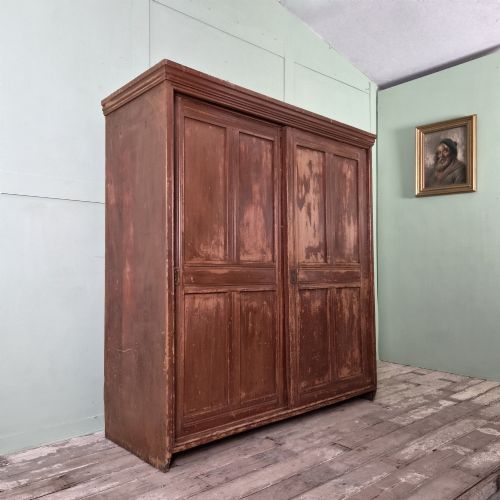
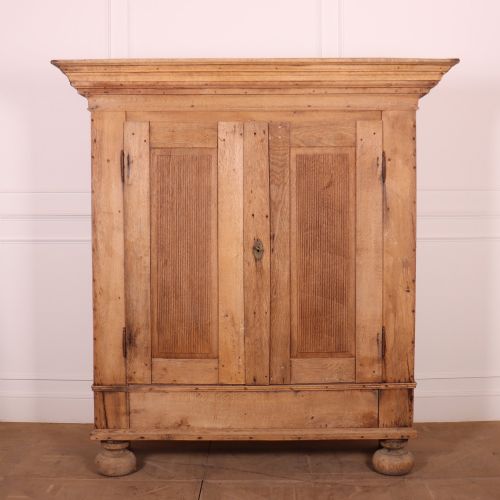
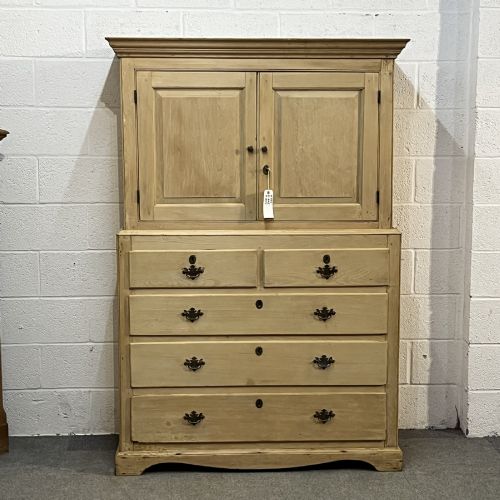
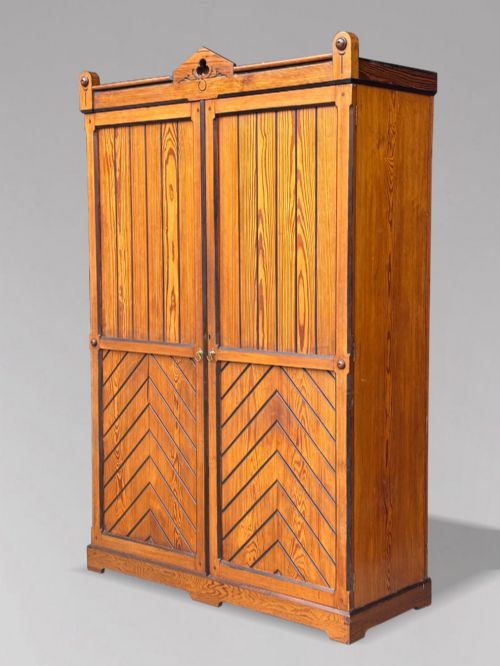
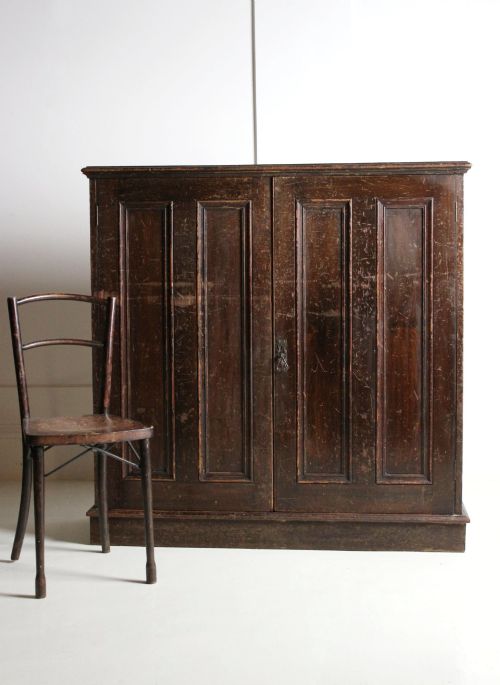
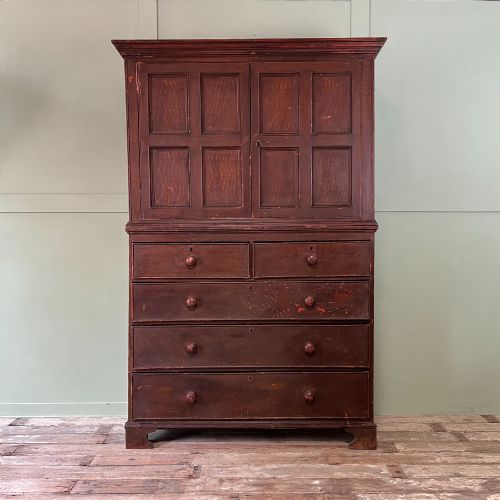
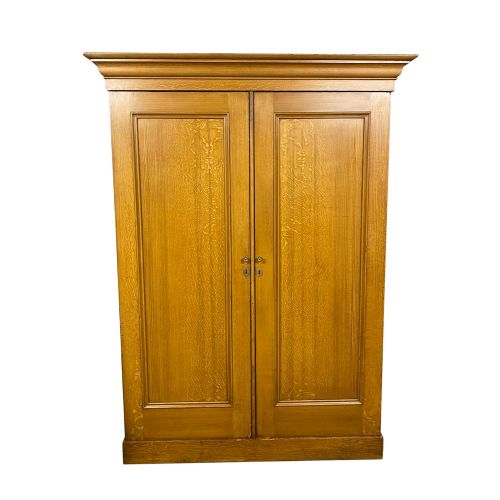
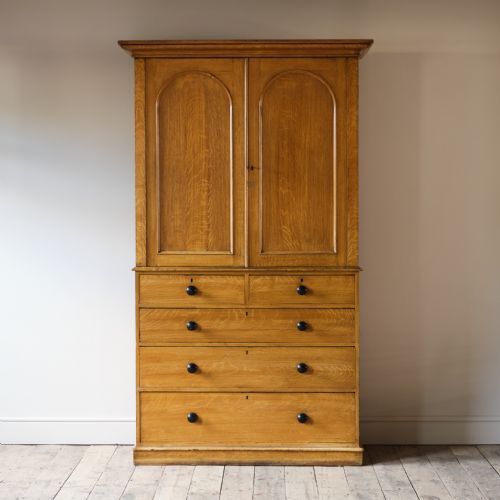
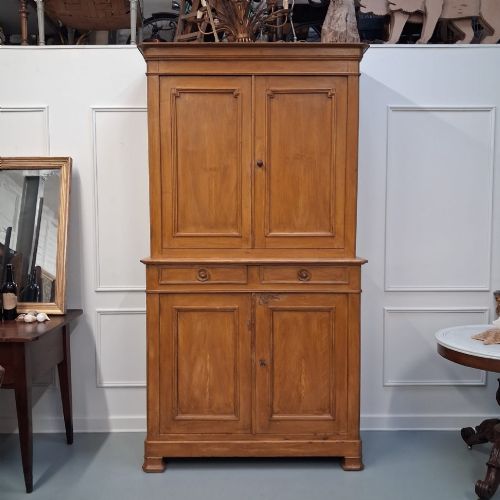
A 19th century pine armoire represents a practical storage solution built from softwood, taking many forms from large wardrobes and housekeepers cupboards to compact presses and kitchen cabinets. These pieces span French provincial, Victorian country and Scandinavian folk art traditions, reflecting local workshop practices across Europe.
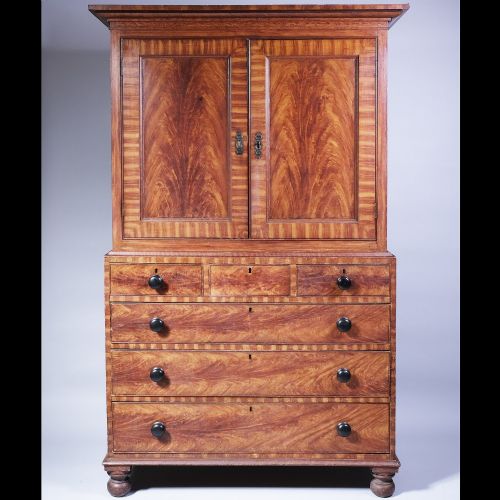
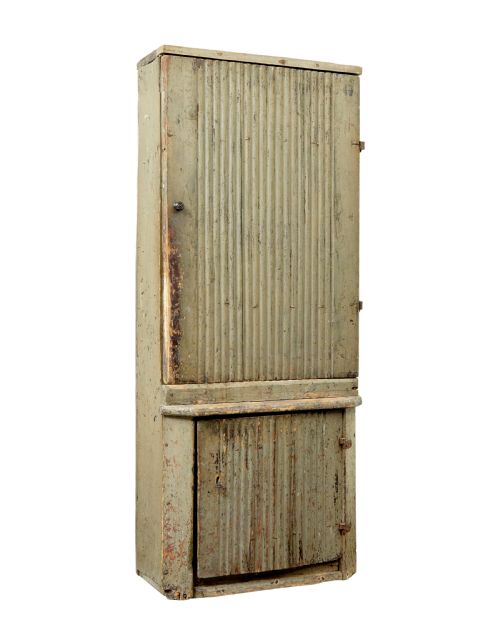
The versions most commonly met on this page include French armoires and knockdown wardrobes alongside painted Scandinavian cupboards and British linen presses. They serve as substantial storage furniture that brings rustic utility and decorative presence into modern interiors.
How they were made
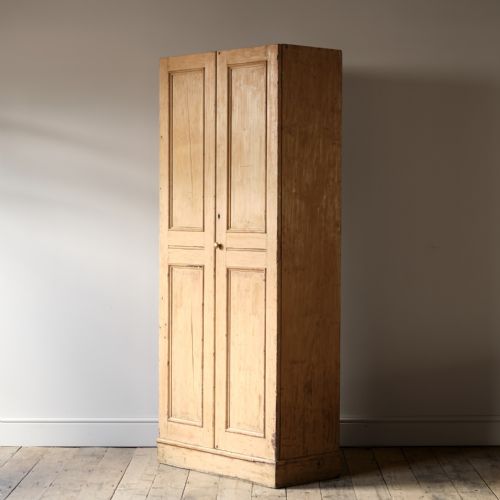
Construction relies on solid pine and pitch pine assembled with traditional joinery, often incorporating iron hinges and brass fittings. Many examples utilise a knockdown design, allowing large carcasses to be dismantled for transport using internal peg or bolt systems.
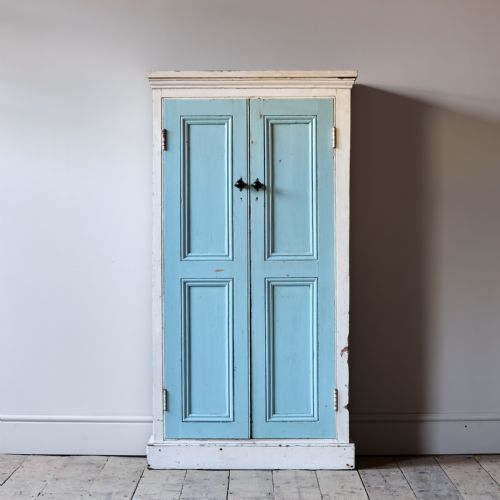
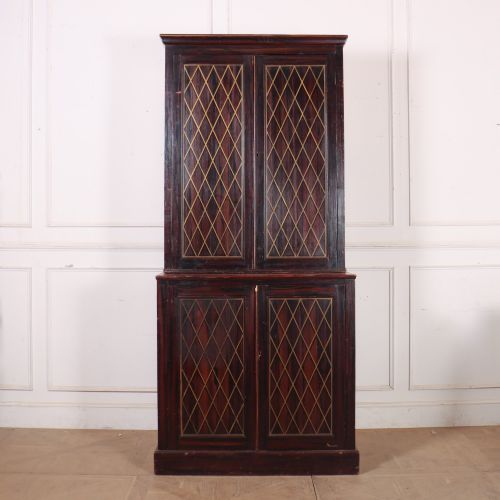
Surfaces frequently show original layers of paint, scumble glaze, folk art decoration or simple waxed finishes. Painters used scumble techniques to imitate richer hardwoods like oak, whilst regional workshops applied vibrant hand-painted floral motifs.
19th Century Pine Armoire Retail Price Guide 2026
Typical asking prices for 19th century pine armoire among the pieces listed under this phrase on Sellingantiques today, from the lower quarter to the upper quarter. They describe what is for sale here now, not the wider market.
Listings feature items from the 18th century through to 1900, with notable representation from Victorian Britain, France and Scandinavia.
What varies in quality
Quality rests primarily in the integrity of the original construction and the preservation of surface finishes. Pieces retaining their untouched scumble glaze or hand-painted folk art sit at the upper end of desirability compared to stripped timber.
Proportion and scale also dictate worth, as well-balanced proportions in larger double and triple wardrobes separate standard utilitarian furniture from exceptional regional examples.
The 19th Century Pine Armoire Glossary
- Armoire
- A large wardrobe or cupboard, traditionally used for storing clothes. French examples often feature double doors and deep internal proportions.
- Scumble
- A decorative paint technique involving a translucent top glaze dragged or brushed over a lighter base coat. This method was frequently employed to simulate the grain of oak or walnut on pine.
- Knockdown
- A piece of furniture engineered to be easily dismantled into panels and parts for moving and transport. This construction method was common in large European armoires.
- Linen press
- A tall cupboard featuring sliding trays or shelves in the upper section above drawers below. They were designed for storing household textiles.
- Folk art
- Decorative painting and carving rooted in regional traditions and vernacular culture. Swedish and Tyrolean pieces often display these expressive motifs.
19th Century Pine Armoire: Frequently Asked Questions
How do I fit a knockdown armoire?
Knockdown armoires dismantle into separate panels, cornices, bases and doors to allow easy transport and access through tight doorways. Assembly typically involves interlocking timber joints, wooden pegs or internal bolts.
Take care to support the heavy side panels evenly during assembly to keep the frame square and ensure the doors hang correctly.
What is scumble paintwork?
Scumble paintwork involves applying a translucent glaze over a lighter ground coat and manipulating the surface with combs or brushes to create faux wood grain patterns. It was popular in the nineteenth century for giving pine the appearance of costly hardwoods.
Original scumble finishes are valued for their depth of colour and decorative patina.
Are these wardrobes deep enough for modern hangers?
Many older wardrobes were built with shallow interior depths because clothes were traditionally folded rather than hung on modern angled hangers. Some pieces have had hanging rails retrofitted.
Check the internal depth measurements carefully before purchase if you plan to hang contemporary garments inside.
How do I care for a waxed pine finish?
Waxed pine benefits from occasional cleaning with a soft, dry cloth and the application of a quality beeswax to nourish the timber. Avoid placing these pieces near direct heat sources or strong sunlight to prevent the wood from drying out.
Regular light polishing maintains the soft lustre built up over generations.