


19th Century Padauk Furniture
19th century padauk furniture brings dense, richly coloured exotic timber and intricate regional carving together in tables, desks and seating.
19th Century Padauk Furniture
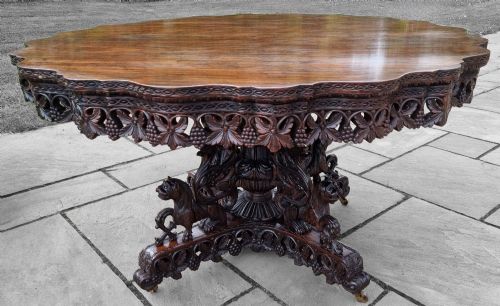
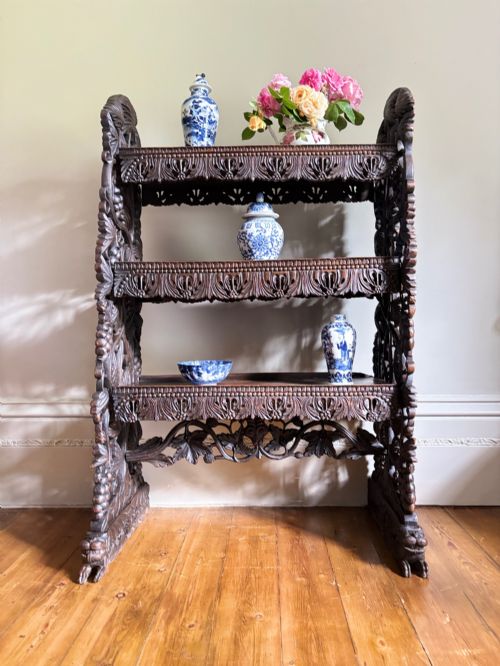
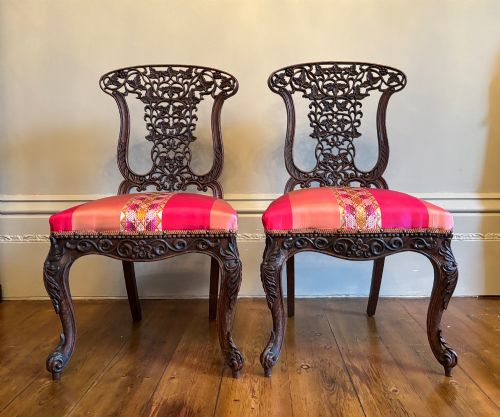
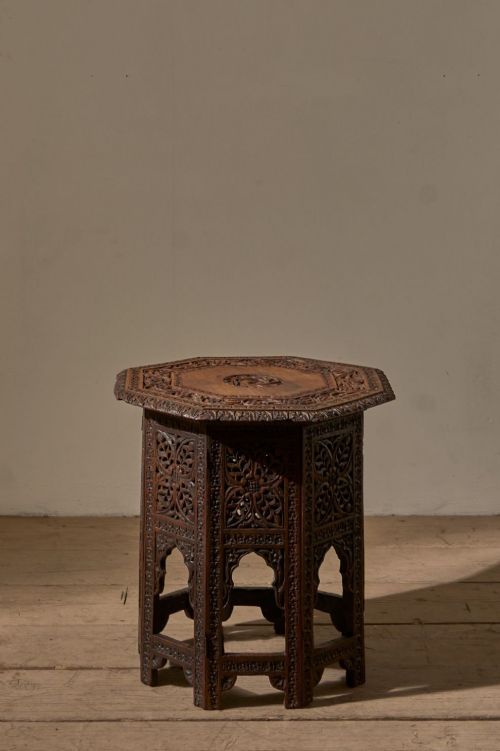
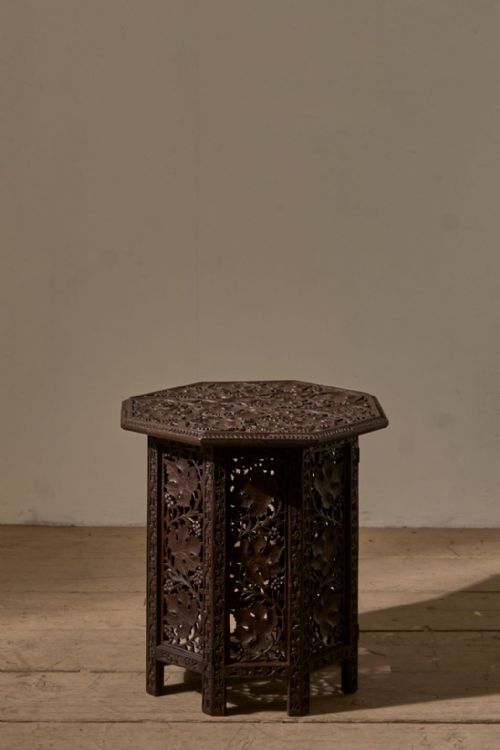
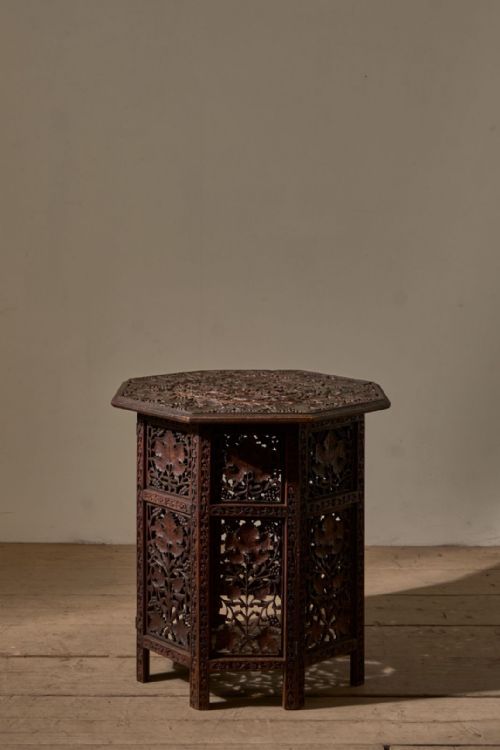
19th century padauk furniture consists of solid timber pieces produced during the Victorian era and earlier decades, heavily represented by Anglo-Indian and Burmese workshops. Buyers searching for 19th century padauk furniture will find forms ranging from side tables and partners desks to large shelving units and upholstered suites. The pieces display distinctive regional motifs such as leaf designs and dragon carvings executed in dense tropical wood.
Originating largely from colonial trade and production, these items reflect the stylistic exchange between British form requirements and eastern carving traditions. Side tables, armchairs and cabinets dominate the selection, often featuring circular tops or elaborately carved bases. The aesthetic sits firmly within the colonial and export spheres of the nineteenth century.
How these pieces were made
Makers utilised padauk wood and related hardwoods, prized for their deep reddish-brown tone and remarkable structural stability. Construction often involved heavy timber framing to support intricate surface carving without warping over time.
Surface decoration relies on deep relief carving, executed by hand to render complex foliate scrolls, dragons and geometric borders. Brass fittings and silk or fabric upholstery appear as supplementary materials on desks, seating and cabinetry.
Listings feature nineteenth-century items incorporating padauk, teak and rosewood alongside brass, silk and fabric elements.
What varies in quality
The depth and crispness of the hand carving dictate the visual success of any piece, separating competent regional work from truly ambitious execution. Carving that retains sharp undercut details and well-defined motifs shows greater artisan engagement than shallow or perfunctory surface scoring.
Timber selection and colour consistency across large surfaces also determine the tier of a piece. Padauk that exhibits a deep, even grain without excessive patching or mismatched board joints represents the upper standard of nineteenth-century production.
The 19th Century Padauk Furniture Glossary
- Padauk
- A dense, heavy tropical hardwood native to Asia and Africa, known for its vibrant reddish-brown colour that darkens with age. It forms the primary structural and visual medium for this furniture.
- Anglo-Indian
- A descriptive term for furniture made in India during the British colonial period, combining British cabinet forms with local decorative carving traditions. These pieces often showcase exceptional regional craftsmanship.
- Partners Desk
- A large double-sided desk designed for two people to work opposite one another, typically fitted with drawers and cupboards on both elevations. They are frequently executed in heavy hardwoods.
- Davenport
- A compact writing desk featuring a sloping, hinged writing surface above a pedestal of drawers. The form gained popularity in the nineteenth century for domestic study spaces.
- Chinese Export
- Furniture produced in China specifically for Western markets, blending traditional Chinese construction methods with European design demands. Such pieces often arrived via nineteenth-century trade routes.
19th Century Padauk Furniture: Frequently Asked Questions
What is padauk wood?
Padauk is a durable, heavy hardwood derived from trees grown in tropical regions of Asia and Africa. It is prized by cabinetmakers for its natural resilience and distinctive red-brown hue.
Over time, exposure to light deepens the original reddish tint into a rich, dark brown patina. This stability made it an ideal medium for the heavy carving seen in nineteenth-century colonial furniture.
How do I care for padauk furniture?
Padauk furniture requires minimal intervention beyond dusting with a soft, dry cloth to protect the polished surface. Keeping pieces away from direct heat sources and drastic humidity changes prevents the timber from drying out.
Applying a traditional beeswax polish occasionally helps nourish the hardwood and maintain its natural lustre. Avoid synthetic sprays or silicone products that can build up on heavily carved surfaces.
How do I identify Anglo-Indian furniture?
Anglo-Indian furniture is identified by its fusion of standard British furniture forms, such as side tables or partners desks, with dense eastern carving. Motifs often include intricate leaf patterns, dragons and elaborate floral scrolls executed in tropical hardwoods.
The scale is frequently generous, reflecting the spacious colonial interiors for which the pieces were originally commissioned. The use of padauk or teak further points to its regional origin.
Where was padauk furniture used?
This furniture was primarily used in colonial administrative offices, grand residences and hill stations across India and Burma during the nineteenth century. British officials and merchants furnished their homes with these robust local pieces to maintain domestic comfort.
Over time, many of these items were brought back to Britain as family pieces or trade goods. Today they function effectively as statement pieces in contemporary living rooms, studies and hallways.