


19th Century Oak Pew
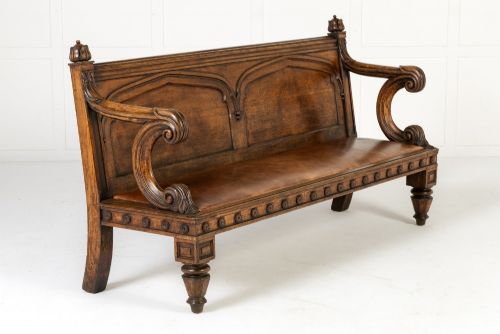
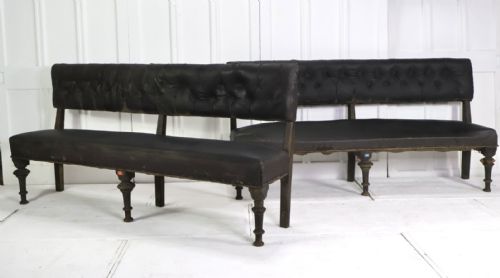
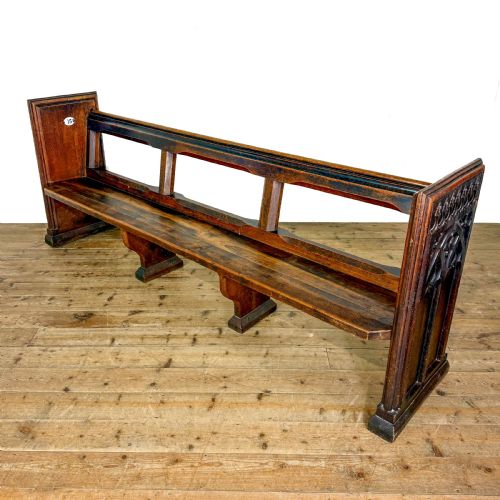
These 19th century oak pew examples bring ecclesiastical dignity and heavy timber construction directly into domestic hallways and kitchens.
19th Century Oak Pew
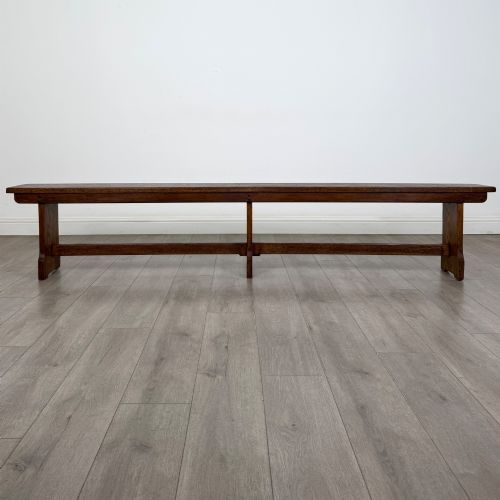
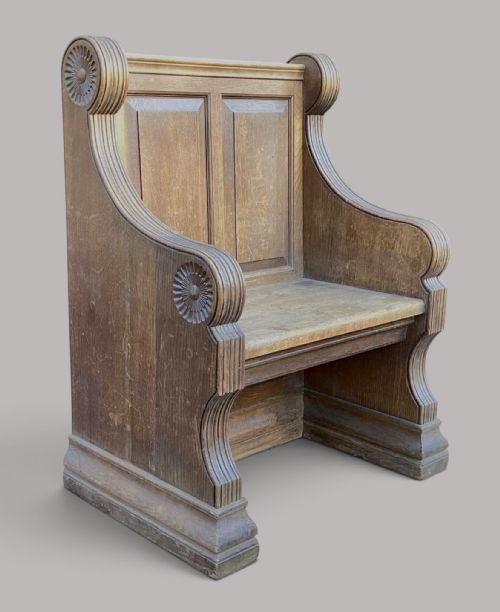
A 19th century oak pew brings substantial ecclesiastical history into a domestic setting, ranging from long church seating to architectural hall benches and settles. When searching for this phrase, buyers encounter church furniture salvaged from places of worship alongside vernacular pieces made for taverns and country houses.
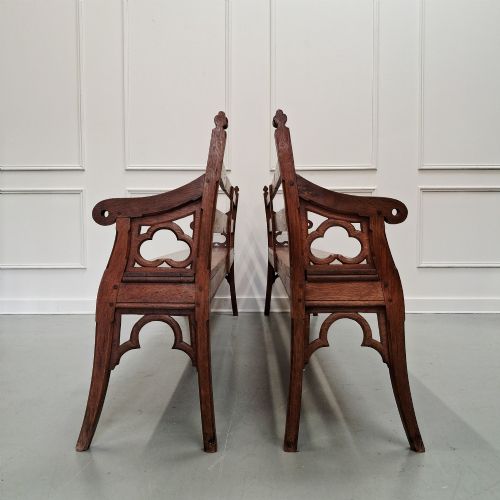
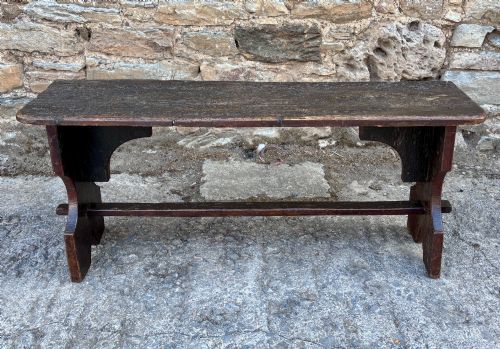
The selection includes rustic farmhouse benches and Gothic Revival designs carved with foliate motifs or poppy heads. Many pieces trace their origins to English parishes, Irish country houses, or local Cotswold churches.
Materials and Construction
Makers utilised solid timber, predominantly oak supplemented by elm, chestnut, and occasionally leather for seating. Construction relied heavily on traditional joinery methods that accommodated the dense weight of hardwood planks.
Carving was executed by hand, creating architectural forms, poppy head finials, and relief panels depicting saints and lions. Surfaces reveal natural grain patterns, sometimes bleached or treated to highlight the aged character of the wood.
The listings combine solid oak with occasional elm, chestnut, and leather elements across Victorian Gothic and rustic country styles.
Judging Quality and Origin
The distinction between pieces rests on the depth of hand carving and the integrity of the original timber. Deep relief work featuring figurative panels or architectural tracery elevates a bench above plain utility seating.
Provenance also plays a role in the standing of a piece, particularly items retaining documented church origins or specific regional styles like Irish country house furniture. Structural alterations from shortening long church benches to fit domestic spaces influence the overall form.
The 19th Century Oak Pew Glossary
- Pew
- A long wooden bench with a high back and sides, traditionally used for seating congregations in churches. These pieces often feature book rests or enclosed ends.
- Settle
- An antique wooden bench with high backs, solid arms, and frequently a box seat for storage underneath. They protected sitters from draughts in domestic interiors.
- Poppy Head
- An ornamental carved finial atop the end of a pew bench, typically shaped like a stylised leaf or bud. This Gothic architectural detail is found on ecclesiastical seating.
- Gothic Revival
- An architectural and decorative style popular during the Victorian era, reviving medieval forms. Pieces display pointed arches, tracery, and heavy carved ornamentation.
- Tavern Bench
- A long, sturdy bench produced for public houses and inns to accommodate multiple patrons. They prioritise durability and straightforward timber construction.
19th Century Oak Pew: Frequently Asked Questions
Where did these church pews originate?
Many examples originate from English parish churches, local chapels, and Irish country houses. Some retain specific provenances linking them to named ecclesiastical buildings.
Others were built for secular spaces such as large halls, farmhouses, and village taverns during the Victorian period.
How do I fit a long pew into a modern hallway?
Long ecclesiastical pews require careful measurement of entryways and corridors before placement. Many buyers position them against hallway walls or beneath tall ceilings where their vertical backs balance the proportions.
Shorter hall benches and settle variants provide alternative options for more compact domestic spaces.
Are these pews comfortable for daily sitting?
Original church pews were built for upright congregational seating rather than lounging. Their solid timber construction encourages an erect posture.
Many owners add loose cushions or squabs upholstered in leather or fabric to soften the wooden seats for everyday use.
How can I tell a church pew from a hall bench?
Church pews typically feature continuous long seating runs, book ledges on the reverse, and architectural pew ends decorated with poppy heads or tracery. Hall benches often show shorter proportions and domestic styling.
Both forms overlap significantly, as many church pews were adapted for domestic hallways after being removed from parishes.