



19th Century Nautical Watercolour
A 19th century nautical watercolour captures maritime history through delicate washes on paper, offering collectors authentic scenes of ships, harbours and stormy seas.
19th Century Nautical Watercolour
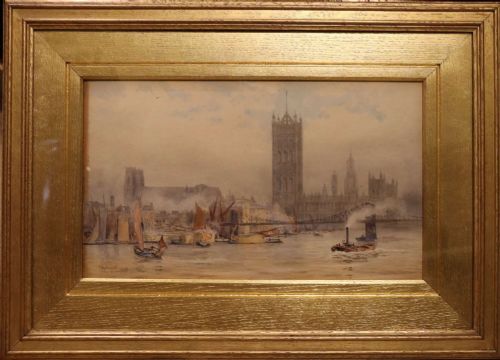
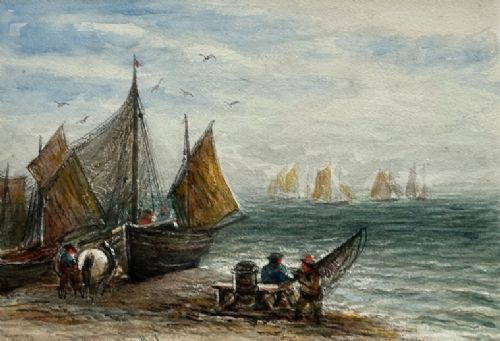
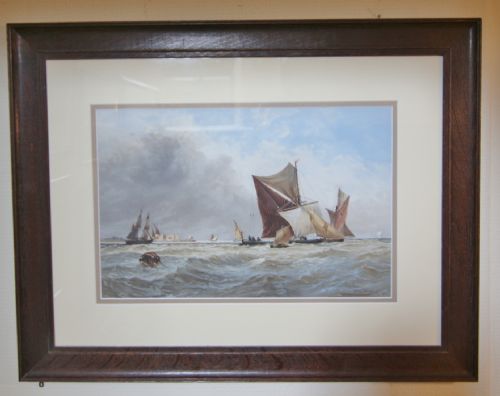
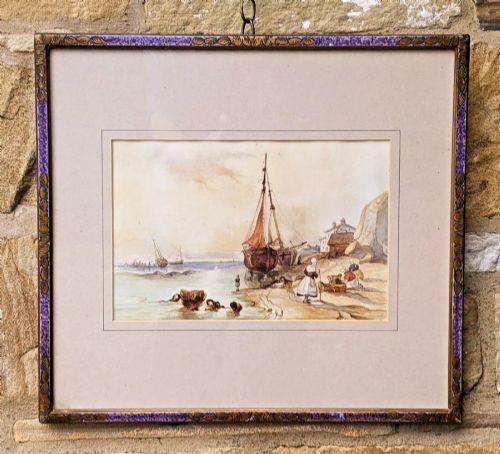
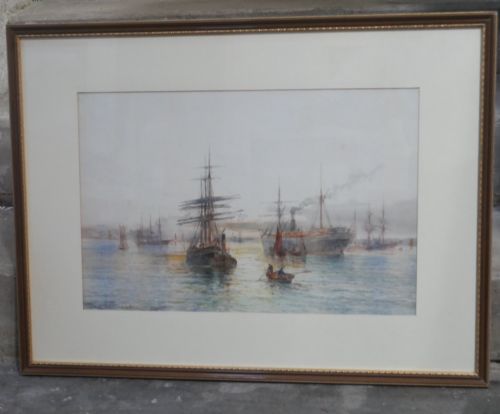
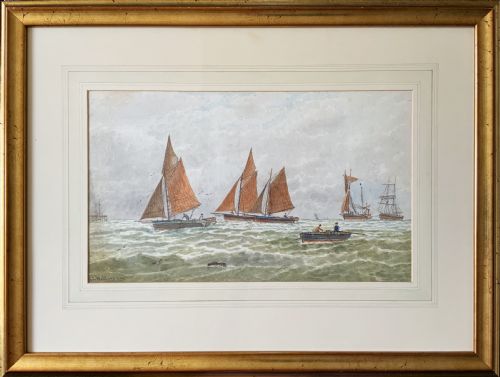
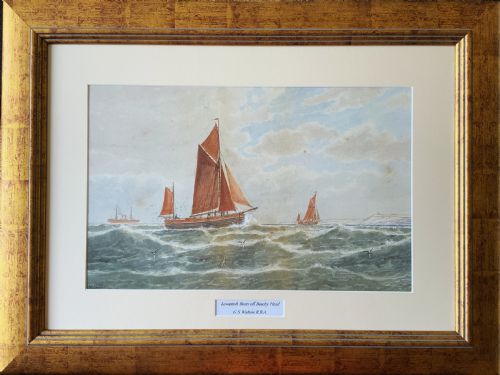
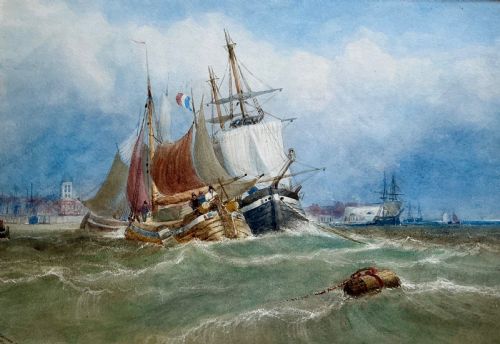
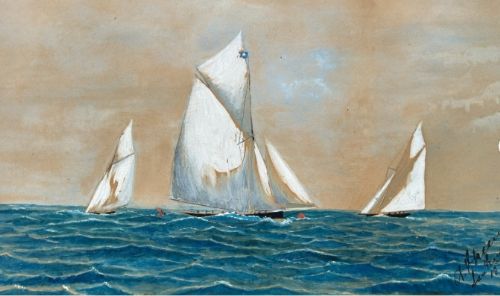
A 19th century nautical watercolour typically depicts coastal views, fishing vessels, naval ships and bustling harbours across various British and international waters. The selections on this page range from detailed portrayals of named clippers and steamships to moody coastal landscapes executed during the Victorian period.
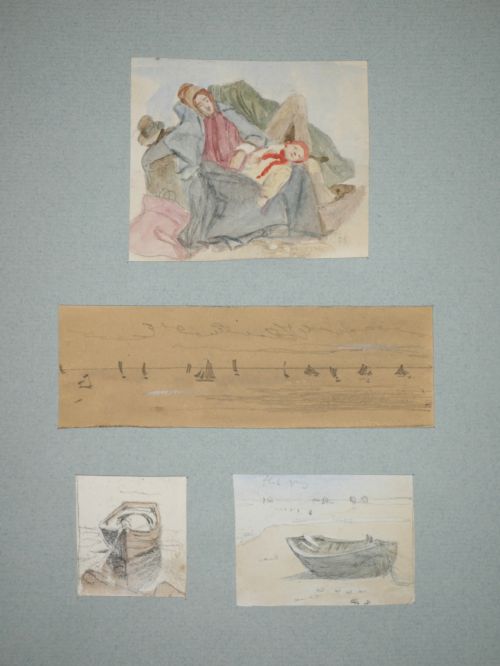
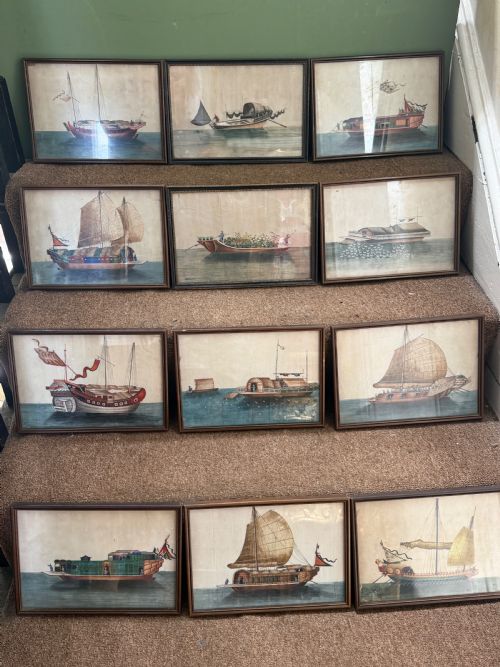
Buyers will encounter works attributed to known marine artists alongside unsigned sketches and decorative sets of Chinese Export gouache paintings. These pieces appear in formats such as framed works on paper, fine art paintings and wall art suited to traditional maritime collections.
Materials and technique
Artists of this era applied watercolour pigments and ink onto paper supports, occasionally incorporating bodycolour or gouache to achieve opaque highlights on churning waves and billowing sails. Works frequently utilise glass and wood frames, sometimes featuring gilt wood or hand enamelled polychrome surrounds to protect the delicate medium.
Techniques varied from rapid marine sketches capturing immediate weather conditions to highly finished studio watercolours detailing the rigging and hull structures of Royal Navy vessels and merchant barques.
Listings feature works created across the 19th century, utilising paper, watercolour pigments, ink, and glass within wooden frames.
Assessing quality and execution
Quality in these works rests upon the artist's command of perspective, atmospheric light and maritime architecture, where accurate depiction of ship rigging distinguishes master marine painters from amateurs. The vibrancy of the watercolour pigments and the preservation of the paper support heavily influence the visual impact of the scene.
Superior examples demonstrate confident brushwork that conveys the movement of choppy seas and the distinct character of coastal environments, while lesser pieces rely on stiff compositions and muted tones.
James Orrock·James Smetham·TB Hardy·George Stanfield Walters·Henry Barlow Carter·William Frederick Settle·Thomas Bush Hardy·Samuel Owen·William Wyld·Arthur Wilde Parsons·Frank Wasley·Thomas Clavering Alder·Joseph Newington Carter·WF Mitchell·J Syer
The 19th Century Nautical Watercolour Glossary
- Gouache
- An opaque watercolour paint mixed with a white pigment, used by artists to create solid highlights on water and clouds.
- Seascape
- A work of art depicting the sea, coastal views, ships or maritime activities.
- Clippers
- Fast sailing ships with three masts and square sails, frequently depicted in maritime art from this era.
- Gilt wood
- Wood carved and coated with gold leaf or gold paint, commonly found on period frames.
- Man-of-war
- A powerful armed sailing warship used by the Royal Navy during the sailing ship era.
19th Century Nautical Watercolour: Frequently Asked Questions
How should I display a water colour safely?
Keep the piece away from direct sunlight to prevent the watercolour pigments from fading over time. Ensure the frame utilises conservation glass and appropriate backing to protect the paper support from ambient moisture.
Maintain stable indoor humidity levels where the artwork hangs, avoiding damp spaces like unheated rooms or areas prone to temperature swings.
What subjects appear in these marine paintings?
Common subjects include fishing boats hauled onto beaches, naval ships at anchor, steam and sail vessels navigating busy estuaries, and dramatic coastal lighthouses. Artists frequently recorded specific locations such as Portsmouth Harbour, Dublin Bay, and the River Medway.
Scenes range from tranquil harbour reflections to turbulent open seas featuring masted barques battling choppy waters.
Are these works signed by the artists?
Many pieces bear artist signatures, initials, or contemporary inscriptions identifying the vessel, harbour or date of execution. Other works remain attributed based on style, provenance or gallery records from the period.
Unsigned watercolours were often produced as preparatory sketches or travel studies by professional marine painters.
How do I identify a Victorian maritime piece?
Look for stylistic markers typical of Victorian marine art, including precise depictions of steam and sail technology popular during the 19th century. Paper types, framing materials, and handwritten inscriptions on the reverse often provide clues to the era.
Costume details on any figures included in the coastal scenes, such as soldiers or sailors, also help anchor the piece within the 19th century.