
19th Century Mahogany Chiffonier
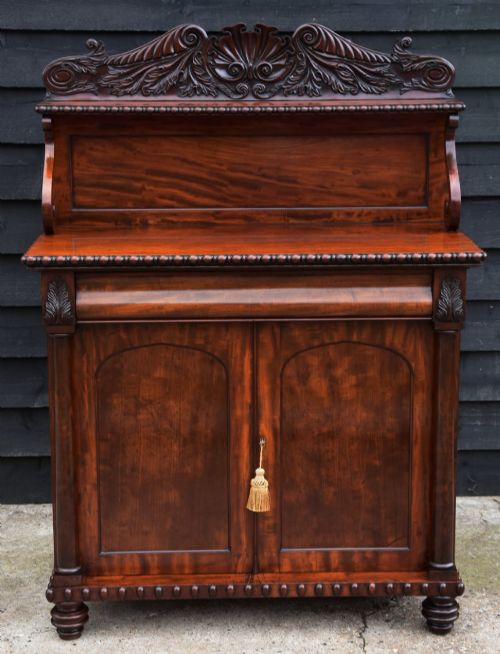
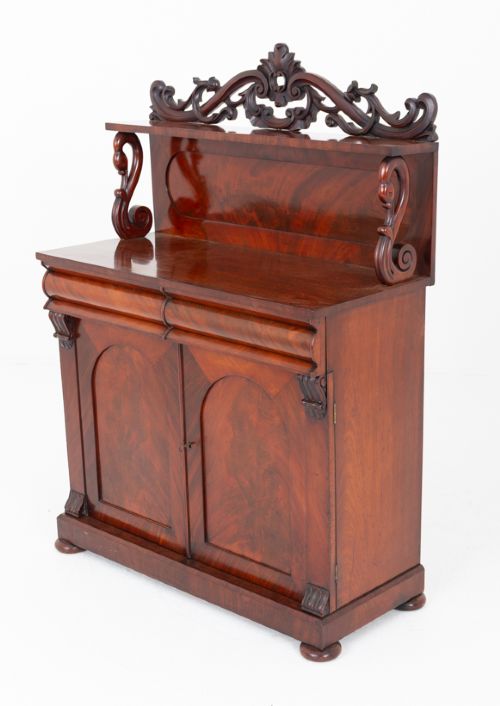
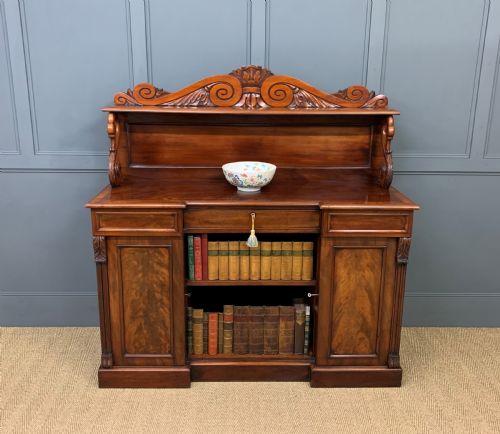
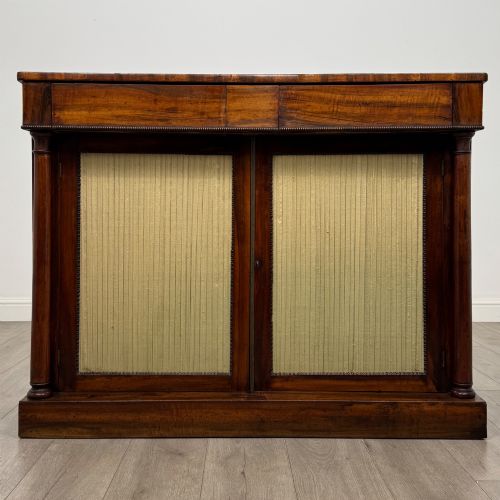
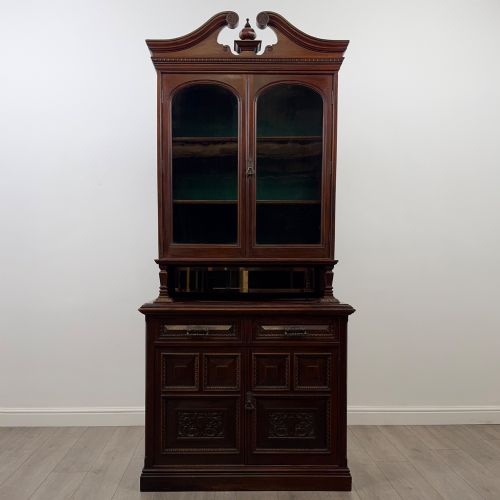
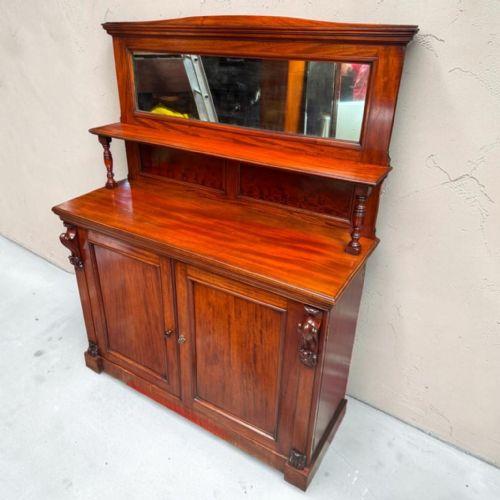
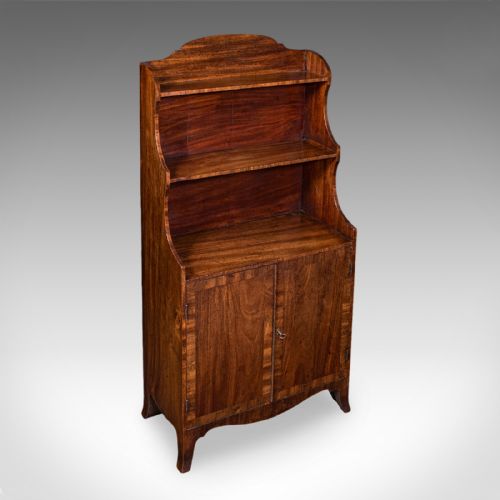
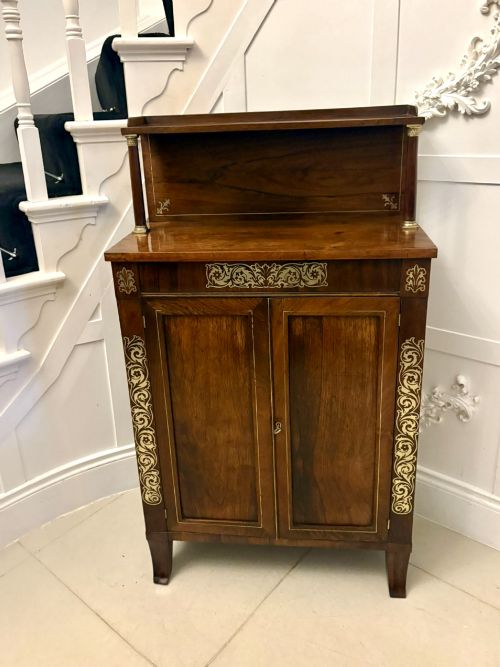
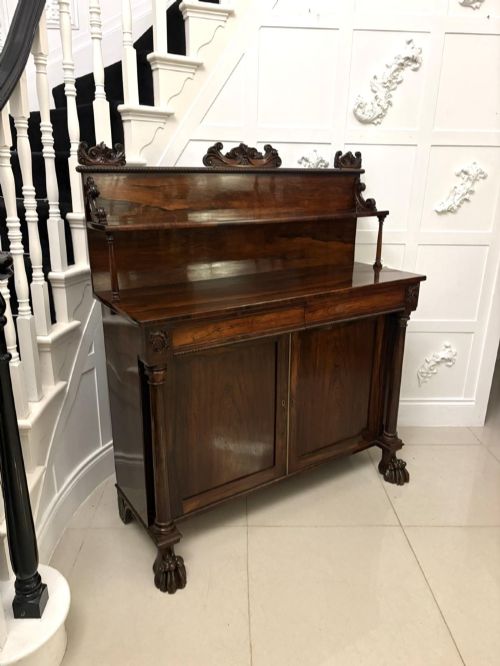
A 19th century mahogany chiffonier brings compact storage and display to a room, pairing a lower enclosed cupboard with upper shelving.
19th Century Mahogany Chiffonier
When searching for a 19th century mahogany chiffonier, buyers encounter low side cabinets designed for dining rooms and parlours to hold tableware, books, and decorative objects. The pieces span periods from the Georgian era through the Regency, William IV, and Victorian decades, evolving from simple low cupboards into more elaborate chiffonier bookcases.
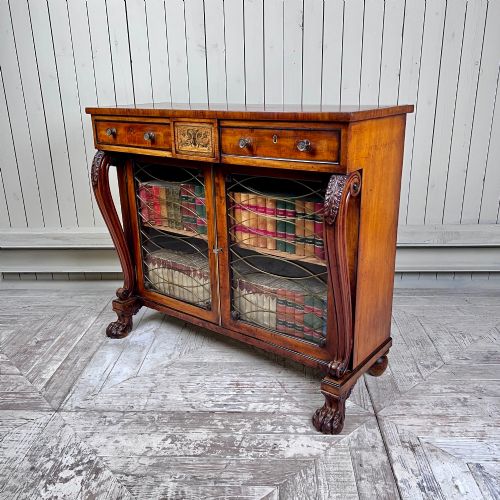
The most common formats on this page include the dwarf cabinet with enclosed lower doors and open shelves above, alongside variants incorporating mirrored backs or drawers. Makers utilised the dense timber to create functional furniture suited to both grand houses and smaller domestic spaces.
How They Were Made
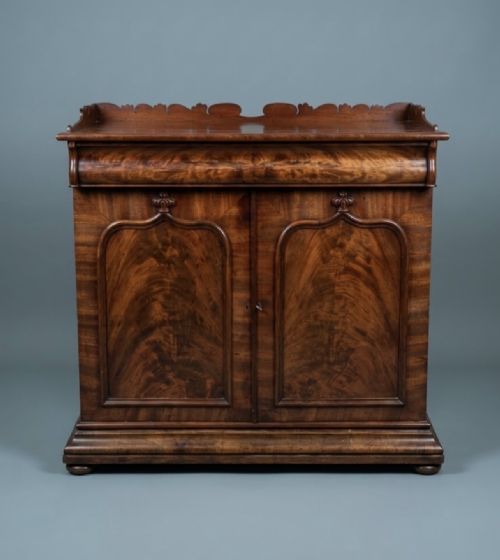
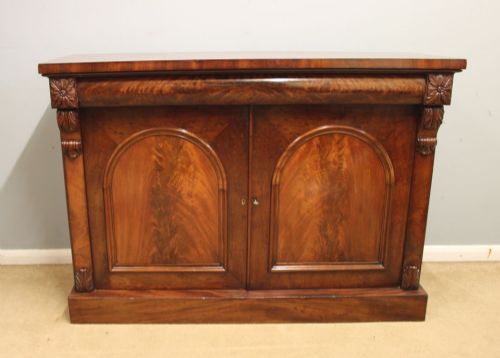
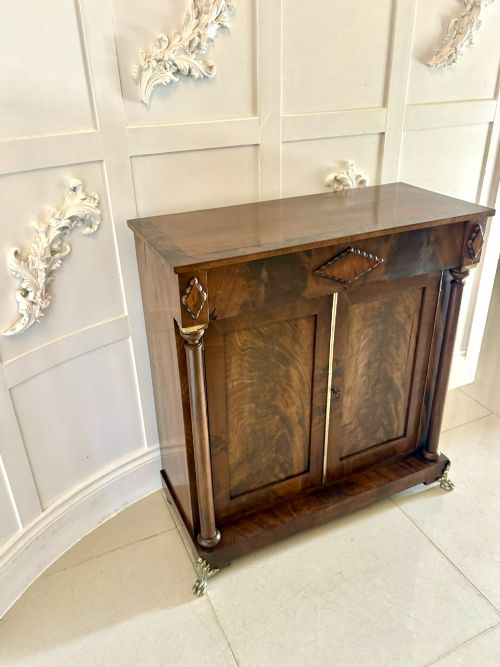
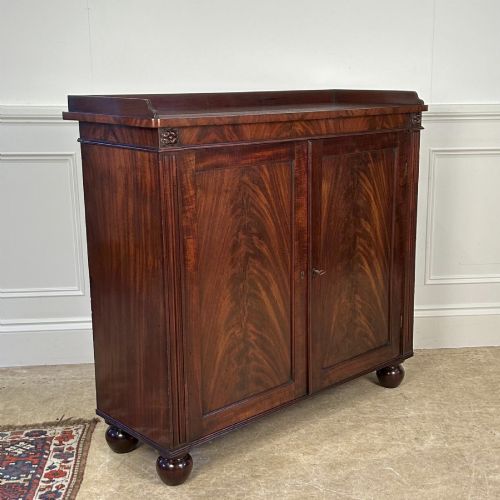
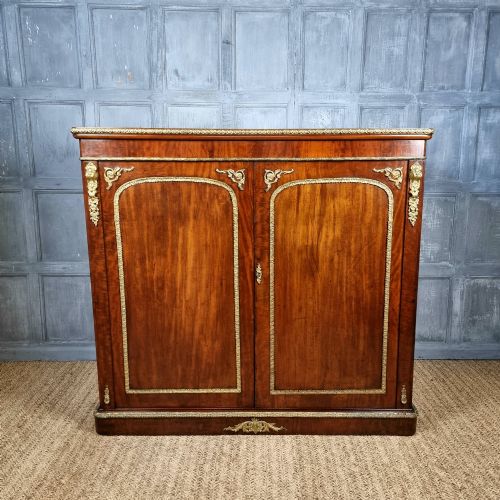
Cabinetmakers built these pieces primarily from solid wood and flame mahogany veneer, selecting specific cuts to highlight dramatic figuring on door panels and drawer fronts. Secondary materials such as brass inlays, ebony details, and glass added decorative contrast to the dark timber framework.
Construction techniques relied on traditional joinery, integrating panelled doors, turned columns, and carved corbels. Cabinetmakers often paired the timber with fabric-backed shelving or mirror glass in later Victorian iterations.
Some Victorian chiffoniers feature hidden internal cellarette drawers designed specifically to keep wine bottles secure and out of sight.
What Varies in Quality
Quality in a 19th century mahogany chiffonier rests upon the selection of the timber veneer and the precision of the cabinetmaker's joinery. Pieces displaying matched flame mahogany across the principal surfaces indicate superior material selection by the workshop.
The refinement of carved details, such as applied corbels or brass inlay work, separates standard utility furniture from pieces produced by notable workshops. Structural integrity in the doors and the crispness of turned supports further define the tier of the piece.
Gillows of Lancaster·Robert Strahan
The 19th Century Mahogany Chiffonier Glossary
- Flame mahogany
- A distinctive wood grain pattern resembling flickering flames, created by cutting across the branch burls or forks of the tree. Cabinetmakers prized this figure for principal door panels.
- Chiffonier
- A low sideboard or cabinet featuring an enclosed cupboard base, often surmounted by one or more tiers of open shelving. It originated as a French-style piece for holding silver and dining accessories.
- Regency
- An English design period spanning the early 19th century, characterised by classical restraint, architectural lines, and occasional classical motifs. Furniture from this era frequently incorporates brass inlay and ebony stringing.
- Waterfall bookcase
- A tall shelving unit with graduated shelves that step back toward the top, creating a tiered profile. This form frequently appears integrated into the upper section of a chiffonier.
19th Century Mahogany Chiffonier: Frequently Asked Questions
What is a chiffonier used for?
A chiffonier served as a versatile side cabinet in 19th-century dining rooms and living spaces, offering enclosed storage below for serving items and linens.
The upper shelves provided a convenient surface to display books, ceramics, and decorative objects within easy reach.
How do I date a chiffonier?
Dating relies on observing stylistic markers, such as the architectural restraint of Regency pieces versus the heavier carved ornamentation of later Victorian examples.
Material choices, construction methods, and the presence of mirror glass or adjustable shelving brackets also help narrow the decade of manufacture.
Where do I place a chiffonier?
These cabinets suit dining rooms, hallways, and living areas where floor space is limited but surface display is desirable.
Their shallow depth allows them to sit comfortably against walls without obstructing walkways in smaller rooms.
What is flame mahogany?
Flame mahogany is a highly figured wood veneer derived from specific sections of the mahogany tree where the grain twists and catches the light.
Cabinetmakers reserved these striking veneers for the most prominent surfaces of a cabinet, such as door fronts.