




19th Century Leather Couch
A 19th century leather couch brings deep character and enduring comfort to a room.
19th Century Leather Couch
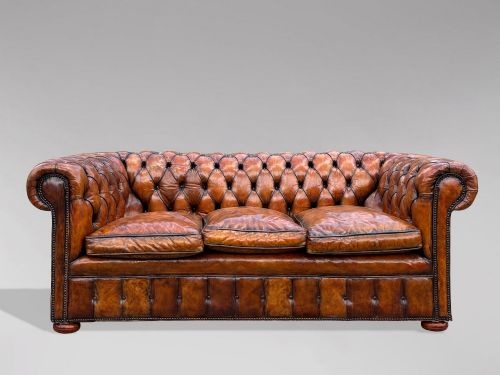
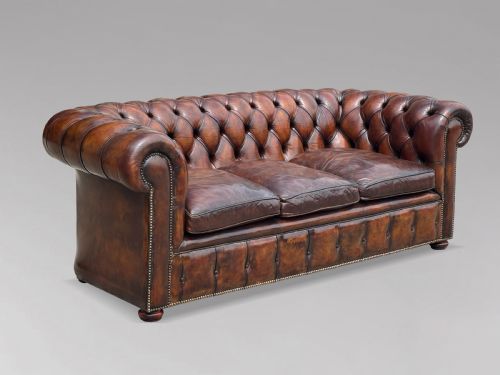
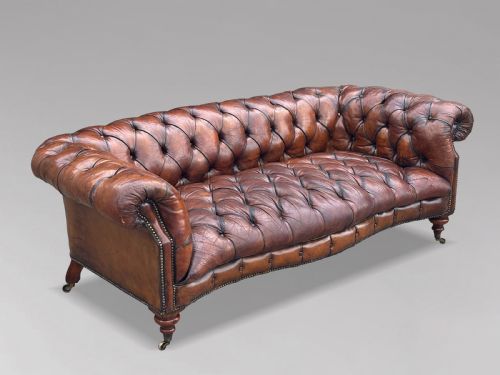
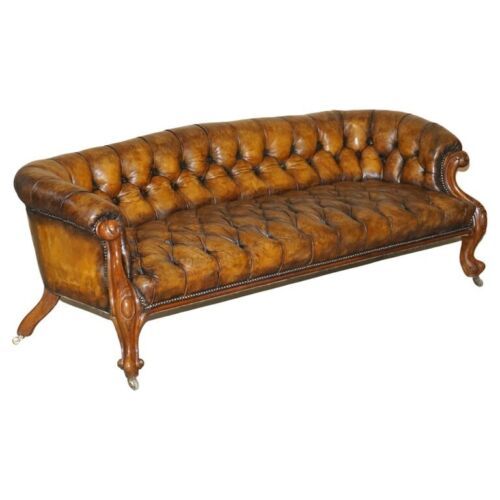
A 19th century leather couch encompasses substantial Chesterfields, scroll-end settees, and open arm sofas spanning the Victorian and Regency periods. These seating pieces anchor a room with their generous proportions and historical presence.
The version most commonly met on this page is the classic Chesterfield, upholstered in hand-dyed brown, green, or amethyst leathers. These pieces reflect the robust craftsmanship of English country houses and metropolitan workshops alike.
Makers such as Howard and Sons and Hampton and Sons appear alongside walnut show-frame settees and mahogany-framed designs. Every piece demonstrates the utility and decorative ambition characteristic of nineteenth-century seating.
Materials and construction methods
Frames rely on sturdy hardwoods such as mahogany and walnut, providing the structural foundation for deep seating. Timber framing ensures longevity while supporting heavy upholstery and sprung interiors.
Upholstery centres on natural leather, often hand-dyed in shades ranging from traditional brown to distinctive green and aubergine. Brass detailing, including studs, punctuates the leather edges and secures the hides to the frame.
Some nineteenth-century Chesterfields harbour decades of hidden sixpences dropped deep beneath their buttoned upholstery by previous readers.
Distinctions in quality and finish
The calibre of a nineteenth-century couch rests in the integrity of its wooden frame and the depth of its upholstery work. Pieces retaining maker stamps or original show-frames display superior provenance and workshop execution.
Leather treatment creates another division, as hand-dyed finishes vary from faithful restorations to patinated original hides. The refinement of carved details on walnut and mahogany supports further distinguishes workshop output.
Howard and Sons·Hampton and Sons of Pall Mall
The 19th Century Leather Couch Glossary
- Chesterfield
- A large, deeply buttoned sofa characterised by arms and back of the same height. This form remains the quintessential nineteenth-century seating choice.
- Show-frame
- A wooden structural frame left partially exposed around the upholstered elements. Walnut and mahogany examples showcase fine cabinet-making skills.
- Scroll end
- A sofa arm or terminal curved outward in a tight scroll shape. This design feature frequently appears on Regency and early nineteenth-century settees.
- Chaise longue
- An upholstered long chair designed for reclining, combining a seat with a single raised backrest. Examples from the period often incorporate carved wooden supports.
19th Century Leather Couch: Frequently Asked Questions
How do I care for antique leather?
Antique leather requires regular conditioning with appropriate balms to maintain flexibility and prevent the surface from drying out. Keeping the couch away from direct sunlight and heat sources preserves the natural tone of the hide.
Gentle dusting with a soft cloth prevents particle buildup in the button folds and crevices. Avoid harsh chemical cleaners that strip the original or hand-dyed finish.
Where were these sofas originally placed?
These seating pieces occupied studies, libraries, and grand drawing rooms in townhouses and country estates. Their durable construction suited heavy daily use by families and guests alike.
Today, they transition easily into modern living spaces, serving as central statement furniture that grounds contemporary or traditional interior schemes.
How do I distinguish Victorian from Regency styles?
Regency pieces often display lighter wood frames, crisp carving, and classical motifs like scroll ends or herms. They reflect an earlier nineteenth-century taste for neoclassical elegance.
Victorian designs tend toward heavier, more robust proportions, encompassing massive buttoned Chesterfields and ornate walnut show-frames. The upholstery and framing become progressively more exuberant as the century advances.