
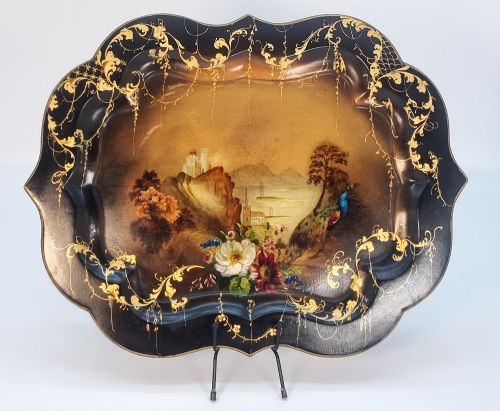


19th Century Lacquered Tray
A 19th century lacquered tray brings hand-painted scenes and lustrous dark surfaces to a room, serving drinks or mounted on a stand.
19th Century Lacquered Tray
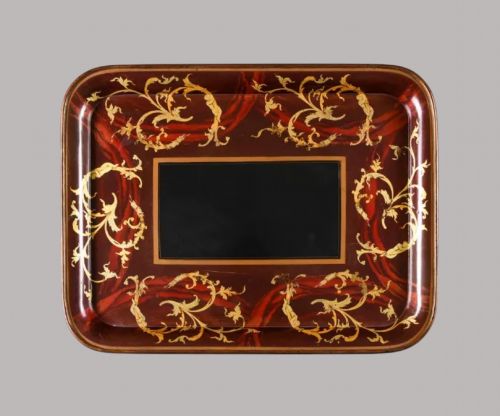
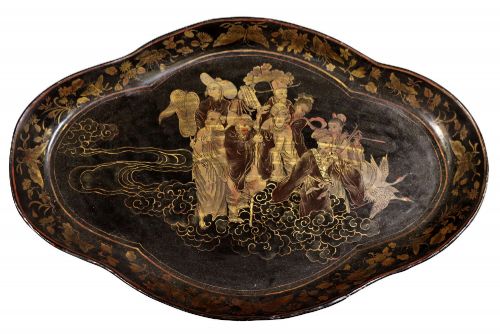
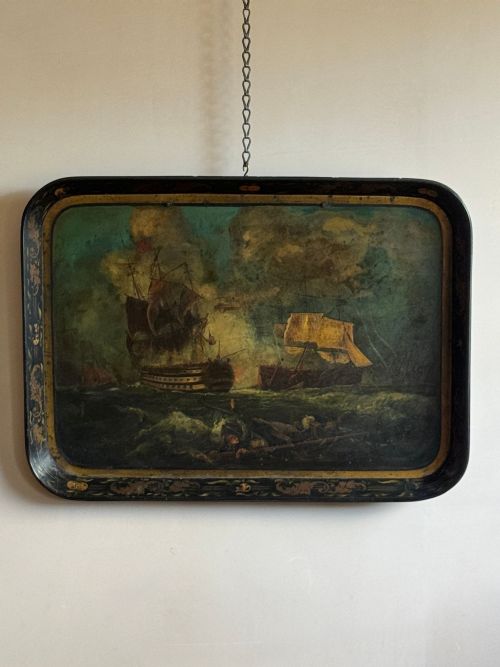
A 19th century lacquered tray is most often made from papier-mâché or painted metal, formed into oval, rectangular or kidney shapes for serving or display. These pieces appear across Regency, Victorian and later periods, frequently decorated with Chinoiserie motifs, floral gilding or landscape scenes.
Many examples survive fitted to later folding or fixed stands, transforming the serving piece into an occasional table or desk accessory. The selection includes specific forms such as desk sets, letter racks and inkstands alongside standard serving trays.
Materials and construction
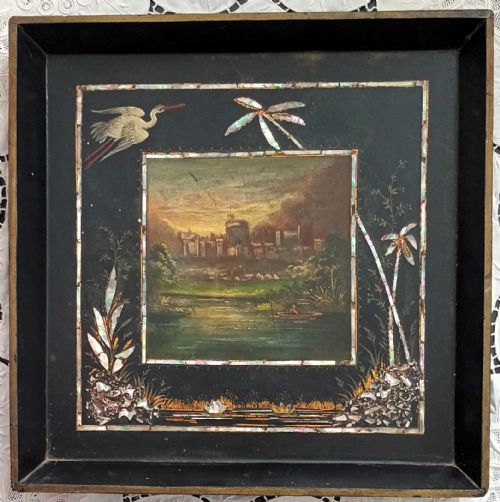
The foundation relies heavily on papier-mâché or metal toleware, built up and smoothed to receive layers of dark lacquer. Artisans applied gold leaf, paint and mother-of-pearl inlay to create intricate decorative schemes across the surface.
Gilding and hand-painted details define the finish, utilising contrasting colours and metallic accents to highlight architectural views, hunting scenes or orientalist designs.
Several trays double as gaming boards, hiding past evenings of Regency card games beneath their gloss.
Assessing the execution
Quality rests in the crispness of the hand-painted detail and the depth of the lacquered finish, separating standard production from works bearing maker signatures. Pieces originating from recognised workshops demonstrate superior control over gilding and pictorial composition.
The preservation of the original surface decoration dictates the standing of a piece within the period. Examples retaining their untouched painted landscapes or complex mother-of-pearl inlay hold greater visual coherence.
Jennens and Bettridge·Clay
The 19th Century Lacquered Tray Glossary
- Papier-mâché
- A composite material made from paper pulp or layers of paper mixed with glue, pressed and dried to form a rigid base for lacquer. This technique allowed makers to mould smooth, durable trays and desk accessories.
- Toleware
- Painted or enamelled sheet metal items produced throughout the period for domestic use. These trays often feature dark grounds decorated with gilt borders or floral motifs.
- Chinoiserie
- A European artistic style reflecting Chinese aesthetic influences, prominent in the decoration of these lacquered surfaces. Designs typically incorporate imaginary landscapes, pavilions and figures.
- Japanning
- A European imitation of East Asian lacquerwork, created by applying layers of varnish and hardening them with heat. The process produced the characteristic glossy dark finish seen on nineteenth-century pieces.
- Mother-of-pearl
- The iridescent inner layer of certain mollusc shells, inlaid into the lacquer surface to catch the light. This material frequently highlights architectural elements or floral details.
19th Century Lacquered Tray: Frequently Asked Questions
How do I clean a lacquered tray?
Dust the surface gently with a soft, dry cloth to remove particles without scratching the delicate lacquer. Avoid using water, chemical cleaners or abrasive cloths that might damage the paint or gold leaf.
Keep the piece away from direct sunlight and excessive heat sources to prevent the lacquer from cracking or warping over time. Wax polishes are generally unnecessary and can build up an unwanted haze on the finish.
Were these trays originally used on stands?
Most pieces were manufactured purely as serving trays or desk accessories, designed to be handled and stored when not in use. Stands were frequently added later to adapt the trays into occasional tables or coffee tables.
Some period examples were produced specifically with folding or rigid supports, particularly larger serving formats. Inspecting the underside reveals whether a stand is a later adaptation or an integrated component.
How do I date a papier-mâché piece?
Dating relies on stylistic clues, construction methods and occasionally maker marks stamped or written on the reverse. Early nineteenth-century Regency pieces often display distinctive border gilding and flatter proportions compared to later Victorian iterations.
Subject matter also provides a guide, as Chinoiserie motifs span the entire century while specific landscape scenes align with Victorian production tastes. Examining the wear patterns on the base assists in confirming the age of the piece.
Can I use these trays for serving?
While sturdy, the historic lacquer and hand-painted surfaces require careful handling if utilised for actual serving. Moisture and heat from hot cups can leave permanent rings or marks on the delicate varnish.
Many owners choose to display them on walls, stands or sideboards to preserve the artwork. If used for drinks, inserting a protective glass liner helps safeguard the antique surface from spills.