
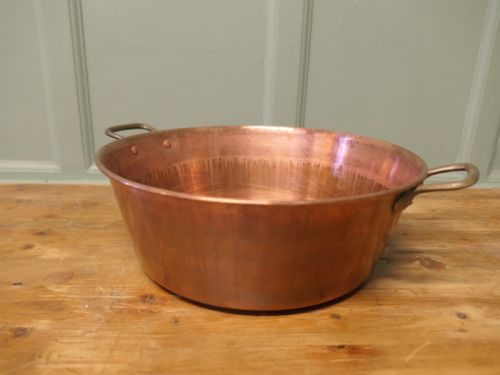
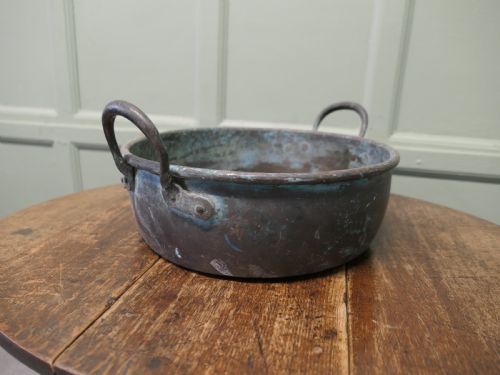


19th Century Jam Pan
A 19th century jam pan brings utilitarian warmth to a modern interior through honest metalwork.
19th Century Jam Pan
A 19th century jam pan is a heavy kitchen vessel designed for boiling fruit and sugar, combining domestic utility with robust craftsmanship. When you search for this phrase, you find practical cookware shaped as large bowls, cauldrons, and preserving pans.
Originating from the nineteenth century, these objects bridge the gap between historic utility and decorative home use. They serve equally well as deep bowls, basins, or contemporary planters and vessels.
Materials and Construction
Metalworking defines these items, with copper, brass, and wrought iron forming the primary body and handle structures. Smiths shaped these heavy sheets by hand, utilising rivets to secure handles firmly to the vessel walls.
Iron and tin appear selectively, providing structural strength for swing handles or reinforcing rims. The resulting cookware shows the direct marks of nineteenth-century fabrication without modern industrial smoothing.
Listings feature 19th century cookware in copper, brass, iron, and tin, spanning utilitarian forms from simple bowls to large double-handled cauldrons.
Assessing Quality and Build
Weight and metal thickness distinguish superior pans from lighter domestic examples. Substantial copper gauge and heavy-duty wrought iron handles indicate a vessel built for intense, continuous kitchen labour.
The neatness of the riveting and the integrity of the rim shape determine the finer examples. Well-formed double handles and balanced proportions separate a utilitarian tool from a coarse storage vessel.
The 19th Century Jam Pan Glossary
- Preserving pan
- An alternative term for a large kitchen basin used in fruit preparation. These pieces share the same heavy metallic construction as standard jam pans.
- Wrought iron
- A tough, malleable form of iron worked by hammering while hot. It frequently forms the swing handles on larger cauldrons and heavy pans.
- Swing handle
- An articulated metal handle attached to opposite sides of a vessel. It drops down flat against the rim when not in use.
- Riveted
- Joined together using short metal pins hammered flat at the ends. This technique securely fastens handles to the body of copper and brass vessels.
19th Century Jam Pan: Frequently Asked Questions
What is a 19th century jam pan?
A 19th century jam pan is a heavy metal cookware vessel used historically for boiling fruit preserves over a fire or stove.
Today, collectors and interior decorators prize these substantial copper and brass pieces for their rustic aesthetic and tactile presence in homes.
How were jam pans used?
Cooks utilised these wide vessels to distribute heat evenly across sticky sugar and fruit mixtures during open-pan boiling.
The wide mouths allowed steam to escape quickly while giving the cook ample room to stir with a wooden paddle.
How do I clean a copper pan?
Gentle washing with warm soapy water preserves the historic surface and natural darkening of the metal.
Avoid harsh chemical abrasives unless you prefer a bright, polished finish rather than an aged antique patina.
Can I use them for plants?
Many people repurpose these sturdy metal bowls as indoor planters and decorative vessels for the home.
Their waterproof nature and deep basins suit them well for holding potted greenery or dried floral arrangements.