


19th Century Jade Carving
These 19th century jade carving pieces range from celadon brush washers to Mughal powder flasks, offering tactile history for your desk or cabinet.
19th Century Jade Carving
When you search for a 19th century jade carving, you enter a field defined by Chinese craftsmanship spanning the Qing Dynasty and the year 1880. The pieces you are most likely to meet on this page include snuff bottles, desk accessories, and scholarly brush washers.
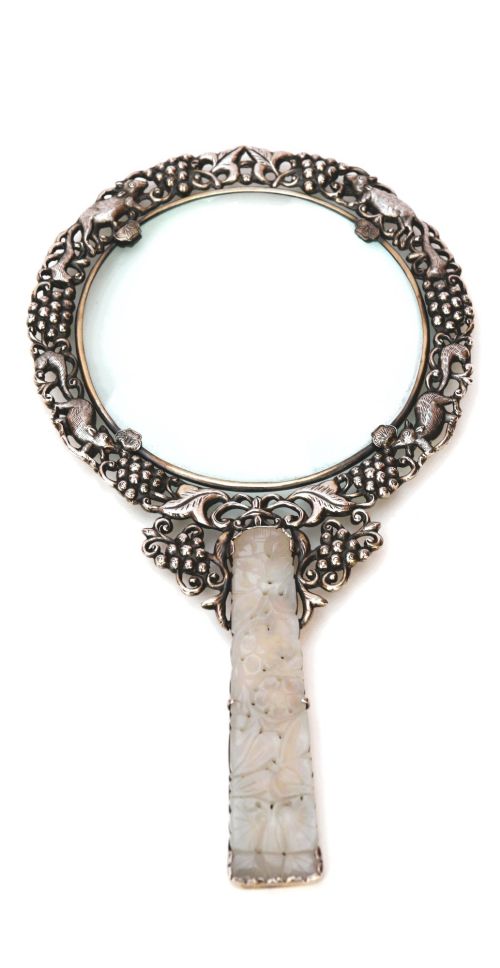
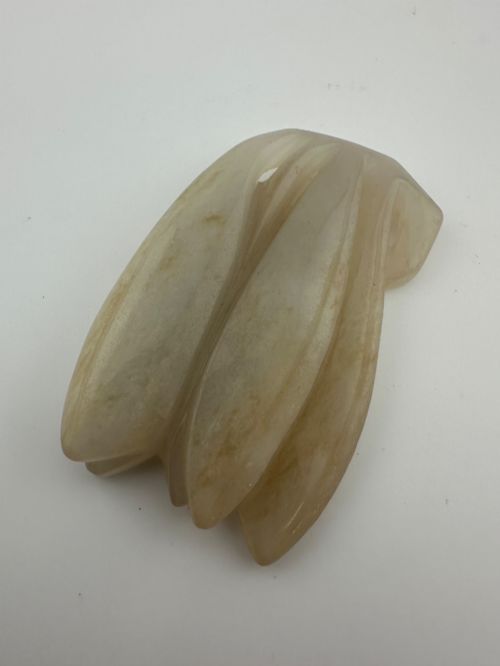
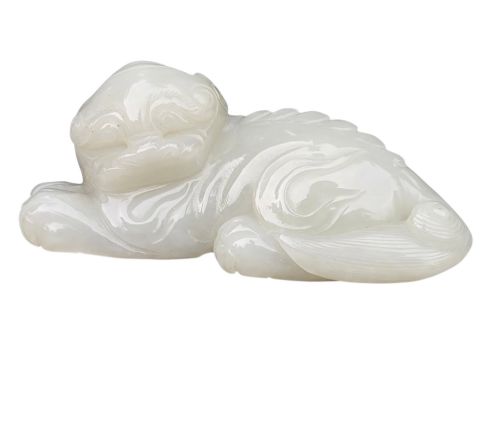
Forms vary from practical items like magnifying glasses and spoons to pure sculptures and figurines of mythical beasts, horses, and cicadas. Many carry the pale celadon, white, spinach-green, or two-coloured hues characteristic of nephrite jade and related hardstones.
Origins point firmly to Chinese workshops, with distinct Mughal style influences appearing on flasks and spoons alongside traditional Qing Dynasty carvings. Collectors encounter everything from small cabinet objects to larger vases adapted as table lamps.
Materials and methods
The makers of these objects relied upon nephrite jade and hardstone, working materials of notable density into smooth, tactile surfaces. Artisans exploited the natural variations of the stone, often incorporating russet inclusions into the design of a brush washer or carving.
Metal mounts in silver appear alongside mother of pearl in select snuff bottles and magnifying glasses, demonstrating mixed media construction. Carving techniques ranged from deep relief work on mythical beasts and horses to the delicate shaping of hollow vessels and spoons.
Materials across these listings span white jade, celadon jade, spinach-green jade, silver, hardstone, and glass.
Judging quality in jade carvings
Quality rests upon the sensitivity of the carving relative to the natural characteristics of the stone. A superior piece displays confident handling of form, whether defining the muscles of a horse or the wings of a cicada, without losing the tactile warmth of the jade.
The purity and tone of the material dictate distinction, with cleanly worked white jade and evenly coloured pale celadon commanding attention. Integration of design with the stone's natural russet markings separates standard production from thoughtful artistry.
The 19th Century Jade Carving Glossary
- Celadon
- A pale green or grey-green glaze or stone colour. It remains one of the most sought-after hues in Chinese jade carving.
- Nephrite
- One of the two mineral species recognised as jade, prized for its toughness and fibrous structure. It forms the primary material for the majority of these pieces.
- Brush washer
- A small vessel used in Chinese calligraphy to clean ink brushes. Examples carved from jade often double as desk ornaments.
- Recumbent
- Lying down or resting, a common posture for carved mythical beasts and animals in Chinese art.
19th Century Jade Carving: Frequently Asked Questions
How do I identify Mughal style jade?
Mughal style pieces show Indian lapidary influences, often featuring thin-walled construction and refined vegetal motifs.
These items stand apart from traditional Qing carving through their specific ornamentation on objects like spoons and flasks.
What is celadon jade?
Celadon refers to a pale green or grey-green tone found naturally in nephrite jade.
It is a defining characteristic of many scholarly and decorative objects from the period.
Where were these carvings made?
The pieces originate primarily from Chinese workshops operating during the Qing Dynasty.
They reflect both domestic aesthetic traditions and cross-cultural exchanges with Mughal design.