



19th Century Jacobean Chair
A 19th century jacobean chair brings heavy carved timber and seventeenth-century style into a Victorian room.
19th Century Jacobean Chair
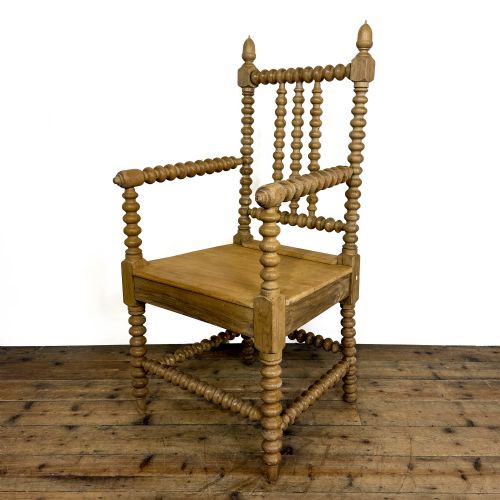
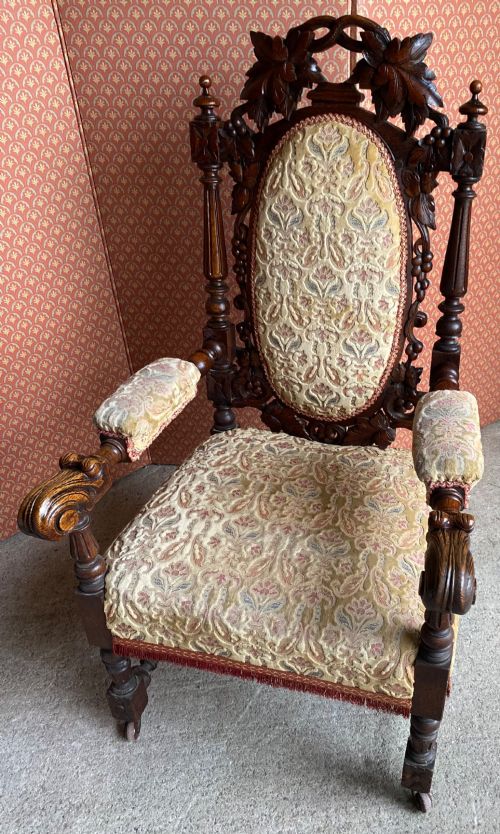
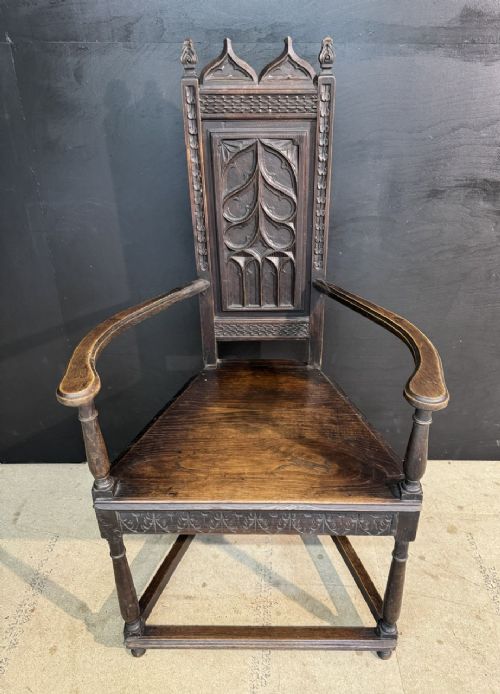
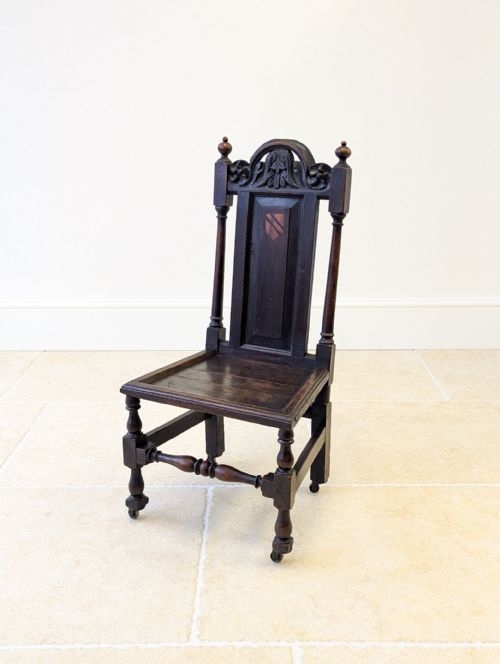
A 19th century jacobean chair is a revival seating piece drawing upon seventeenth-century motifs, built during the Victorian era. These chairs appear in forms such as wainscot armchairs, hall chairs, side chairs, and throne chairs.
Makers of this period produced these pieces in sets or as single armchairs and pairs, often employing revival styles that echo Carolean and Gothic designs. Buyers encounter these chairs in dining rooms, halls, libraries, and bedrooms.
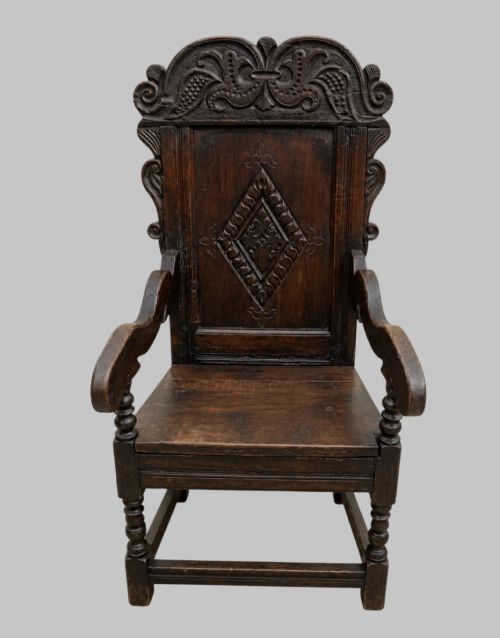
The most common survival on this page is the carved oak wainscot chair or hall chair, reflecting a Victorian appetite for dark timber and historical imitation. They range from small side chairs to large open elbow armchairs and throne chairs.
How they were made
Makers utilised solid oak, walnut, ash, and other hardwoods, assembling frames with traditional joinery. Artisans applied deep relief carving to timber backs and rails, incorporating scrollwork and geometric patterns.
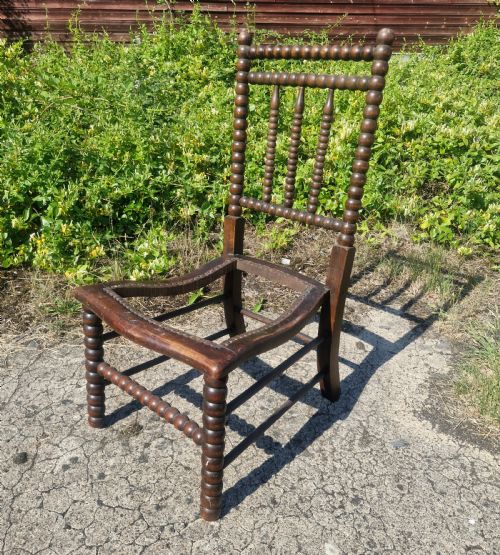
Upholstery elements include fabric, velvet, and rattan panels inserted into frames. Turning techniques produced bobbin-framed and barley twist supports, whilst brass accents sometimes secured joints or added decorative detail.
19th Century Jacobean Chair Retail Price Guide 2026
Typical asking prices for 19th century jacobean chair among the pieces listed under this phrase on Sellingantiques today, from the lower quarter to the upper quarter. They describe what is for sale here now, not the wider market.
What varies in quality
The depth and crispness of the hand carving separate standard production from superior examples. Timber selection also dictates grade, with dense dark oak and figured walnut holding more presence than plain utility hardwoods.
Construction scale influences desirability, as large throne chairs and matched sets require substantial material and intricate joinery. The integrity of the original timber frame and the appropriateness of any added upholstery define the enduring character of each piece.
The 19th Century Jacobean Chair Glossary
- Wainscot chair
- A heavy wooden armchair with a solid panelled back, popular in the seventeenth century and revived in the nineteenth.
- Barley twist
- A type of furniture turning resembling a twisted rope, common in seventeenth-century English joinery and later revival pieces.
- Carolean
- Pertaining to the reign of Charles II, characterised by rich ornamentation, scrolling carving, and turned supports.
- Bobbin framing
- A style of furniture turning featuring a series of spherical or spool-like shapes carved along the length of a wooden upright.
- Throne chair
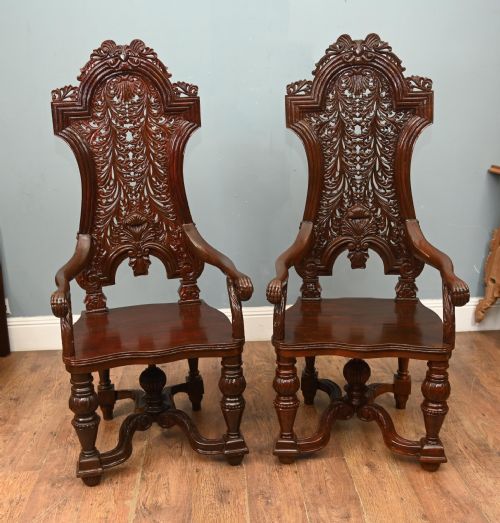
- A large, high-backed armchair designed with imposing proportions and heavy carving for formal placement in a hall or library.
19th Century Jacobean Chair: Frequently Asked Questions
Are these chairs from the seventeenth century?
No, these pieces date from the nineteenth century, typically the Victorian period, when cabinetmakers revived seventeenth-century aesthetics.
They copy earlier wainscot and Carolean forms using nineteenth-century tools and timber seasoning methods.
What rooms suit a high-back throne chair?
Large throne chairs and carved oak armchairs require generous space such as a hallway, a library, or a study.
Their substantial height and heavy timber framing dominate smaller modern spaces if placed without adequate clearance.
How do I identify a revival piece?
Revival chairs show nineteenth-century construction methods, machine-sawn components hidden beneath hand-finished surfaces, and typical Victorian timber patination.
Tool marks and joint tightness often reveal the true nineteenth-century date of manufacture rather than the seventeenth-century style it mimics.
What timber was used most often?
Oak is the predominant material seen across these listings, often finished in dark stains to emulate antique seventeenth-century wainscot furniture.
Walnut, ash, and mixed hardwoods also appear in framed and turned chair structures.