



19th Century Inlaid Chairs
These 19th century inlaid chairs combine period timber with intricate surface decoration, offering collectors functional seating with decorative distinction.
19th Century Inlaid Chairs
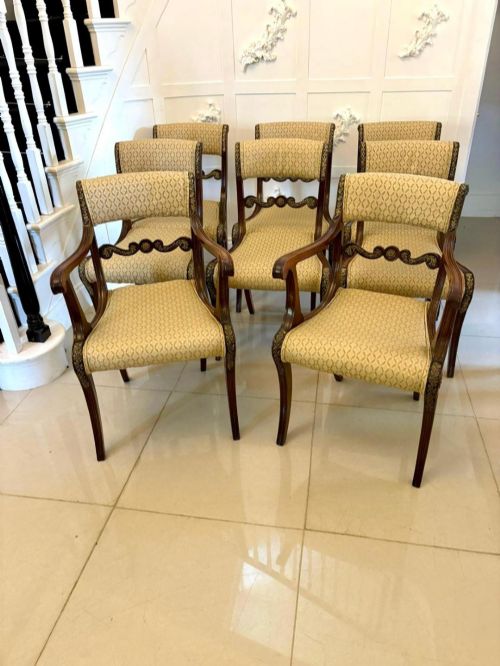
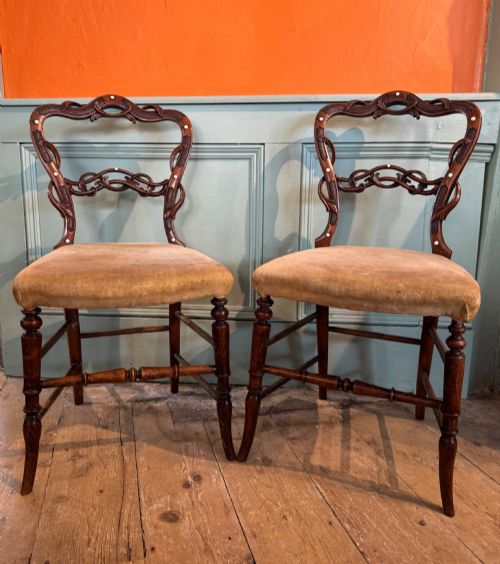
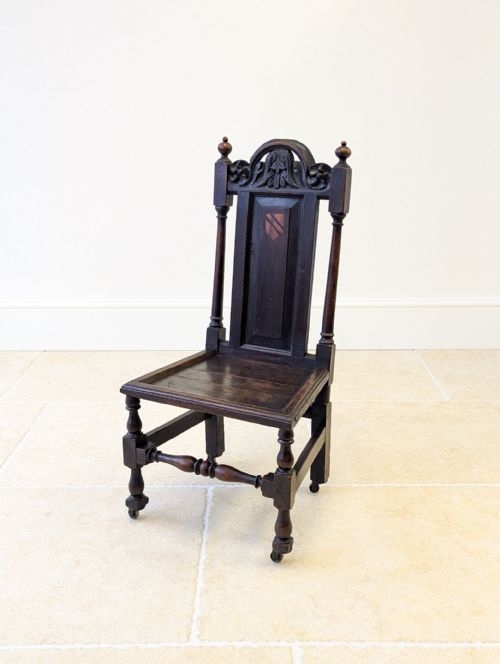
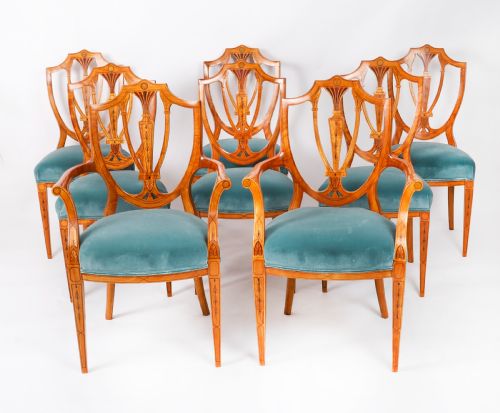
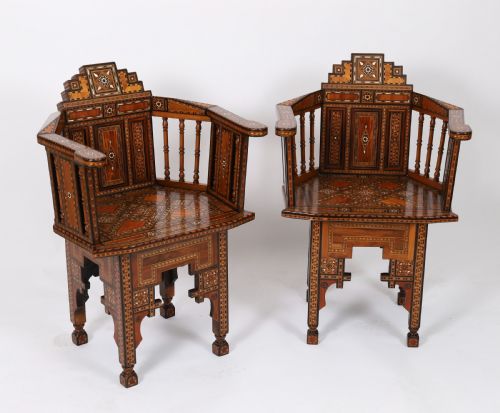
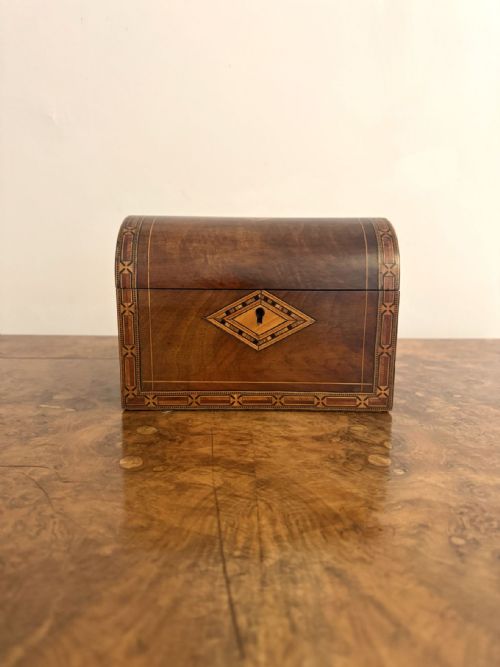
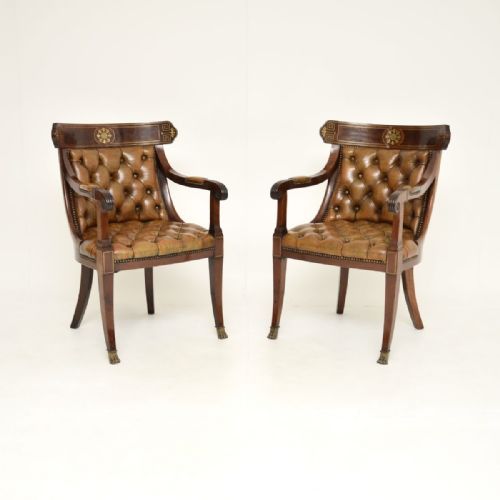
When searching for 19th century inlaid chairs, buyers encounter a wide variety of seating forms spanning the Regency, Victorian, and Georgian eras. Dining chairs, armchairs, side chairs, and hall chairs make up the bulk of the selection, reflecting domestic needs of the period. Alongside British Regency and Victorian styles, the listings incorporate global influences such as Moorish, Levantine, and Chinese export designs.
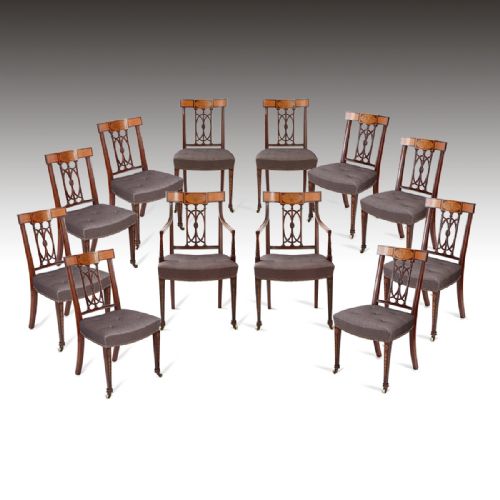
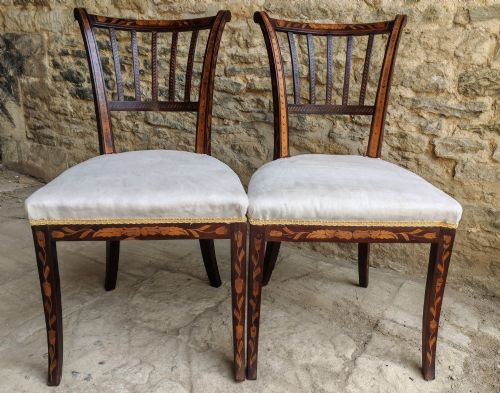
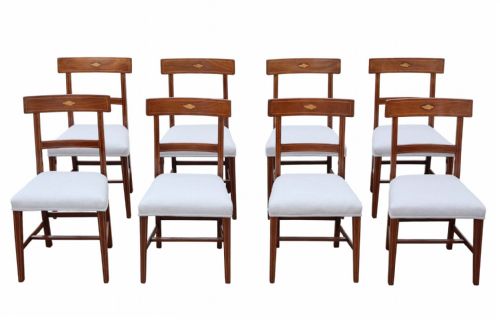
The most common versions met on this page are mahogany, rosewood, and walnut dining or library chairs featuring contrasting wood, brass, or mother-of-pearl ornamentation. Pieces range from single occasional chairs to large matched sets intended for formal dining rooms. Regional interpretations, including Dutch marquetry and Syrian parquetry, appear regularly within the broader nineteenth-century timeline.
Materials and Technique
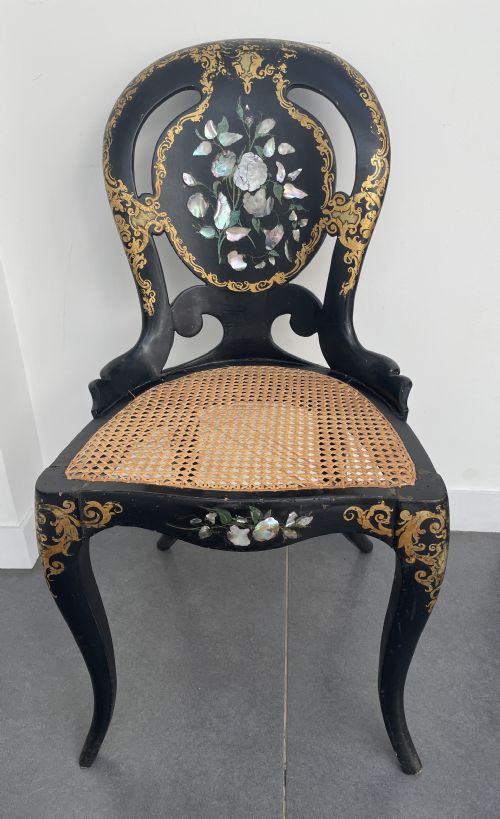
Cabinet makers utilised dense hardwoods such as mahogany, rosewood, walnut, and satinwood as the primary structural foundations for these chairs. Surfaces were then embellished using specialised veneer and inlay techniques, incorporating contrasting timbers, bone, nacre-shell, and brass lines or motifs. Artisans also applied parcel gilding, carving, and leather or fabric upholstery to complete the seating.
The integration of brass inlay required precise routing into solid or veneered timber bases, often secured with adhesives or tiny pins. Marquetry and parquetry elements demanded exact hand-cutting of diverse wood species to form pictorial or geometric patterns across backs and seats. Frame construction relied on traditional joinery methods, supplemented in folding or campaign forms by specialised hardware and bone button decorations.
Listings feature diverse regional styles, including English Regency, Victorian revival, Dutch marquetry, Moorish, and Chinese export forms.
Standards of Execution
Quality separates through the precision of the inlay work and the selection of the primary timber figures. Superior examples display tight, seamless integration of brass, mother-of-pearl, or contrasting woods without visible gaps or excessive filler. The crispness of carved details on the crest rails and legs also indicates the skill of the original workshop.
Consistency across a group distinguishes matched dining sets from assembled collections. A uniform timber grain, balanced proportions, and matching hardware or secondary woods elevate the desirability of multi-piece suites. Furthermore, the structural integrity of the frame under daily use reflects the underlying standard of period joinery.
Cowtan & Sons·Henry Maxwell
The 19th Century Inlaid Chairs Glossary
- Inlay
- A decorative technique where materials like wood, brass, or shell are set into recessed portions of a base timber surface. This creates a flush, patterned exterior across the backrests or frames of chairs.
- Marquetry
- The art of forming decorative patterns using fitted wood veneers. Craftsmen assemble various tinted woods to produce pictorial designs on chair backs and panels.
- Parquetry
- Geometric mosaic woodwork utilised for flooring and furniture surfaces. It appears on regional chairs in repeating angular patterns.
- Carver chair
- An armchair, typically larger and more substantial than standard dining chairs. These often sat at the head of a dining table.
- Tub chair
- An upholstered seating form featuring a continuous curved back and arms resembling the shape of a tub. These frequently incorporate inlaid woodwork along the upper rail.
19th Century Inlaid Chairs: Frequently Asked Questions
How do I identify Regency inlaid chairs?
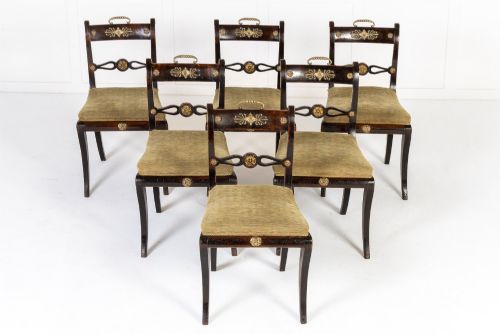
Regency inlaid chairs typically feature classical revival motifs, precise brass line inlays, and dark timbers such as rosewood or mahogany. They often align with early nineteenth-century design aesthetics inspired by ancient Greek and Roman forms.
Look for Saber legs, rope-twist crossbars, and restrained brass scrollwork embedded directly into the wood. The presence of these specific decorative elements distinguishes them from later Victorian revivals.
Are these chairs suitable for daily dining?
Many of these pieces were originally constructed as functional dining or library seating designed for everyday domestic use. Their sturdy hardwood frames allow them to continue serving practical seating roles in modern homes.
Care should be taken with delicate veneer surfaces and antique upholstery fabrics during regular use. Placing them around a dining table requires mindful handling to avoid scratching the polished finishes.
What is the difference between marquetry and inlay?
Inlay involves sinking materials into a solid or veneered wood base, while marquetry builds up an entire pictorial veneer puzzle of various woods before applying it to the surface. Both techniques decorate nineteenth-century chair backs and panels.
Marquetry often creates complex floral or geometric pictures, whereas inlay frequently utilises linear brass or contrasting wood strips.
How do I care for antique inlaid wood?
Maintaining antique inlaid chairs involves keeping them away from direct sunlight and fluctuating humidity levels to prevent wood shrinkage and veneer lifting. Regular dusting with a soft, dry cloth preserves the polished timber finish.
Avoid using harsh chemical polishes or excessive moisture on surfaces containing brass, bone, or mother-of-pearl. Gentle waxing helps protect the porous grain of woods like mahogany and walnut.